





Brass Studded Blanket Box
A brass studded blanket box combines robust utility with decorative clout, offering ample storage finished with distinctive metal ornamentation.
Brass Studded Blanket Box
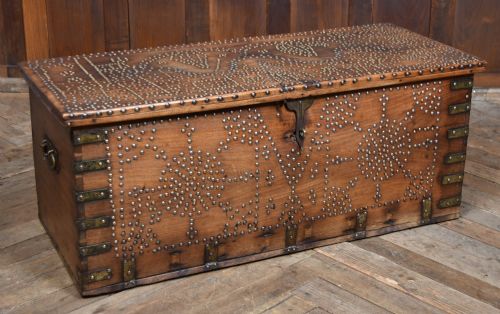
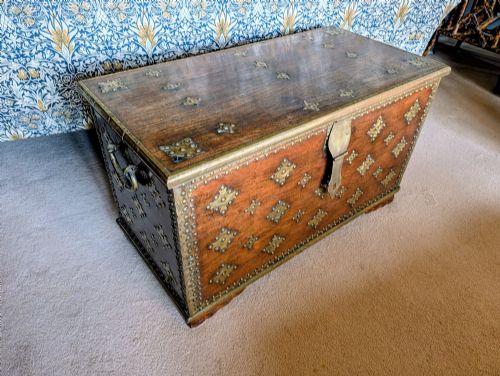
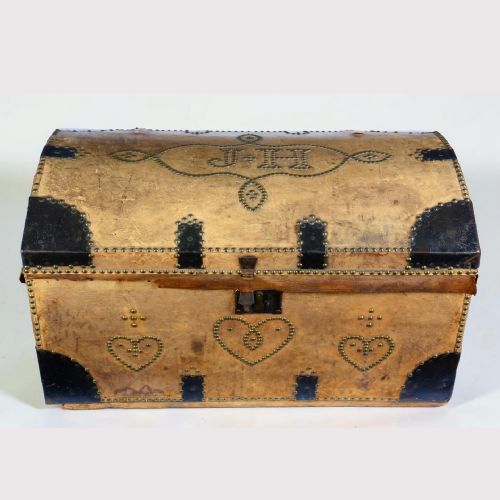
A brass studded blanket box functions primarily as a storage trunk, coffer, or ottoman designed to hold textiles and travelling goods. These pieces emerge across the 18th, 19th, and early 20th centuries, spanning diverse global origins including China, Zanzibar, Spain, and Britain.
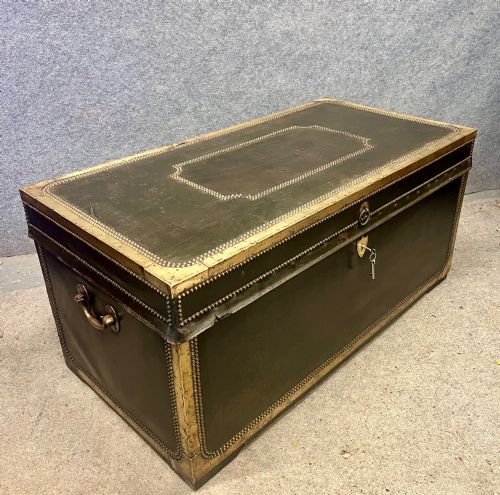
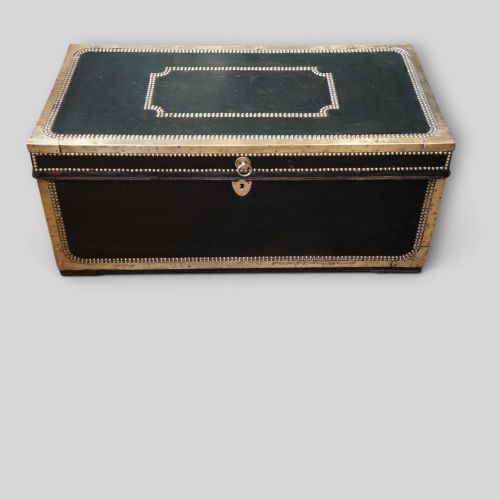
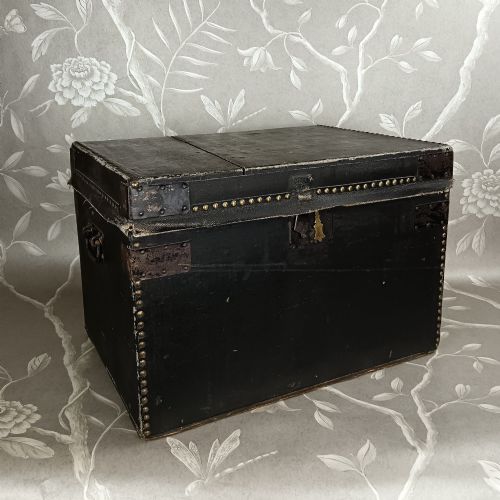
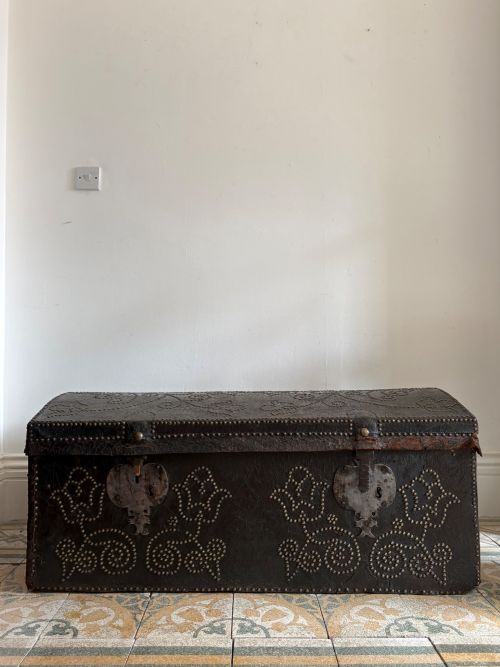
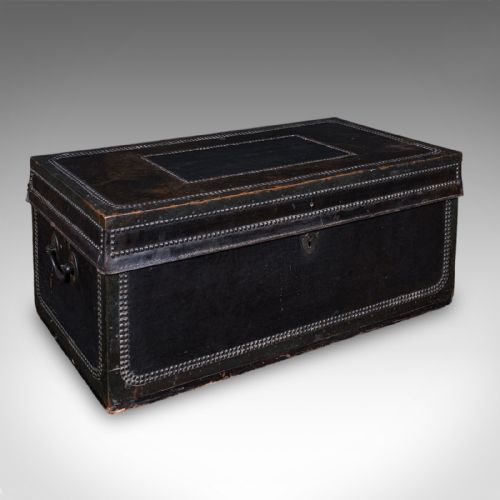
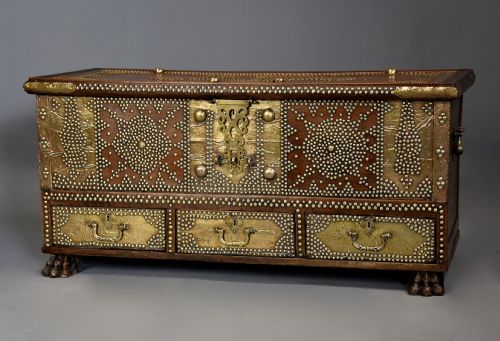
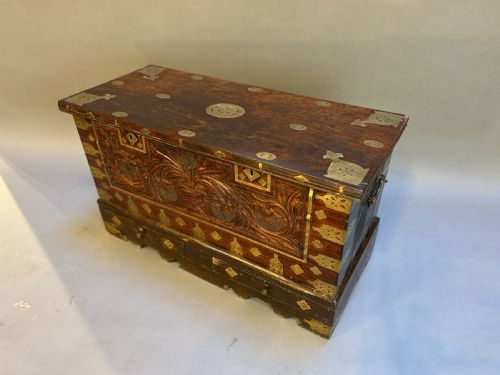
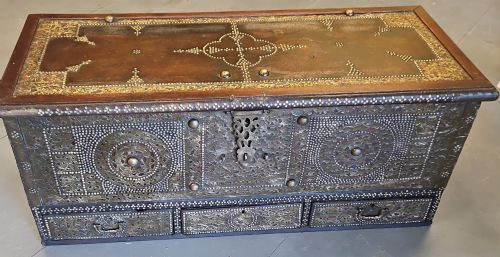
The version most commonly met on this page is the 19th century Victorian or Regency chest, frequently bound in leather and heavily detailed with brass studwork. Regional variants such as Anglo-Indian Zanzibar chests and China Trade camphorwood trunks appear alongside domestic mahogany and teak examples.
Materials and construction
Makers constructed these boxes using sturdy timbers including hardwood, teak, padouk, camphorwood, mahogany, and rosewood, which were often clad in leather, hide, or metal bindings. This robust internal carpentry provided the necessary structural integrity for travel and daily domestic use.
The characteristic surface decoration relies on brass studs, nailhead details, and metal mounts hammered meticulously into the exterior. These brass elements served the dual purpose of reinforcing structural seams and creating elaborate geometric patterns.
Trunks equipped with hidden compartments remind us that Victorian travellers took their secrets very seriously.
Assessing quality and character
Quality separates through the integrity of the primary timber and the density and precision of the brass studwork. Superior examples display dense, well-executed hand-applied nailhead patterns and retained original leather or hide upholstery.
The presence of maker signatures, original carry handles, and functioning locking mechanisms elevates a piece. Finer items exhibit superior cabinet-making in exotic woods like padouk or camphorwood rather than basic utility construction.
Samuel Pratt·Wm. Insall of Bristol·Arthur Wannop·Seabrook of St.Pauls, London
The Brass Studded Blanket Box Glossary
- Camphorwood
- An aromatic timber traditionally used in China Trade trunks to protect stored textiles from insects. Its distinct scent remains identifiable decades later.
- Campaign trunk
- A portable chest built for military officers or travellers, often featuring recessed brass handles, corner brackets, and rugged leather or metal bindings.
- Zanzibar chest
- An ornate storage chest originating from East Africa and India, characterised by heavy brass studding, strapwork, and compartmentalised interiors.
- Coffer
- A heavy wooden box typically used for holding valuables, often possessing a domed or flat lid reinforced with metal straps.
- Ottoman
- A low, upholstered seat or footstool with a hollow interior for storage, sometimes finished with decorative nailhead trim.
Brass Studded Blanket Box: Frequently Asked Questions
What were brass studded blanket boxes used for?
These boxes served primarily as durable storage for blankets, clothing, and domestic textiles. Many travelled across continents as coaching, carriage, or campaign trunks.
Over time, owners repurposed them inside the home as decorative coffee tables, ottomans, or stationary blanket chests at the foot of a bed.
How do I date a brass studded trunk?
Dating relies on examining the underlying timber, construction joints, and style of the brass studwork. Regency and Georgian pieces often feature specific leather finishes and cabinet-making techniques distinct from later Victorian iterations.
Named makers stamped onto locks or handles provide the most precise chronological anchor for a specific chest.
How should I care for the leather and wood?
Maintain the timber and leather by keeping the box away from direct heat sources and sudden humidity shifts. Regular dusting and occasional gentle conditioning of the leather surfaces preserve the original hide.
Avoid harsh chemical cleaners on the brass studs to retain their aged metallic patina.
Are these chests suitable for daily seating?
Some upholstered ottoman forms were built with internal padding intended for sitting. However, many traditional wooden and leather trunks are primarily storage receptacles and may not withstand heavy daily weight as furniture.
Checking the internal reinforcement and lid structure helps determine if a specific piece functions safely as an ottoman.