

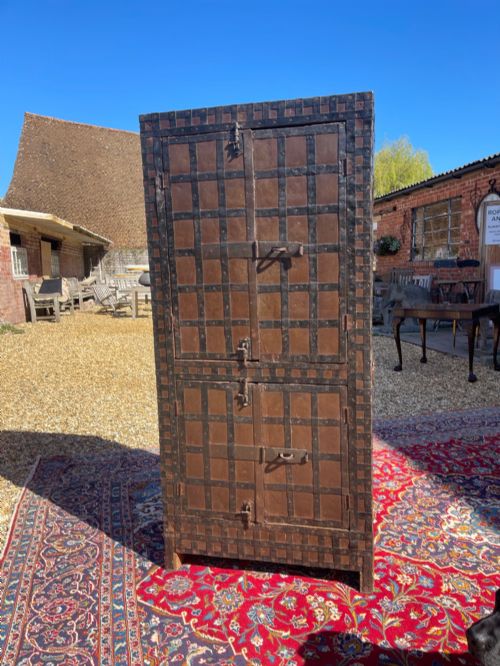


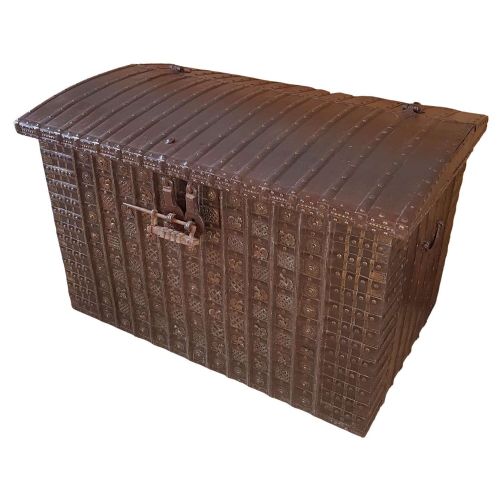


Brass Strap Wooden Chest
A brass strap wooden chest offers sturdy travel storage built from teak, oak, or camphor wood and reinforced with metal bands for long journeys.
Brass Strap Wooden Chest
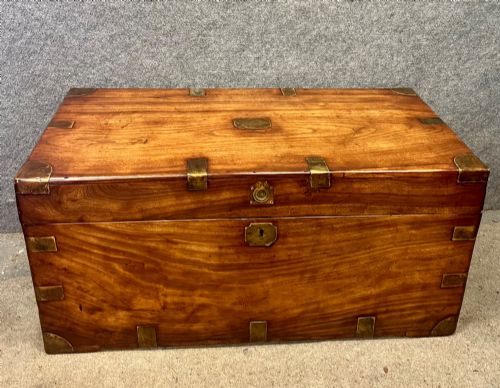
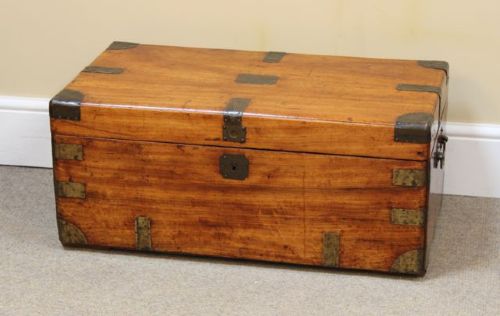
A brass strap wooden chest is a heavy storage piece designed for travel or secure household storage, appearing frequently in Victorian, Georgian, and nineteenth-century formats. Buyers seeking these items encounter military campaign trunks, merchants trunks, and smaller boxes bound in metal straps.
The selection ranges from large camphor wood trunks to compact walnut cigar humidors and octagonal wine coolers. Many pieces originate from British military campaigns or colonial trade routes, showing specific regional construction.
Forms extend beyond standard trunks to include dome top coffers, dowry chests, and serving cabinets. The core function remains portable storage, enhanced by flush brass handles and protective corner brackets.
Materials and construction methods
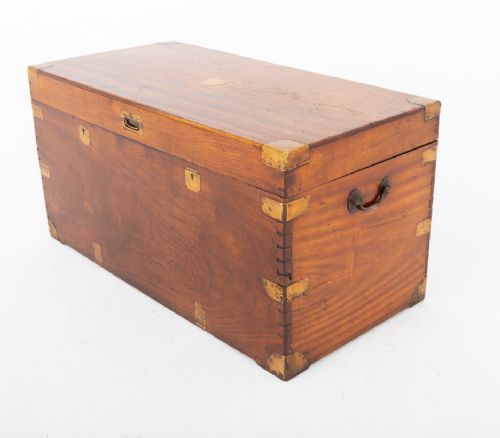
Construction relies on dense timbers such as teak, oak, mahogany, walnut, and camphor wood, chosen for their durability and resistance to splitting. These woods are joined at the corners with dovetail or finger joints to withstand rough handling.
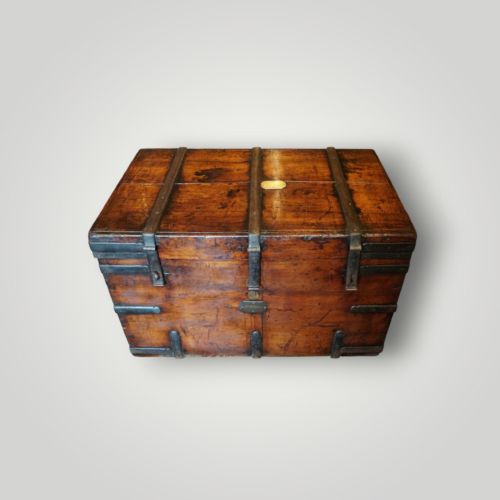
Brass straps, corner brackets, and iron bands are fixed with numerous small screws or rivets to reinforce the timber structure against the strains of travel. Flush-fitting hardware ensures the sides remain smooth for packing into tight spaces.
Lock mechanisms and drop handles are recessed into the wood to prevent damage during transit. Surfaces are typically finished with wax or polish to protect the grain while maintaining a practical exterior.
Camphor wood trunks retain their distinct scent across the centuries, acting as a permanent natural deterrent to moths in your modern wardrobe.
Distinctions in quality
Quality rests in the selection of timber and the precision of the metalwork, where tight joints and heavy gauge brass signify better workshop standards. Pieces intended for senior officers or wealthy merchants often feature superior secondary timbers and more complex locking mechanisms.
The integrity of the original hardware and the survival of makers' inscriptions or interior compartments elevate a piece above standard utility trunks. Simpler domestic boxes display standard iron banding, whereas fine campaign pieces utilise substantial brass strapping countersunk into the wood.
Sir Randolph Isham Routh KCB
The Brass Strap Wooden Chest Glossary
- Campaign chest
- A portable storage box made in sections with recessed brass handles, designed for military officers on the move. These pieces pack down efficiently for transport.
- Cellarette
- A fitted container used for holding bottles of wine or spirits, often brass-bound and kept in the dining room. They appear in octagonal forms during the Georgian period.
- Camphor wood
- An aromatic timber frequently utilised for nineteenth-century trunks due to its insect-repellent properties. It protects stored textiles and uniforms from moths.
- Dovetail
- A joint formed by interlocking wedge-shaped fingers, providing exceptional tensile strength at the corners of a chest. It is a hallmark of traditional cabinet making.
- Escutcheon
- A protective metal plate surrounding a keyhole, usually made of brass on these chests. It prevents the wood from splitting around the lock.
Brass Strap Wooden Chest: Frequently Asked Questions
How were campaign chests used?
Campaign chests served military officers and colonial administrators as portable wardrobes and desk units during postings abroad. Their modular design allowed easy packing onto horses, carts, or ships.
Removable feet, inset handles, and protective brass corners ensured the chests survived rough conditions while keeping personal belongings secure and organised.
How do I identify a Georgian chest?
Georgian chests and cellarettes typically feature rich timbers like mahogany or oak combined with restrained brass banding and classical proportions. Cabinet makers of this era focused on balanced joinery and understated elegance.
Examine the construction of the interior and the weight of the brass hardware to confirm the period. Hand-cut dovetails and older lock mechanisms support an eighteenth or early nineteenth-century origin.
Where should I place a trunk at home?
Trunks and chests work well as living room coffee tables, bedroom blanket boxes, or hallway storage for bulky items. Their flat tops provide useful surface space while the interior conceals clutter.
Keep them away from direct heat sources and strong sunlight to prevent the timber and camphor wood from drying out or splitting over time.