

Brass Sconce Lighting
Brass sconce lighting brings warmth and architectural detail to interiors through cast metal, gilt finishes and glass.
Brass Sconce Lighting
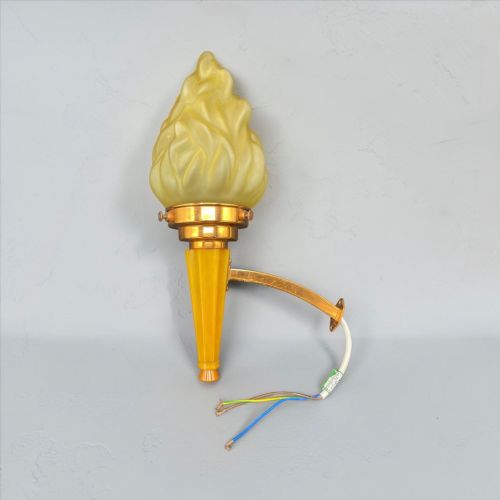
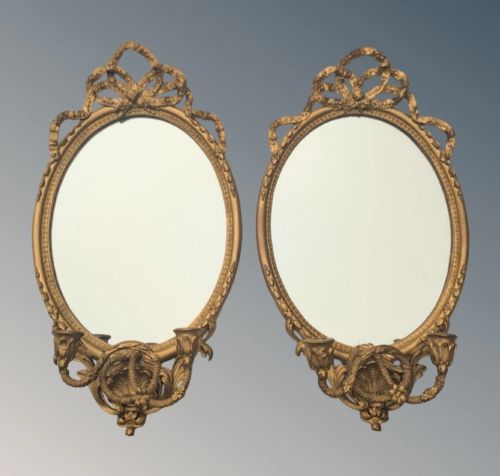
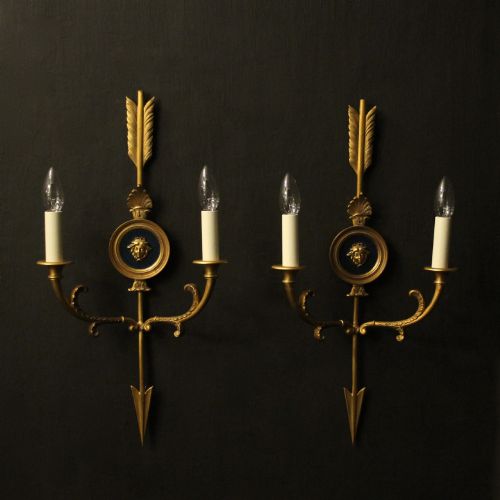
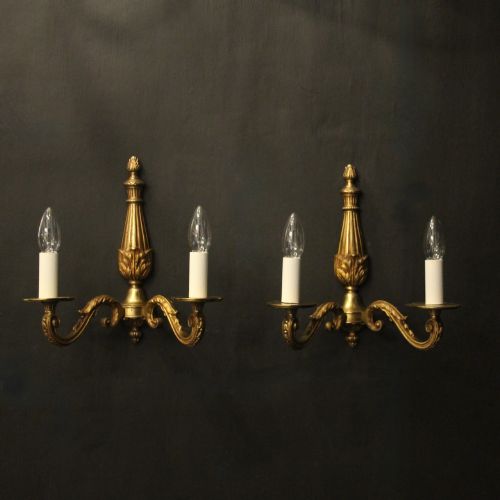
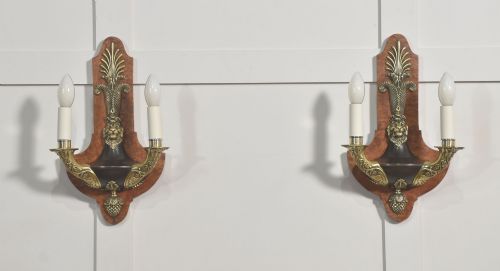
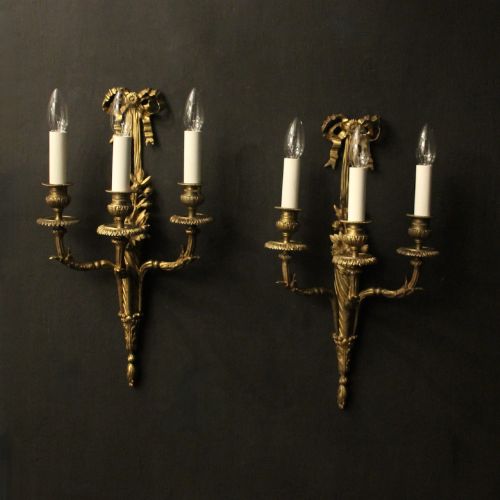
Brass sconce lighting covers wall-mounted fixtures designed to hold candles or electric bulbs, alongside related forms like wall brackets, lanterns and girandole mirrors. Pieces date from the nineteenth century through the Art Deco period, with French designs strongly represented alongside English examples.
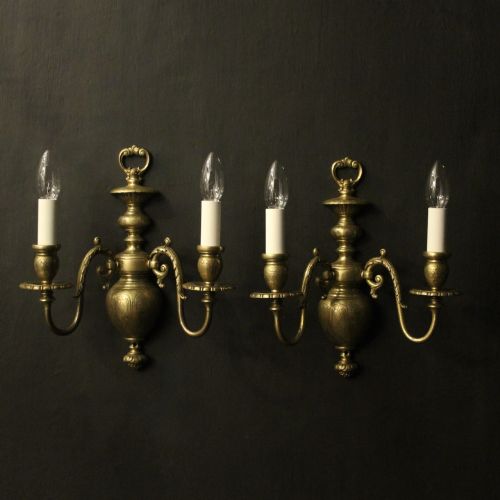
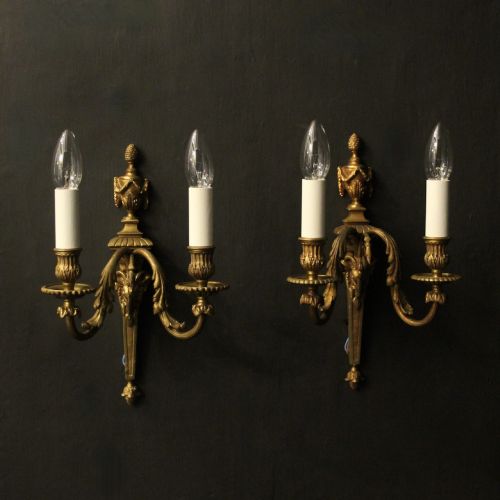
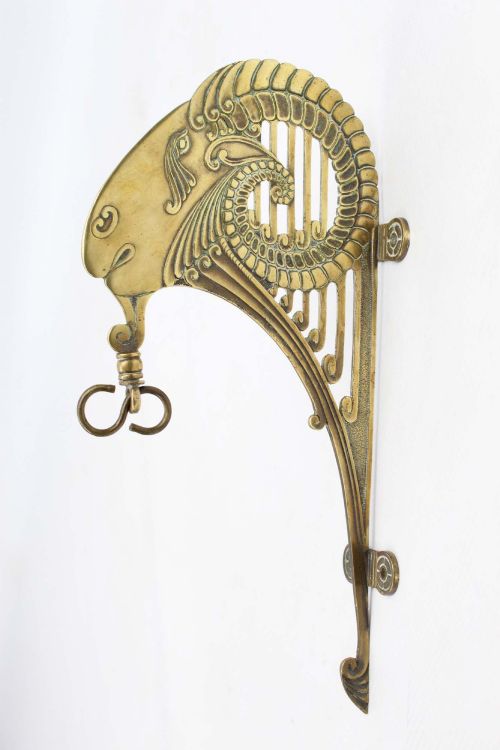
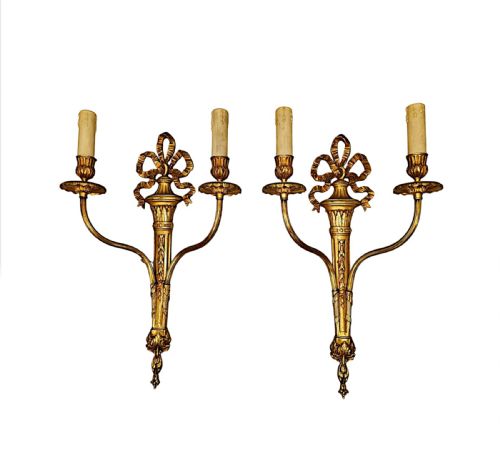
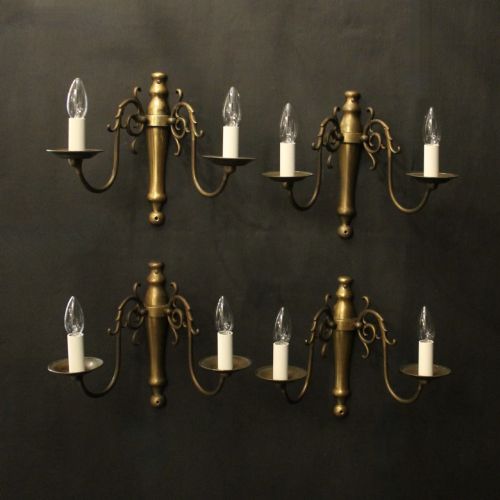
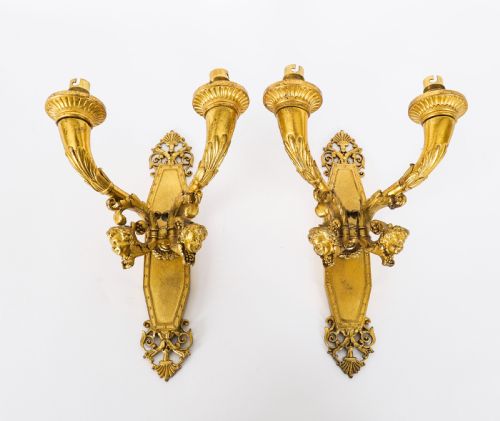
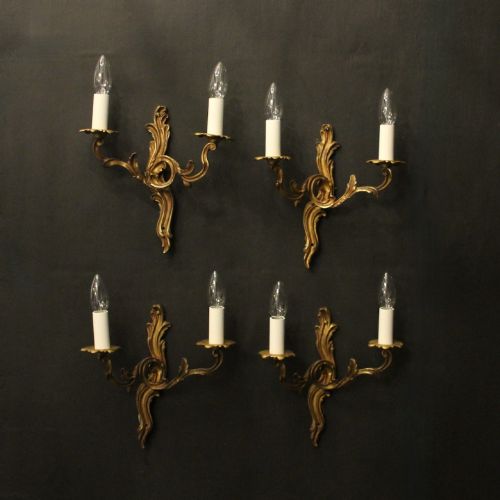
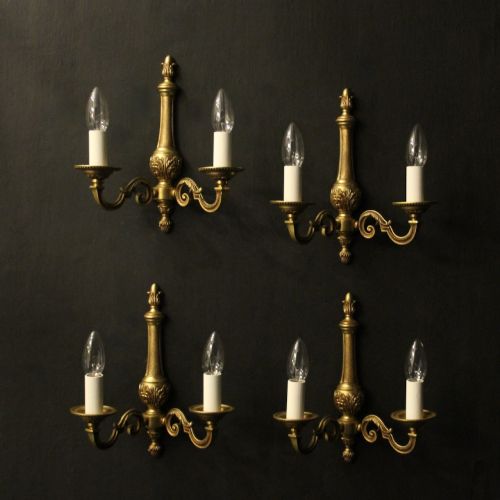
Buyers encounter twin-arm and triple-arm wall lights most frequently, often found in matching pairs or larger sets of four. The selection spans distinct styles including French Rococo, Empire, Neoclassical and Arts and Crafts.
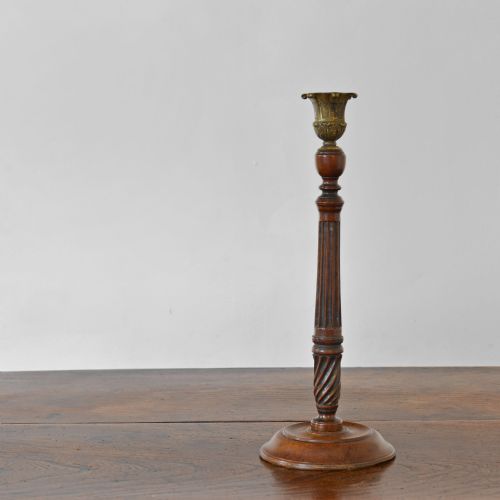
Formats range from simple metal hanging brackets to elaborate gilded bronze appliques adorned with crystal. Table lamps adapted for wall mounting also appear among the selections.
How they were made
Maker's workshops utilised brass, bronze, ormolu and gilt bronze as primary metals, often combining them with glass drops or ceramic elements. Components were cast, chased and hand-finished to create decorative backplates and curving arms.
Surface treatments included fire gilding and applied lacquer to protect the metal base. Construction methods varied from heavy sand-cast bronze frames to lighter brass pressings and wrought iron elements.
Squirrels clamber up cast bronze tree branches on Regency girandole pieces.
What varies in quality
The crispness of the metal chasing separates standard production from finer workshop output, particularly in cast floral or scroll motifs. Heavier gauge brass and thick fire gilding indicate superior material selection.
The structural integrity of joints and the retention of original glass components or crystals influence desirability. Original patination and minimal wear to the gilt surfaces distinguish better-preserved examples.
W.A.S. Benson·Bruce Talbert·Villeroy & Boch·Casier
The Brass Sconce Lighting Glossary
- Ormolu
- Gilded bronze produced by applying a mercury and gold amalgam to a bronze base and heating it. This technique creates a durable, rich golden surface seen on nineteenth-century French lighting.
- Girandole
- A branched wall light, frequently incorporating a mirror to reflect the candlelight. The mirrored backplate multiplies the illumination in a room.
- Applique
- A French term for a wall-mounted light fixture designed to hold candles or electric lamps. These pieces sit flat against the wall surface.
- Campana
- A bell-shaped vessel form used as the cup or socket holding the candle. It appears frequently on Regency and nineteenth-century examples.
- Baluster
- A moulded column of square or circular section supporting the structure. This architectural profile appears on table and wall lamps from the early twentieth century.
Brass Sconce Lighting: Frequently Asked Questions
How do I install antique sconces?
Most wall lights from the nineteenth and early twentieth centuries require professional electrical fitting to connect securely to modern wall circuits. Wiring channels and backplates need assessment by an electrician to ensure safe mounting.
Original gas or candle fixtures often undergo conversion for electric bulbs during restoration. Qualified installers can adapt internal fittings without altering the visible exterior metalwork.
How do I clean brass and gilt lighting?
Dusting with a dry soft cloth maintains the surface without removing historic patination or delicate surface gilding. Harsh metal polishes should be avoided on gilt bronze and ormolu to prevent stripping the gold layer.
Glass components and crystal drops can be removed and washed in warm soapy water before drying thoroughly. Metal parts only require gentle wiping to remove accumulated grime.
Can I mix different styles of wall lights?
Pairing matching sconces within the same room creates visual balance, especially along a hallway or flanking a fireplace. Different rooms can support varied styles, such as placing an Art Deco bracket in a study alongside French Neoclassical pieces elsewhere.
Matching the metal finish, such as gilt brass or bronze, helps unify diverse periods within a home. Scale remains the most important factor when placing lights near mirrors or furniture.
How do I date a brass wall light?
Stylistic clues like Regency motifs, Art Deco geometric lines or French Rococo scrollwork provide initial dating boundaries. Manufacturing methods, including the transition from hand-cast bronze to machine-formed brass, also indicate the period.
Maker marks, registration numbers or workshop stamps stamped into the metal help confirm specific dates. Component construction and screw threads offer further evidence of age.