

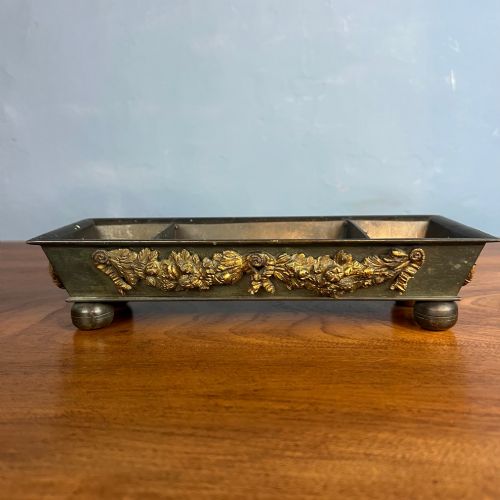
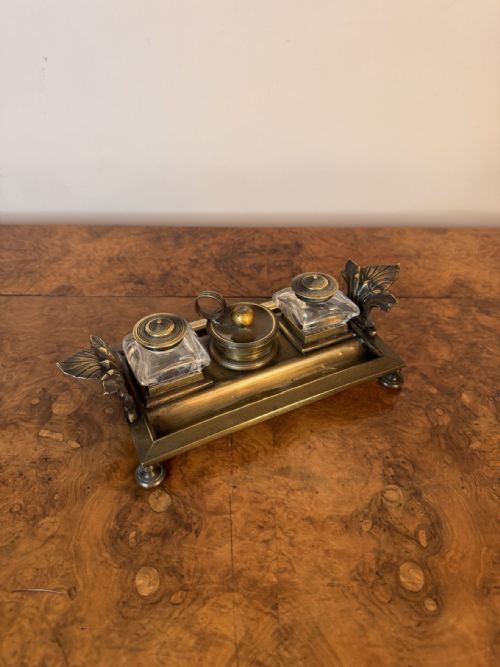
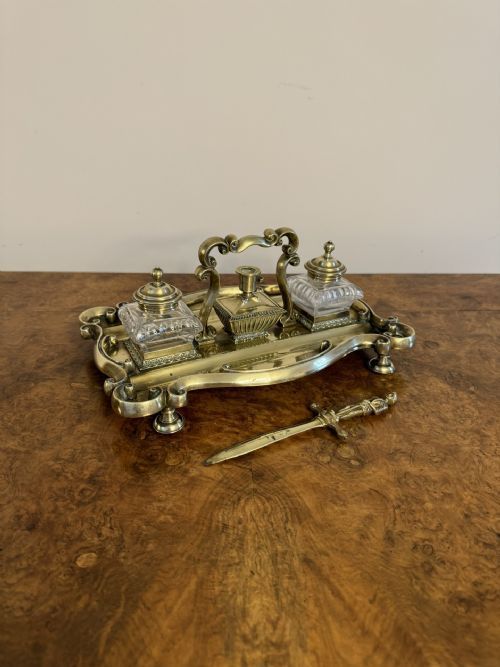
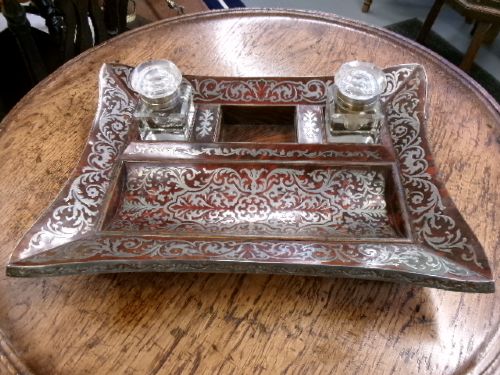

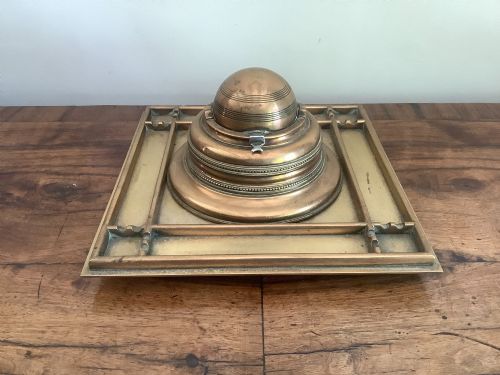


Brass Pen Tray
A brass pen tray gathers the small metal implements of correspondence, resting on the writing surface as both utility and ornament.
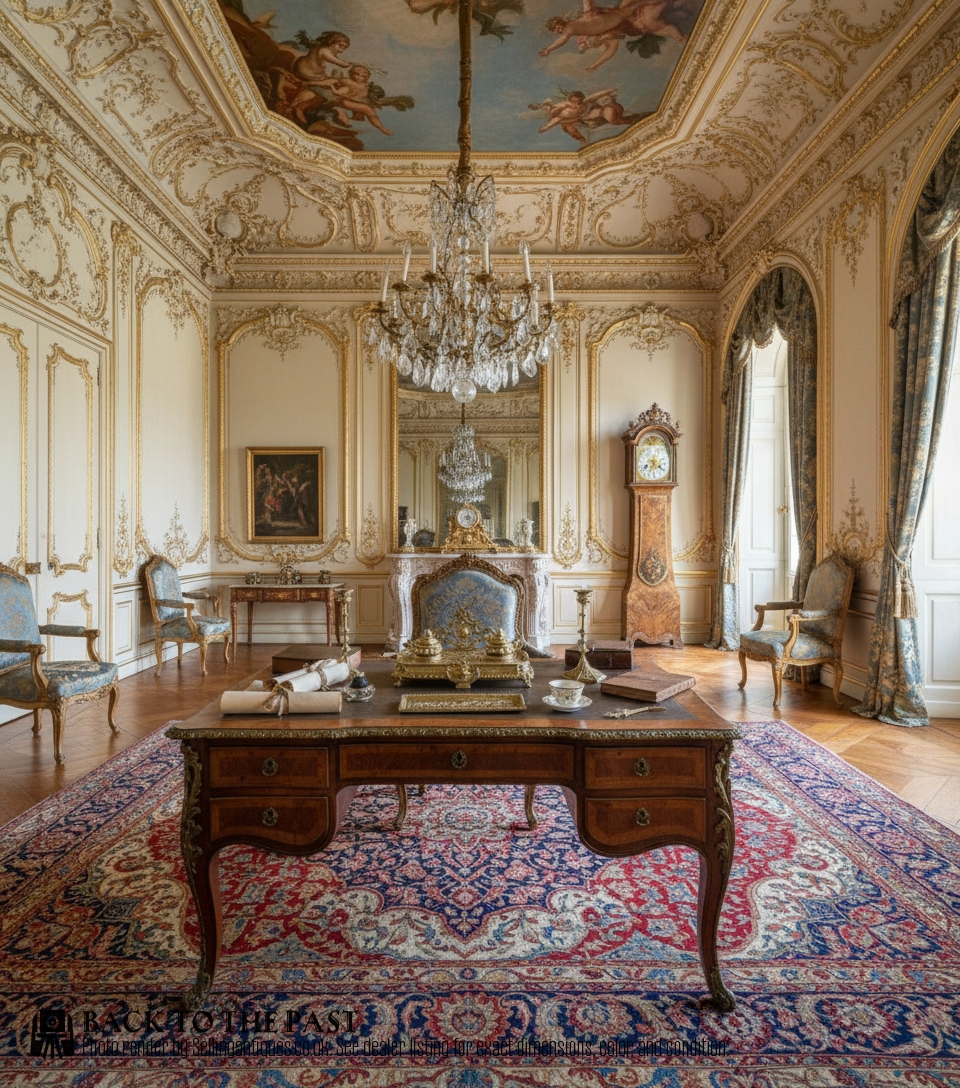
Brass Pen Tray
A brass pen tray serves to hold dip pens and quills upon the desk, appearing frequently both as an independent piece and as part of a larger desk set with inkwells. These pieces emerge in styles ranging from Victorian and Edwardian to Art Nouveau and French Napoleon III.
The materials paired with the metal include coromandel wood, tortoiseshell, glass, and agate cabochons, reflecting the rich desk furniture of the nineteenth century.
Materials and Manufacture
The construction relies heavily on cast brass, ormolu, and gilt bronze, sometimes enhanced with champlevé enamel or delicate brass inlay set into rosewood, walnut, and coromandel wood.
Makers utilised techniques such as fine chasing for decorative mounts and intricate wood-inlaying known as boulle work, creating durable items designed for daily use in correspondence.
Brass Pen Tray Retail Price Guide 2026
Typical asking prices for brass pen tray among the pieces listed under this phrase on Sellingantiques today, from the lower quarter to the upper quarter. They describe what is for sale here now, not the wider market.
Degrees of Quality
The standard of a piece rests upon the crispness of the brass casting and the depth of the chased ornamentation, where sharper botanical or figurative details distinguish superior examples.
Quality also shows in the choice of base materials, such as dense exotic woods or inset gemstones like agate, which elevate standard brass work into high decorative art.
James Cartland and Sons
The Brass Pen Tray Glossary
- Ormolu
- Gilded bronze applied to decorative objects and furniture, widely used in French and English desk accessories. It provides a bright gold-coloured finish that does not tarnish easily.
- Champlevé
- An enamelling technique where troughs or cells are carved into the surface of the metal and filled with vitreous enamel before firing. The resulting surface shows colourful patterns flush with the metal dividers.
- Coromandel wood
- A dense, heavy timber from Southeast Asia featuring dark brown colouring with dramatic black stripes. It was frequently utilised for luxury Victorian desk stands and pen trays.
- Boulle work
- A style of marquetry consisting of tortoiseshell and brass inlay, named after a famous French cabinetmaker. It creates a rich, patterned contrast on nineteenth-century desk furniture.
- Agate
- A form of chalcedony quartz often cut into cabochons to adorn nineteenth-century metalwork. These smooth, polished stones add natural colour variation to desk sets.
Brass Pen Tray: Frequently Asked Questions
What is a brass pen tray used for?
A brass pen tray holds writing implements on a desk, keeping quills and metal-nibbed pens from rolling away across the writing surface.
In past centuries, these trays sat beside inkwells and letter racks as part of an organised writing station.
How do I date an antique tray?
Dating relies on stylistic clues, such as the flowing organic curves typical of Art Nouveau or the heavier geometric forms of the Victorian era.
Materials like coromandel wood, tortoiseshell, and champlevé enamel also point directly to mid and late nineteenth-century manufacturing trends.
Are these trays sold alone?
Many trays appear as independent pieces meant solely for pens, while others form part of a larger matched desk set.
These expanded sets frequently include glass or brass inkwells, bell inkstands, and matching letter holders.
How do I care for antique brass?
Maintenance requires gentle dusting with a soft cloth to protect the metal surface and any inset materials like wood or glass.
Harsh metal polishes should be avoided because they can strip away original patination and damage delicate gilt finishes.