


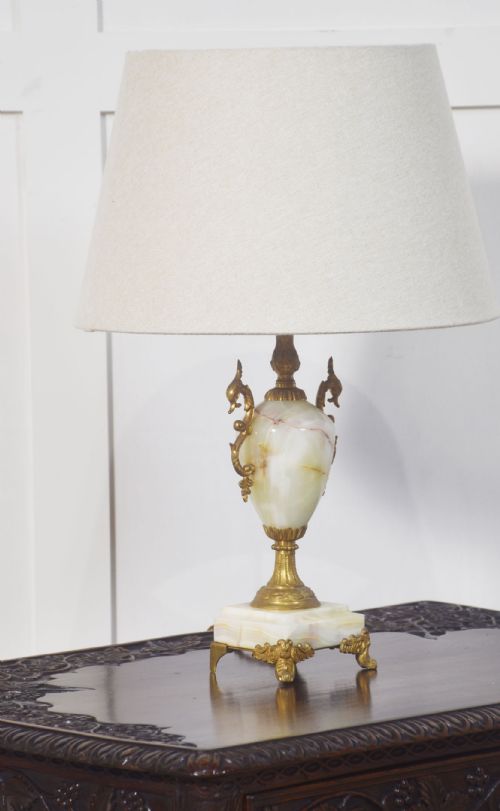


Brass Onyx Table Lamp
A brass onyx table lamp brings a warm, mineral weight to a room, combining polished stone shafts with cast metal mounts.
Brass Onyx Table Lamp
When you search for a brass onyx table lamp, you encounter lighting fixtures that pair natural banded stone with metallic bases and collars. These items span the Victorian era, the Edwardian period, and the Art Deco years, reflecting shifts in interior decoration from ornate revivalism to geometric simplicity.
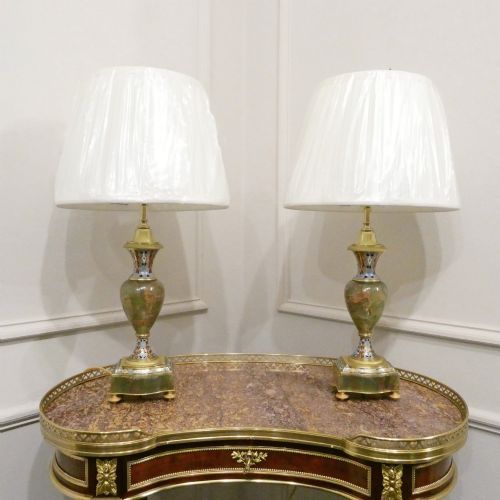
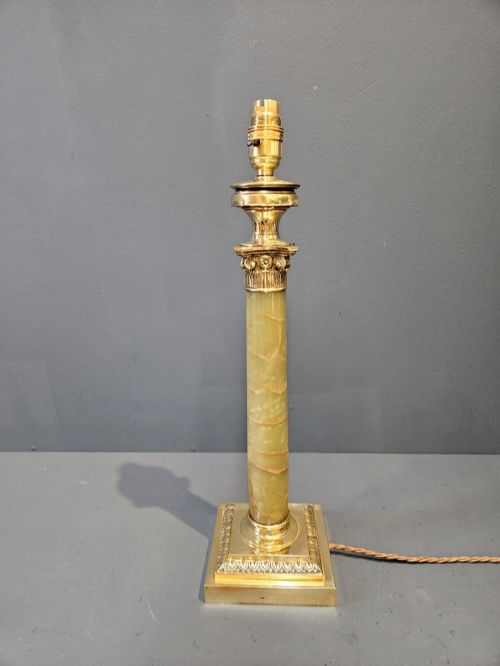
The most common examples on this page are table lamps and standard lamps dating from around eighteen-eighty to nineteen-thirty. They frequently incorporate French or classical motifs, such as Corinthian columns, paw feet, and champlevé enamel detailing.
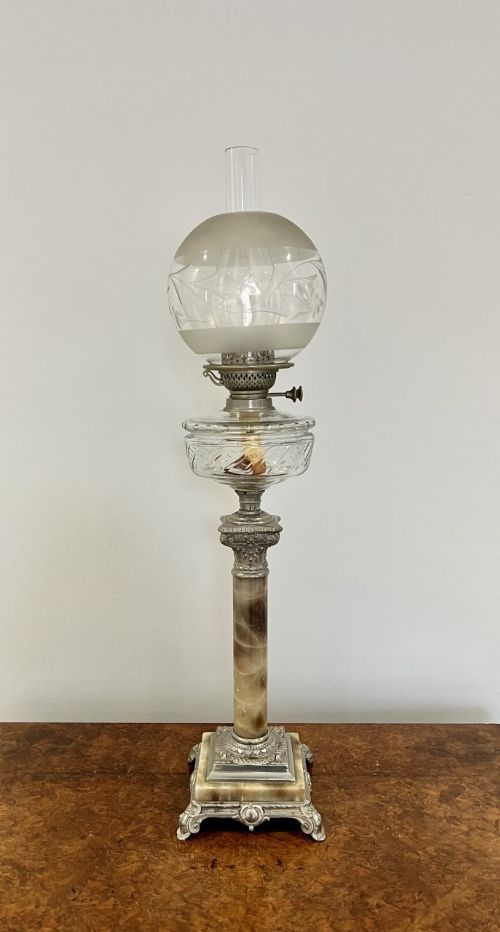
Alongside standard table lamps, the selection includes converted oil lamps and floor-standing standard lamps featuring shaped stone columns. These pieces utilise white or coloured onyx and marble paired with brass, ormolu, and gilt metal.
How they were made
The construction of these lamps relies on turning and carving solid blocks of onyx or marble to form the central shaft or body. Stonemasons shaped the mineral into columns, urns, and amphora forms, which were then polished to a smooth finish.
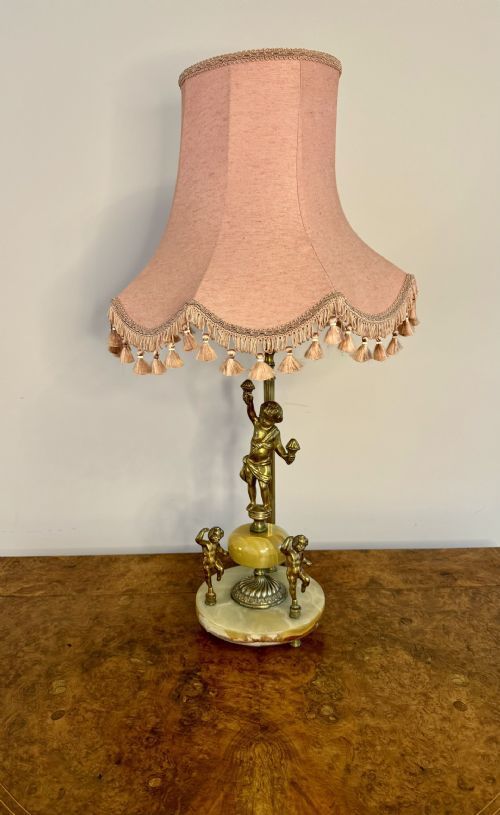
Metal components such as brass, gilt bronze, and ormolu were cast, chased, and fitted to the top and bottom of the stone. Artisans secured the stone and metal components using central threaded rods, integrating decorative mounts like cherubs or classical capitals.
Some nineteenth-century French lamps discreetly incorporate small bronze dolphins and cherubs, proving that even a lighting column needs a touch of mythology.
What varies in quality
The distinction between ordinary and superior pieces rests on the weight and selection of the stone. Finer examples display consistent veining and unblemished onyx columns, whereas simpler pieces use plain or heavily repaired stone.
Another measure of quality is the crispness of the metalwork. Finely chased ormolu, detailed champlevé enamel, and heavy cast brass mounts indicate a higher grade of manufacture than thin, pressed gilt metal.
The Brass Onyx Table Lamp Glossary
- Onyx
- A form of banded chalcedony or calcite used extensively for lamp shafts and pedestals. It provides a translucent quality that catches the light.
- Ormolu
- Gilt bronze produced by applying a mercury-gold amalgam to cast bronze. This technique creates a rich, lasting golden surface on decorative mounts.
- Champlevé
- An enamelwork technique where troughs are carved into the metal surface and filled with vitreous enamel. These coloured sections decorate the brass elements of French lamps.
- Corinthian column
- A classical architectural order featuring an ornate capital decorated with acanthus leaves. It frequently forms the main shaft of nineteenth-century and Edwardian lamps.
- Cassolette
- A decorative vase or vessel with a removable lid, occasionally adapted as a lamp base. In nineteenth-century French pieces, these function as symmetrical decorative objects.
Brass Onyx Table Lamp: Frequently Asked Questions
How do I date my lamp?
Dating relies on stylistic clues and construction methods. Victorian pieces often feature ornate brass castings and heavy proportions, while Art Deco examples display streamlined geometric forms from around nineteen-thirty.
Examining the wiring, switches, and interior hardware also provides clues to the manufacturing period, though many older lamps have been modernised for contemporary use.
Were these always electric lamps?
Many examples on this page started life as oil lamps or fluid burners before being converted to electricity at a later date. Standard lamps and table lamps from the nineteenth century originally burned paraffin or oil.
Conversion work often involves drilling through the stone or metal base to run modern flex, preserving the decorative exterior while updating the functionality.
How should I clean the onyx?
Onyx is a relatively soft, calcareous stone that reacts poorly to acidic cleaners, alcohol, or abrasive cloths. Dusting with a dry microfibre cloth is the safest method for routine maintenance.
For stubborn grime, a damp cloth with mild, neutral soap can be used, provided the stone is dried immediately. Care must be taken to keep moisture away from the metal mounts and electrical components.
What is the difference between onyx and marble?
Marble is a metamorphic rock formed from recrystallised carbonate minerals, showing cloudy or granular patterns. Onyx used in these lamps is typically a banded form of calcite, offering a more translucent appearance.
Both materials were employed interchangeably by makers in the Victorian and Edwardian periods to provide a heavy, decorative base for lighting.