


Cut Glass Oil Reservoir
These cut glass oil reservoir lamps bring weight, brilliance and period presence to a room, catching the light in a way ordinary modern lighting simply cannot match.
Cut Glass Oil Reservoir
When you search for a cut glass oil reservoir, you are looking at the central translucent fuel bowl of a Victorian or Edwardian lighting fixture. These reservoirs sit atop metal columns, most frequently cast in brass or silver plate, and are designed to hold lamp oil or paraffin before being adapted for modern electricity or kept in original decorative order.
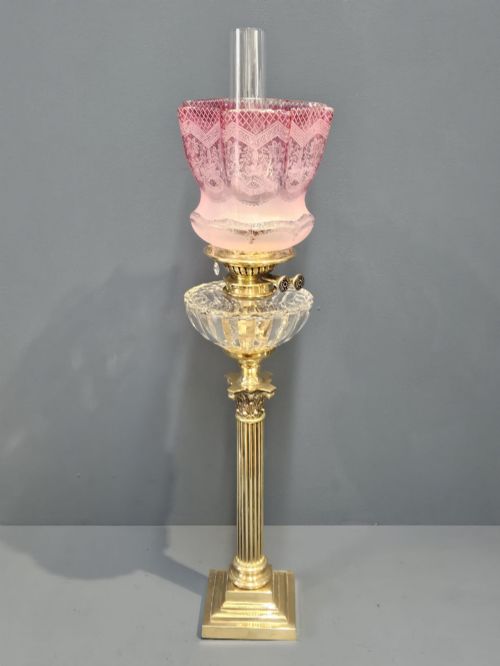
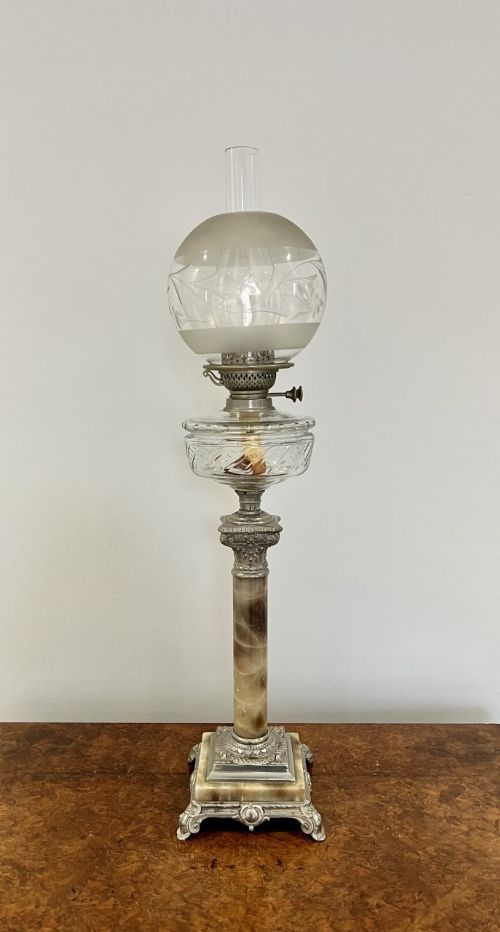
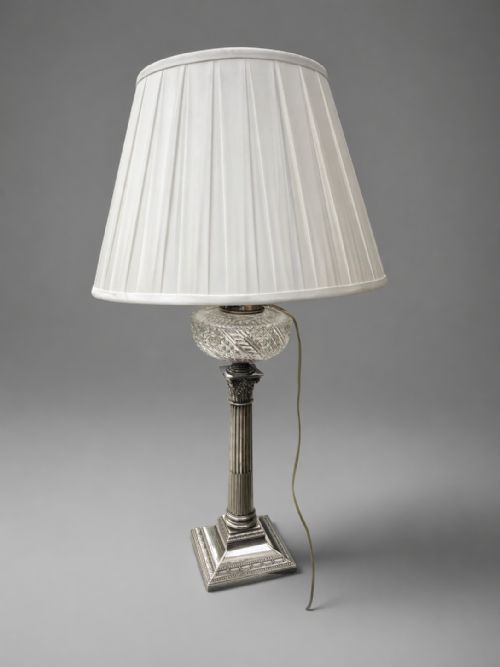
The version you are most likely to meet on this page is the Victorian Corinthian column lamp, where a detailed capital and fluted brass or silver-plated shaft support a heavy glass bowl. These pieces span the nineteenth century and the turn of the twentieth century, appearing alongside taller table lamps and occasional pairs.
The styles recorded across these listings range from straightforward Victorian utility to Neoclassical revival and Victorian Art Nouveau. While some carry makers' marks like Messengers or retailers like Harrods, the primary focus remains the heavy glass bowl itself.
How they were made
The reservoirs are formed from heavy clear glass or striking cranberry glass, then shaped and finished by hand-cutting geometric facets, flutes or star motifs into the surface. This deep wheel-cutting allows the material to refract light sharply from every angle.
The glass bowl is mounted securely into cast brass or silver-plated collars, often resting upon Corinthian columns made of brass, onyx or reeded metal shafts. The construction relies on sturdy threaded brass hardware to keep the heavy glass reservoir stable atop the pillar.
What varies in quality
The crispness and depth of the glass cutting dictate the visual weight of the piece, with sharper, deeper facets creating a superior play of light. Heavy, thick-walled glass reservoirs sit at the top of the range, offering a more substantial feel than thinner pressed alternatives.
The quality of the supporting metalwork tells its own story, seen in the sharpness of the Corinthian column capitals and the heavy gauge of the brass or silver plate. Balanced proportions between the glass reservoir and the column separate ordinary production from finer examples.
Messengers·Harrods
The Cut Glass Oil Reservoir Glossary
- Cut glass
- Glass decorated by grinding designs into the surface using a revolving wheel. This technique creates sharp facets that catch and refract the light.
- Reservoir
- The bowl section of an oil lamp that holds the fuel. In these pieces, it is fashioned from heavy cut glass.
- Corinthian column
- A classical architectural column style featuring an ornate capital decorated with acanthus leaves. It forms the standard support for many Victorian lamps.
- Cranberry glass
- Transparent red glass coloured with gold chloride during manufacture. It provides a rich, warm tone often seen in Victorian lamp shades and glass components.
- Silver plate
- A thin layer of silver fused to a base metal such as brass or copper. It gives the appearance of solid silver while utilising a more durable structural core.
Cut Glass Oil Reservoir: Frequently Asked Questions
What is a cut glass oil reservoir?
It is the thick glass bowl that held fuel on nineteenth-century lighting fixtures. These bowls are usually heavily faceted and mounted on metal columns.
They form the decorative heart of Victorian and Edwardian table lamps, whether wired for electricity or kept in original condition.
How do I date these pieces?
Dating relies on stylistic clues like the height of the column, the complexity of the Corinthian capital, and the manufacturing methods visible in the metal and glass.
Most examples seen here belong to the Victorian era and the years around nineteen hundred, combining classical revival styles with functional nineteenth-century engineering.
Can these lamps be used today?
Many of these lamps have been safely converted to run on electricity for modern domestic use. The conversion typically runs wiring discreetly through the original column without altering the exterior appearance.
Retaining the heavy cut glass bowl ensures they function as striking decorative table lamps.
What materials are used alongside the glass?
Brass and silver-plated metal form the structural columns and bases that support the heavy glass reservoirs. Some pieces also incorporate polished onyx sections into the shaft for added texture and colour.
Shades are frequently made of fabric or contrasting cranberry glass.