
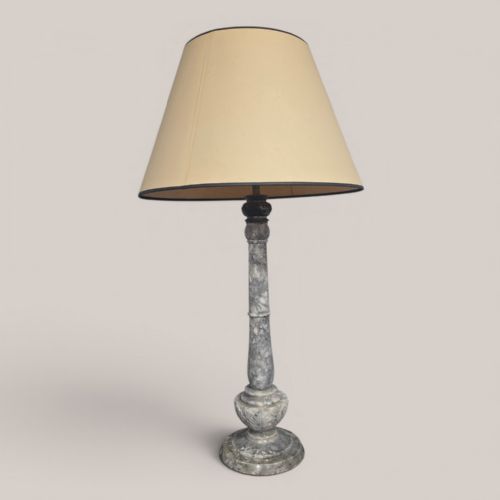
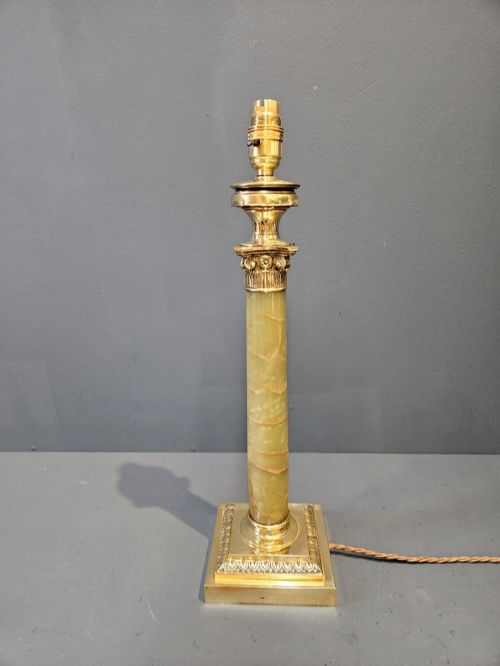
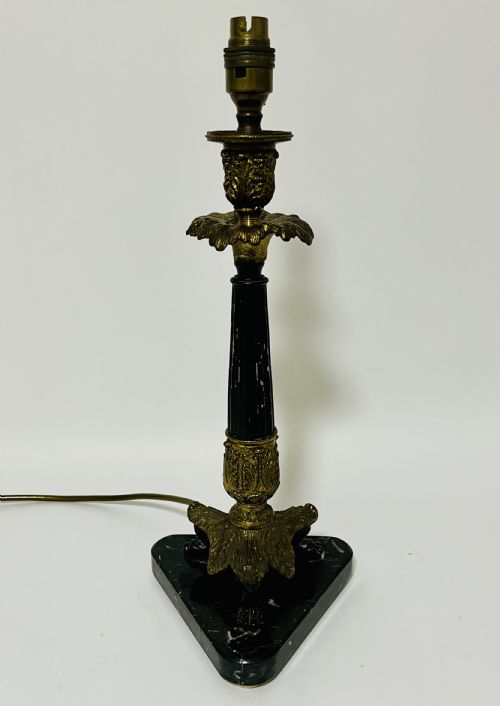


Antique Marble Column Lamp
An antique marble column lamp brings classical proportion and solid mineral weight to a room.
Antique Marble Column Lamp
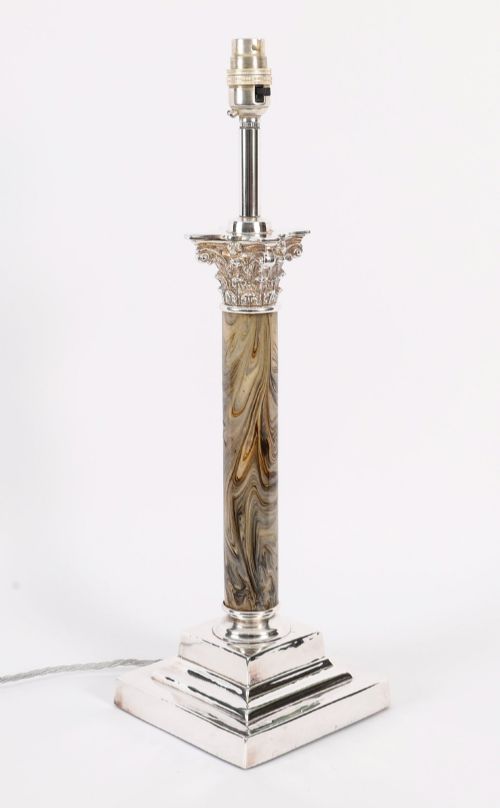
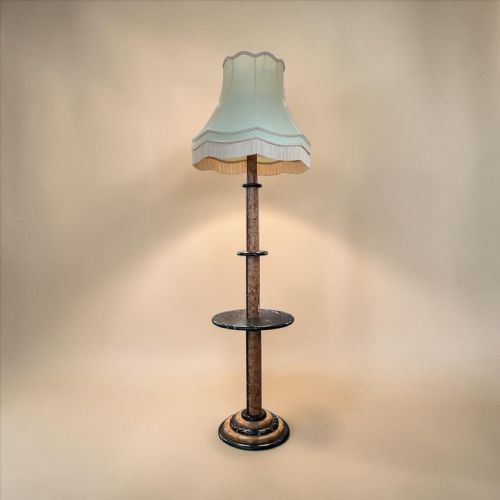
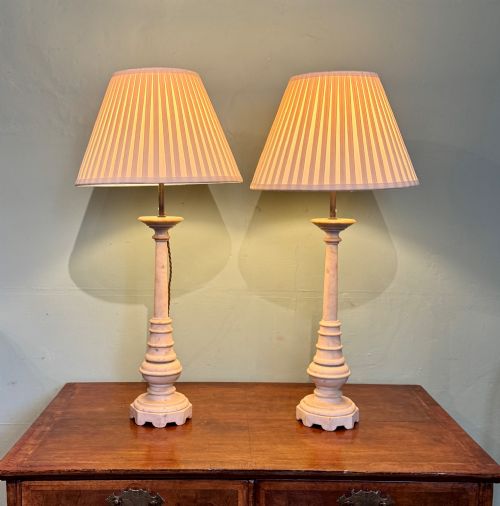
An antique marble column lamp takes its cue from classical architecture, translating stone shafts and capitals into functional domestic lighting. These pieces appear in forms ranging from table lamps to standard floor pieces, often drawing on Victorian and French Empire designs.
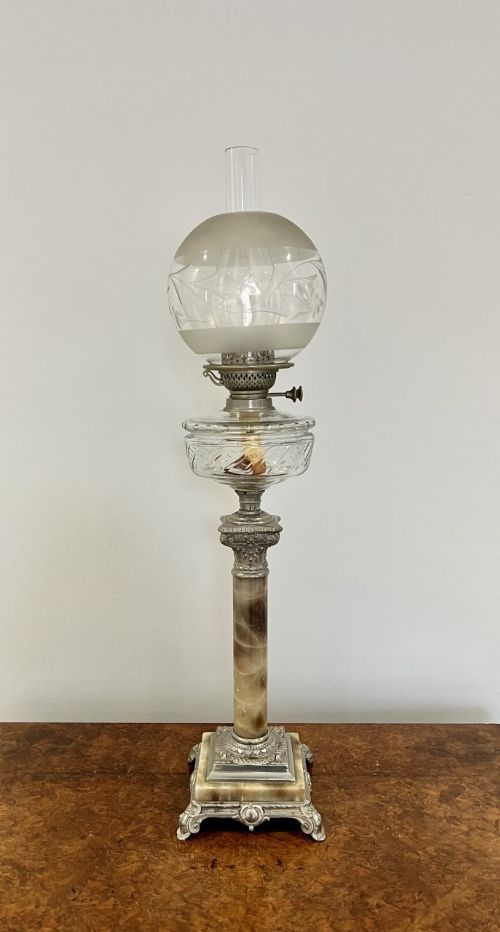
The materials span white and dark marbles, frequently paired with brass, ormolu, or bronze mounts, and occasionally complemented by onyx or alabaster. Many examples mirror the Corinthian order with detailed metal capitals atop the stone shafts.
Materials and construction methods
Makers turned solid blocks of marble and onyx on lathes to form smooth cylindrical or fluted columns, mounting them on square or stepped bases. Metal components such as brass, bronze, and gilt ormolu were cast and chased separately before being fitted to the stone.
Wiring and electrical fittings represent later adaptations, as these objects originated primarily as oil lamps, candlesticks, or decorative pedestals before conversion for modern bulbs.
Several heavy stone columns began their domestic careers holding up dining room oil lamps before trading wicks for wire.
Factors influencing distinction
Quality rests in the crispness of the cast metal mounts and the density and grain of the chosen stone. Finer examples display sharp acanthus leaves on Corinthian capitals and seamless joins between metal collars and marble shafts.
The presence of fire-gilt ormolu rather than simple plated brass elevates an individual piece, as does the integration of patinated bronze alongside carved stone.
The Antique Marble Column Lamp Glossary
- Corinthian column
- A classical architectural column style featuring an ornate capital decorated with carved acanthus leaves. This form appears frequently on columnar lighting from the nineteenth and twentieth centuries.
- Ormolu
- Finely ground high-carat gold applied to a bronze base using a mercury amalgamation technique. It provides a rich, warm metallic contrast to cold stone.
- Guéridon
- A small occasional table supported by a central column or figures. Certain examples share the circular stone tops and columnar supports seen in lighting pieces.
- Toleware
- Painted or enamelled sheet metal used for shades and bodies on specific Empire style designs. It introduces a matte dark contrast against polished marble.
Antique Marble Column Lamp: Frequently Asked Questions
How do I date a marble lamp?
Dating relies on the combination of materials, the style of the metal mounts, and the construction techniques visible in the base and core. Victorian and nineteenth century pieces often show heavier bronze casting and hand-cut threads.
Twentieth century examples from the 1920s and 1930s introduce simpler lines and altered wiring channels. Examining the underside and the joinery helps distinguish period originals from later interpretations.
Were these originally made as lamps?
Many column lamps started life as oil lamps, heavy candlesticks, or decorative pedestals before conversion to electricity. The hollow core required for modern wiring sometimes accommodates the original burner fittings or oil fonts.
This adaptive history means components may span different decades, reflecting domestic changes as households abandoned oil lighting for electric power.
How do I care for marble and ormolu?
Marble requires gentle dusting with a dry microfibre cloth to protect the polished surface from abrasion. Moisture and acidic cleaners damage both the stone and the delicate surface of ormolu mounts.
Metal components benefit from light dusting without commercial polishes, which can strip historic gilding and leave residues in the crevices of cast ornament.
What styles influence these designs?
Neoclassical Revival and French Empire aesthetics dominate these pieces, drawing directly from ancient Greek and Roman architectural vocabulary. Empire style incorporates martial motifs, patinated bronze, and gilded mounts.
Victorian interpretations often favour ornate Corinthian capitals in silver plate or brass, combining classical motifs with heavy domestic proportions.