





Brass Mounted Wheel
These brass mounted wheel pieces span nautical instruments, gaming equipment and heavy chests, offering robust timber construction paired with bright metal fittings for practical display.
Brass Mounted Wheel
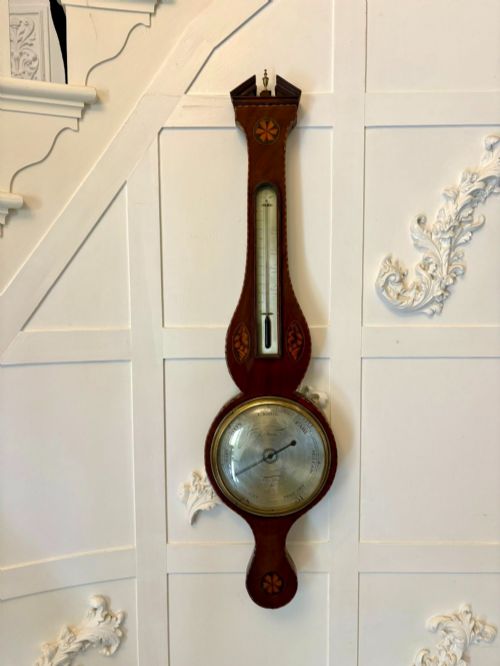
When searching for a brass mounted wheel, a buyer encounters a diverse group of items incorporating heavy wooden frames and rotating mechanisms, spanning nautical instruments, gaming equipment and functional furniture. The selection includes marine ship wheels alongside mercurial barometers and marriage chests mounted on wooden wheels.
Maritime pieces dominate the selection, ranging from large nineteenth-century ship wheels in untouched condition to domestic barometers featuring brass mountings. These items reflect both functional maritime use and nineteenth-century decorative arts, utilising dense timbers like teak, mahogany and rosewood.
Construction and materials
Construction relies upon durable timbers such as teak, mahogany, satinwood and rosewood, selected for structural strength in large items like marriage chests and ship wheels. These woods provide the solid foundation required for load-bearing wheels and intricate barometer cases.
Brass mountings, silvered metal dials and bone details provide functional reinforcement and decorative contrast against the dark hardwoods. Makers incorporated these metal elements to secure joints, frame dials and protect high-wear contact points on maritime and gaming objects.
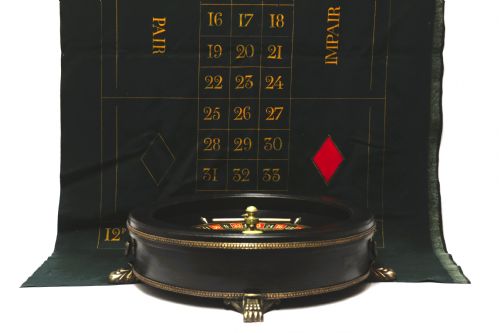
A nineteenth-century roulette wheel arrives ready for play with its original felt table cloth intact.
Assessing quality and finish
Quality rests upon the preservation of original components, such as untouched timber surfaces, early felt tabletops and maker-signed barometer faces. Objects retaining their original mechanical elements and untouched patina command greater interest than heavily restored examples.
Fagioli of Clerkenwell London·Giana Shrewsbury·George Dollond of London
The Brass Mounted Wheel Glossary
- Banjo barometer
- A household weather glass housed in a curved wooden case resembling a banjo, typically featuring a dial at the base and a thermometer above. This form became popular during the Georgian and Victorian periods.
- Mercurial barometer
- An instrument that measures atmospheric pressure using a column of liquid mercury contained within a glass tube. These scientific instruments often featured brass mountings and engraved silvered metal scales.
- Ship's wheel
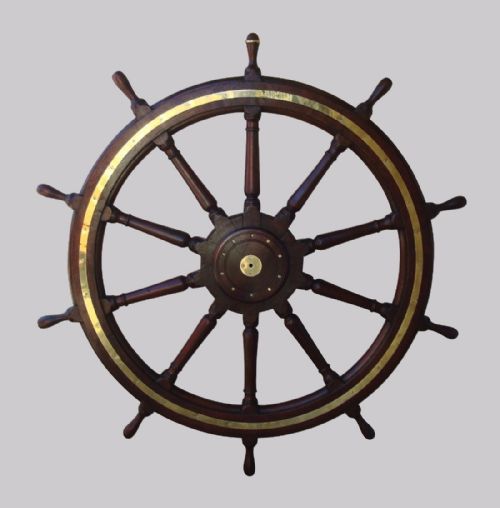
- A large wooden steering wheel fitted with radial spokes and a central brass hub, operated on maritime vessels. Surviving examples often show substantial scale and heavy timber construction.
- Roulette wheel
- A gaming device consisting of a revolving disc and a stationary bowl used for wagering. Antique examples frequently retain original components including the felt table cloth.
Brass Mounted Wheel: Frequently Asked Questions
What is a wheel barometer?
A wheel barometer is a domestic weather glass that uses a mechanical pulley system to translate mercury column movements onto a circular dial. These instruments combine scientific utility with decorative cabinetry.
They typically date from the Georgian and Victorian eras, housed in polished mahogany or rosewood frames adorned with brass bezels.
How old are these ship wheels?
The ship wheels listed here generally date from the nineteenth century, reflecting the height of the age of sail. Large examples often display heavy teak construction and patinated surfaces from maritime service.
Their age is determined by timber type, construction methods, and the style of the central brass and iron mountings.
Where were mercurial barometers made?
Many mercurial barometers were produced in London by specialised instrument makers and optical firms. Workshops often signed their brass dials directly to record their trade.
Towns outside the capital also produced regional examples through local clockmakers and opticians.
How do I care for antique teak?
Antique teak requires minimal intervention, benefiting from occasional dusting with a dry cloth and protection from direct sunlight and extreme humidity. Preserving the dry, untouched surface maintains the historic character of the wood.
Avoid applying modern oils or silicone-based polishes that can alter the natural tone of the nineteenth-century timber.