


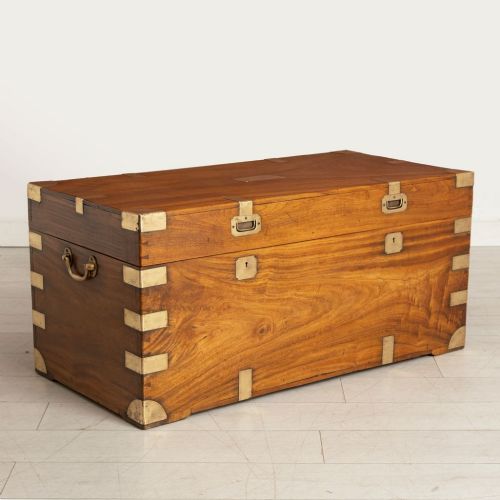
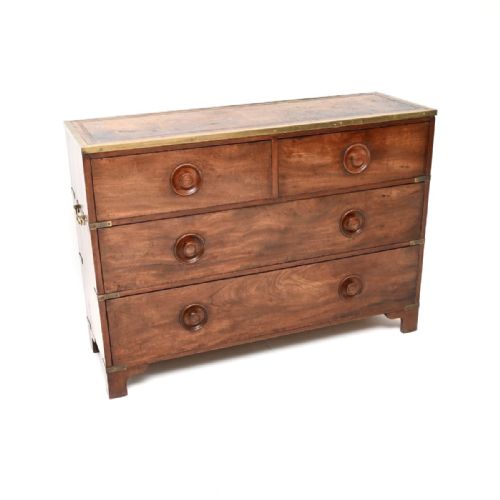
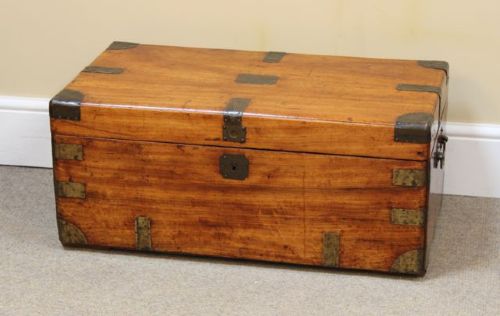
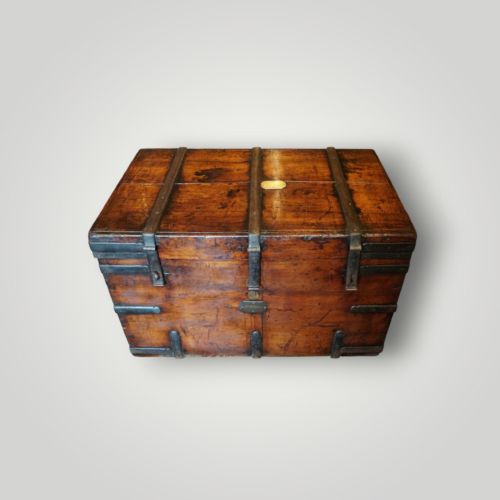
Brass Military Chest
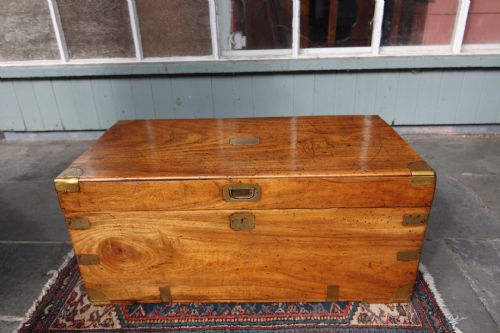
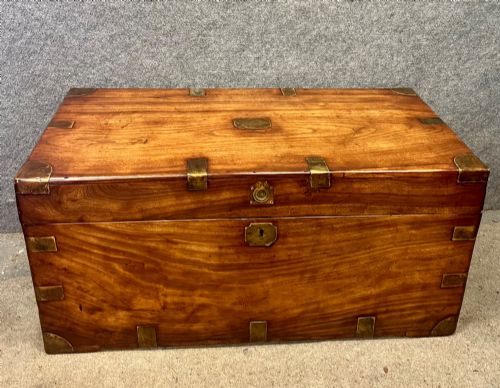
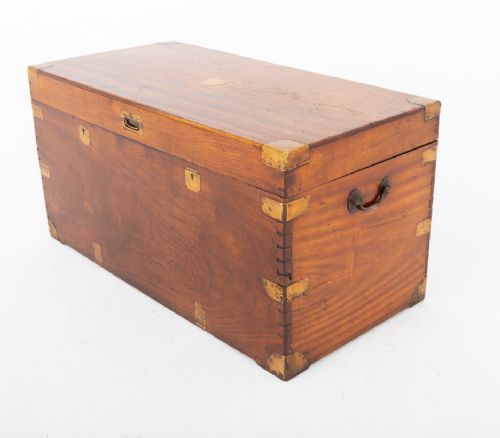
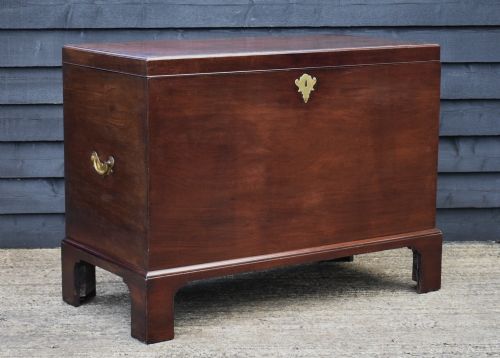
A brass military chest offers robust modular storage designed for travel, combining functional metal corner plates with dense timbers like mahogany and camphor wood.
Brass Military Chest
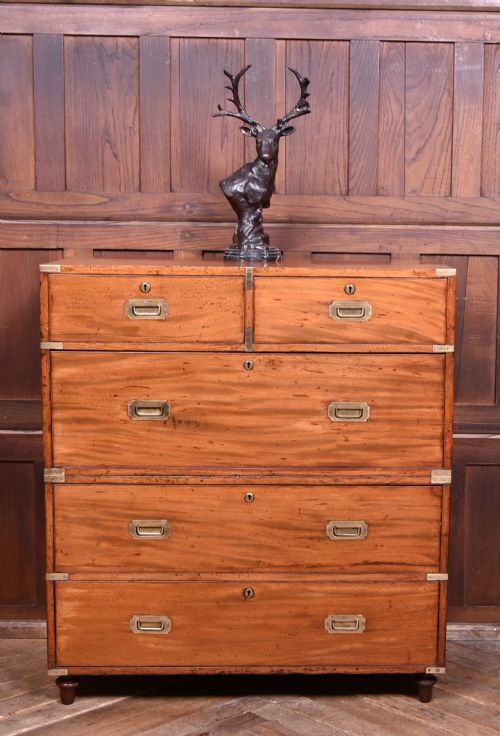
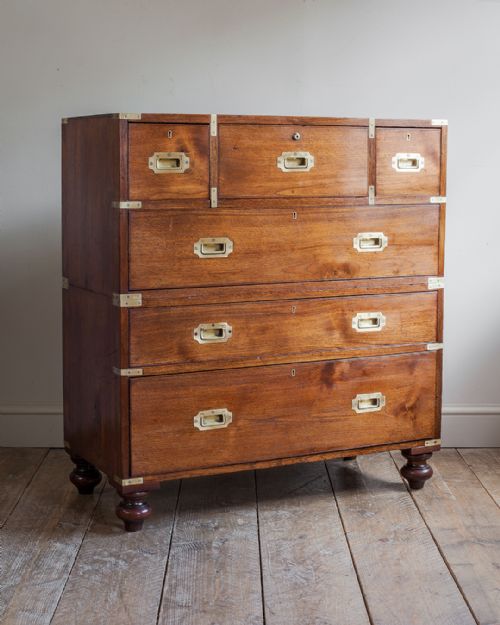
A brass military chest is typically encountered as a two-part chest of drawers built to travel with officers on campaign during the Georgian and Victorian periods. The pieces appearing on this page span the eighteenth, nineteenth, and early twentieth centuries, reflecting the ongoing need for sturdy transportable furniture.
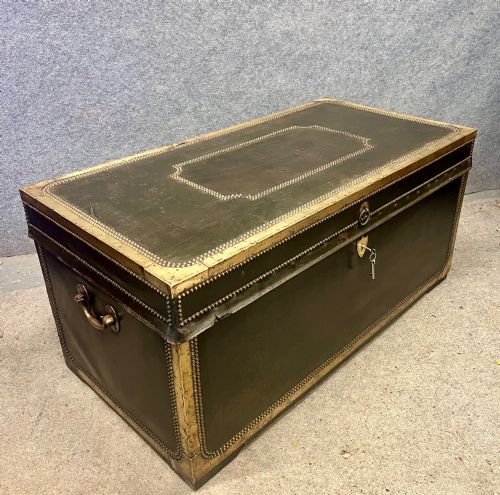
The most common formats include chest of drawers split into upper and lower sections, alongside camphor wood trunks, secretaire desks, and side cabinets. These items display styles ranging from plain campaign utility to elaborate Anglo-Indian craftsmanship.
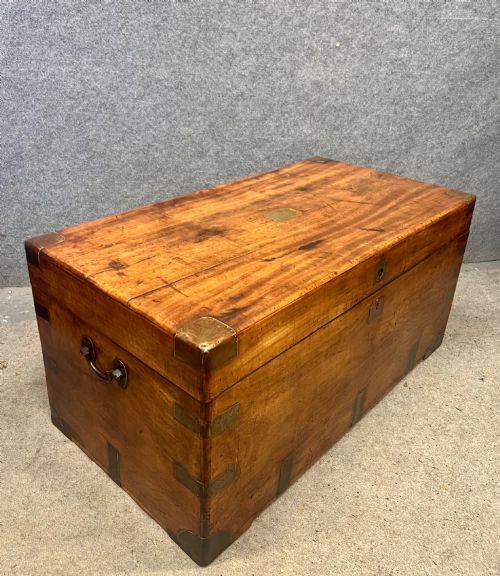
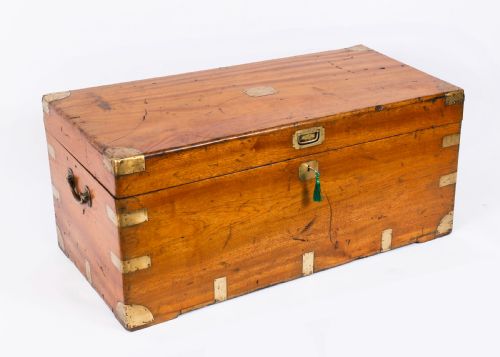
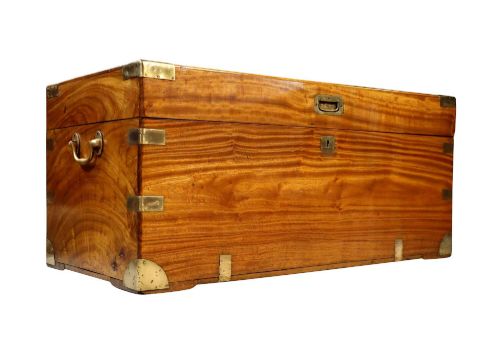
Makers utilised dense timbers that resisted warping in tropical climates, housing them in modular sections fitted with inset brass carrying handles and corner brackets to withstand rough transit.
Materials and Construction
Construction relies heavily on durable hardwoods such as mahogany, teak, and camphor wood, often paired with oak linings in the drawer interiors. These timbers provide the structural resilience necessary for frequent military relocations across distant territories.
Joints and edges are reinforced with brass plates, corners, and straps screwed securely into the wood to absorb impact during movement. Recessed brass drop handles sit flush against the drawer fronts, preventing damage and allowing multiple chests to stack tightly inside transport crates.
Listings feature woods including mahogany, camphor wood, teak, and walnut, paired with brass and iron reinforcement.
Assessing Quality
Quality rests in the precision of the joinery and the original integrity of the brass hardware. Superior examples maintain tight, flush-fitting inset handles and corners where the metalwork sits level with the surrounding timber rather than protruding.
The choice and figuring of the wood dictate the refinement of the piece, with choice cuts of burr walnut or richly grained mahogany marking out higher-status commissions over standard utility trunks.
S. W. Silver & Co. London & Liverpool·Army & Navy CSL
The Brass Military Chest Glossary
- Campaign chest
- A modular chest of drawers or trunk built in two separate stacking sections for ease of transport during military deployment. These pieces feature recessed handles and protective brass corners.
- Secretaire chest
- A form incorporating a fitted writing drawer that drops down to reveal small compartments and pigeonholes. It merges the storage of a standard chest with the utility of a desk.
- Brass bound
- The method of reinforcing cabinet edges and corners with strips of brass to prevent splitting during transit. This technique defines the visual style of military furniture.
- Camphor wood
- A fragrant tropical timber utilised for campaign trunks because its natural oils repel insects. It provides a lightweight yet tough alternative to traditional European hardwoods.
Brass Military Chest: Frequently Asked Questions
Why are these chests made in two parts?
The two-part construction allowed officers to divide a single tall chest into manageable modular units for loading onto pack animals, wagons, or ships. Each section sits securely on the one below via interlocking pins or brackets.
This design also made heavy furniture easier to transport through narrow corridors or rough terrain during military campaigns.
What is the difference between teak and camphor chests?
Teak chests offer immense density and water resistance, making them exceptionally heavy and durable for harsh climates. Camphor wood chests provide a lighter alternative with a distinct aromatic scent that naturally deters moths and insects.
Both timbers were selected specifically because they withstood humidity and rough handling without warping.
How do you use a military chest today?
These chests function effectively as bedside tables, living room storage, or statement chests of drawers in modern interiors. Their flat tops and sturdy construction accommodate lamps, books, or decorative objects easily.
The modular nature means the sections can sometimes be separated and used as distinct low cabinets depending on the room layout.
How can you tell an older campaign chest apart?
Earlier Georgian and Regency examples often feature hand-cut dovetailing, simpler brass strapwork, and secondary woods like oak or pine for internal framing. Victorian pieces frequently display heavier brass corner mounts and utilise exotic timbers like teak or camphor wood more consistently.
The specific style of the recessed brass hardware and the cut of the drawer linings offer further clues to the manufacturing decade.