



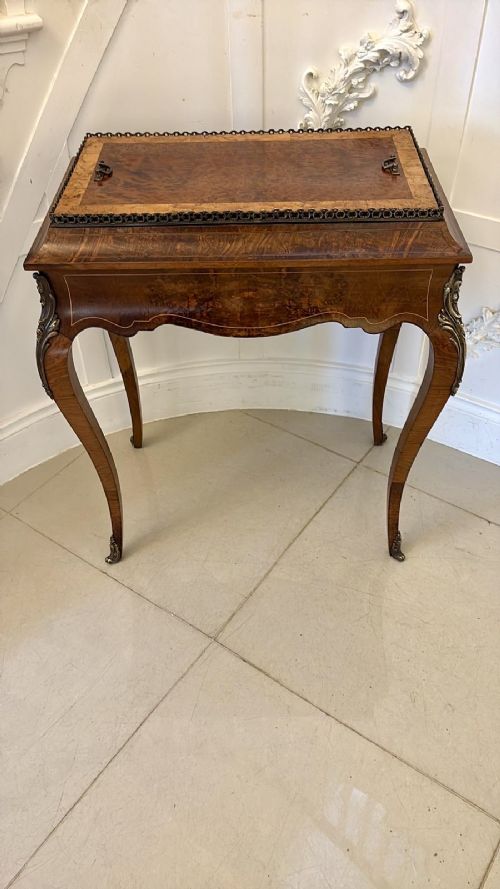


Brass Marquetry Plant Stand
These brass marquetry plant stands combine rich hardwoods and gleaming metalwork to elevate botanical displays in traditional interiors.
Brass Marquetry Plant Stand
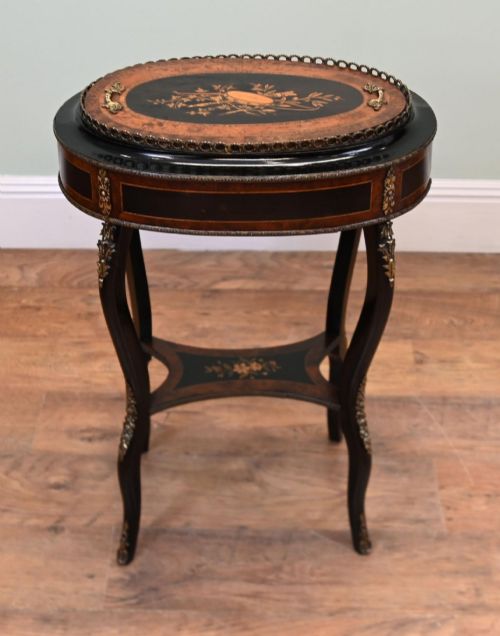
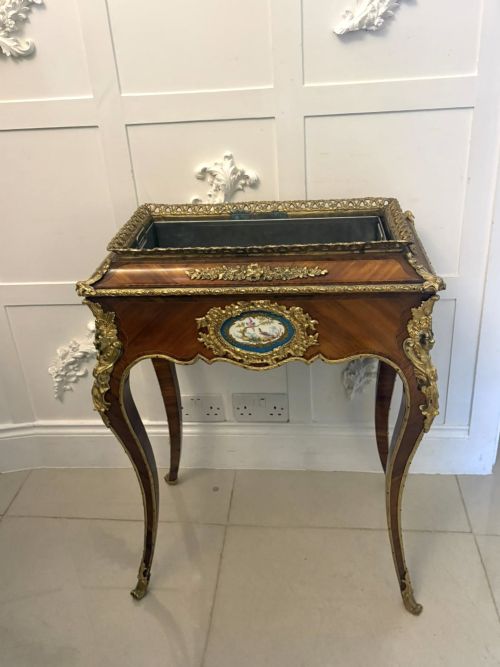
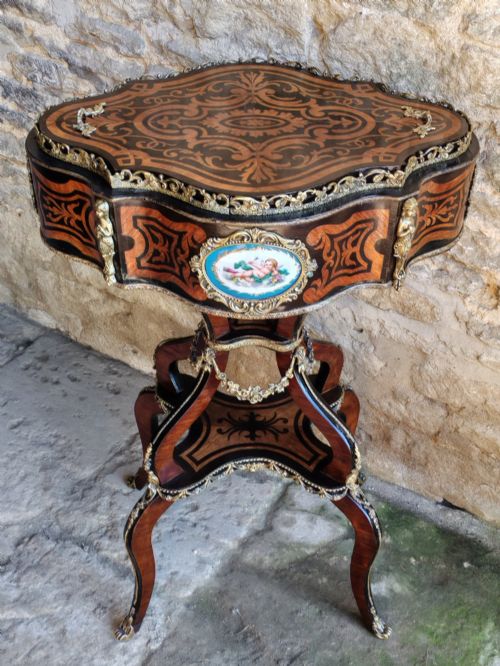
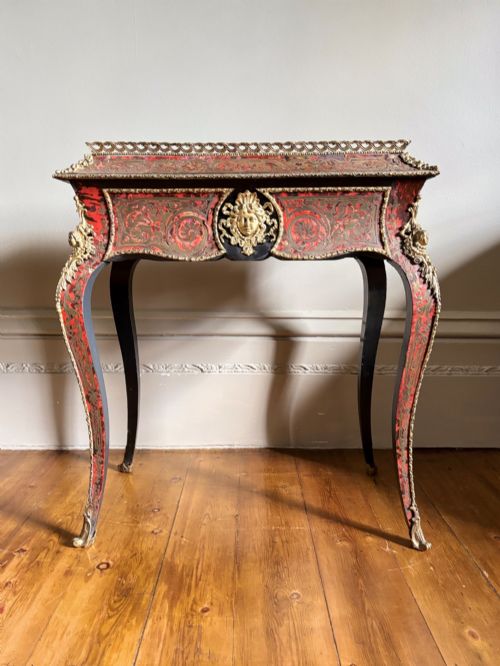
When you search for a brass marquetry plant stand, you encounter a specialised form of decorative furniture designed to hold plants or function as a wine cooler and occasional table. These pieces primarily date from the Victorian era and the nineteenth century, reflecting French Rococo Revival, Napoleon III, and Louis XV styles.
The selections on this page appear as jardinière tables, etageres, side tables, and multi-tiered display stands. Makers constructed these items from dark, figured timbers like walnut, rosewood, kingwood, mahogany, and ebonised wood, often incorporating brass or ormolu mounts to frame the floral and geometric inlays.
How they were made
Cabinetmakers built the foundational carcasses using dense hardwoods such as walnut, mahogany, and rosewood, frequently selecting burr veneers for decorative effect. They then routed precise recesses into the timber surfaces to receive delicate brass marquetry and metal stringing.
Gilt metal, ormolu mounts, and pierced brass galleries were cast and hand-chiseled before being secured to the edges and legs of the tables. Ebonised woods and satinwood were also utilised to provide contrast against the polished brass and rich grain of the primary timbers.
Brass Marquetry Plant Stand Retail Price Guide 2026
Typical asking prices for brass marquetry plant stand among the pieces listed under this phrase on Sellingantiques today, from the lower quarter to the upper quarter. They describe what is for sale here now, not the wider market.
These stands doubled as stealthy wine coolers, letting Victorian hosts disguise a bucket of ice as a tasteful botanical display.
What varies in quality
The standard of craftsmanship shows in the crispness of the brass engraving and the tightness of the marquetry joints within the timber surface. Superior examples maintain flush transitions between the metal inlay and the surrounding wood veneer without noticeable gaps or filler.
Refinement in quality also appears in the casting and hand-finishing of the ormolu mounts and pierced brass galleries. Finer pieces employ heavier gauges of brass and select highly figured burr walnut or kingwood for the primary surfaces.
Donald Ross
The Brass Marquetry Plant Stand Glossary
- Marquetry
- Decorative patterns formed by the insertion of pieces of wood, metal, or shell into a veneered surface. This technique allows for intricate floral and pictorial designs across table tops and tiers.
- Jardiniere
- An ornamental pot or stand designed for holding plants or flowers. In nineteenth-century furniture, these often feature waterproof liners or galleried tops to contain moisture.
- Ormolu
- Gilded bronze used for decorative mounts and feet on fine furniture. The technique involves applying a gold amalgam to cast bronze before heating.
- Etagere
- A piece of furniture consisting of a set of open shelves for displaying small objects. These multi-tiered stands often incorporate marquetry tops and brass galleries.
- Kingwood
- A dense, richly figured tropical timber prized by cabinetmakers for its dark violet-brown colour and contrasting golden streaks. It frequently appears in nineteenth-century French-style marquetry.
Brass Marquetry Plant Stand: Frequently Asked Questions
What is a brass marquetry plant stand?
A brass marquetry plant stand is an ornamental piece of nineteenth-century furniture designed to display potted plants or flowers indoors. These tables typically feature elaborate wooden inlays and decorative metal mounts.
Many examples also function as wine coolers or multi-tiered occasional tables. Their decorative surfaces make them prominent focal points in period reception rooms.
How were these stands used historically?
Victorians used these stands to bring exotic potted plants inside their living spaces. The waterproof liners protected the polished timber tops from water damage during watering.
Beyond holding plants, the tables served as elegant surfaces for serving drinks or displaying decorative ornaments. Their versatile forms allowed them to double as side tables and wine coolers.
How do I care for antique marquetry furniture?
Protect antique marquetry by keeping it away from direct sunlight and sudden changes in room temperature. Excessive heat can dry out the timber and cause the delicate brass inlay to lift.
Apply a quality microcrystalline wax sparingly to nourish the wood and maintain the shine of the brass elements. Avoid using liquid polishes or abrasive cloths that might damage the aged surface.
How can I tell a French style stand from a Victorian one?
Stands influenced by French design often display overt Louis XV or Napoleon III characteristics such as cabriole legs and elaborate ormolu mounts. They frequently employ Boulle work or intricate floral marquetry on walnut and ebonised carcasses.
Victorian pieces made in Britain tend to feature slightly more restrained forms while still adopting continental revival styles. The choice of timbers, such as native mahogany or imported kingwood, also offers clues to the origin.