

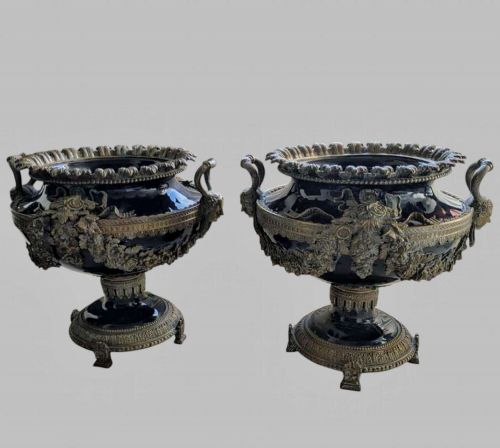
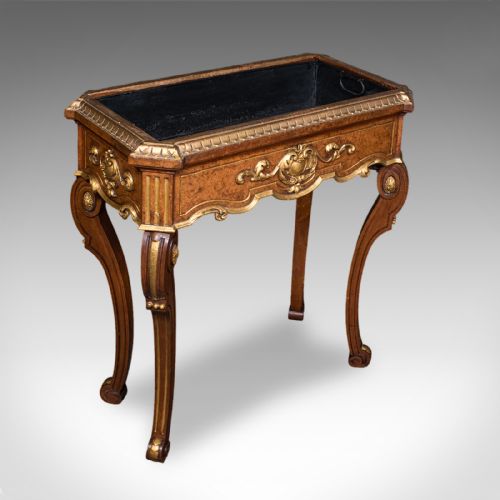
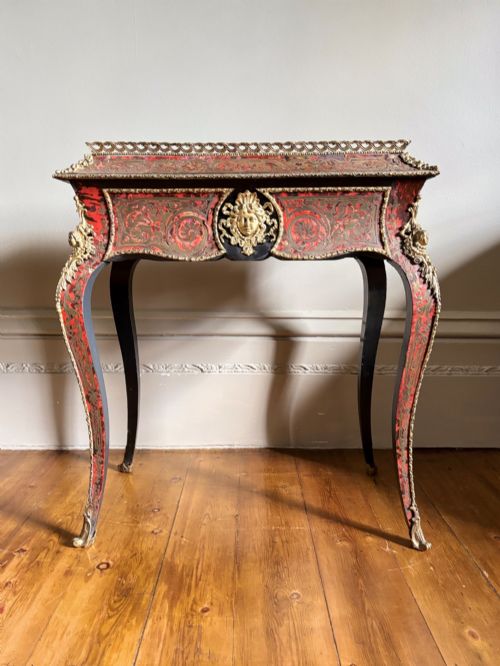


Nineteenth Century French Jardiniere
A nineteenth century french jardiniere brings sculptural planting inside through brass, ormolu, walnut, and marble.
Nineteenth Century French Jardiniere
A nineteenth century french jardiniere functions primarily as an indoor plant stand or centrepiece table designed to display greenery within domestic interiors. These decorative vessels appear frequently in forms such as jardiniere tables, plant stands, side tables, and pedestals.
Buyers meeting this search phrase encounter pieces predominantly dated to the nineteenth century, alongside occasional Regency, Victorian, and eighteenth century examples. Styles range from Napoleon III and French Empire to French Rococo Revival and Louis XV style.
The objects combine horticulture and furniture design, often integrating a metal liner or bowl within a wooden or cast frame. Walnut, mahogany, kingwood, ebonised wood, and marble feature prominently across these decorative forms.
Materials and construction
Cabinetmakers utilised hardwoods including walnut, mahogany, and kingwood as foundations for marquetry inlay and parquetry patterns. Metal mounts in brass, ormolu, gilt metal, and silvered bronze were cast and applied to accentuate the structural lines.
Marble inserts provided durable, moisture-resistant surfaces for holding plants, while cast iron and brass supplied structural support for heavier stands. Marquetry and inlaid veneers demonstrate complex decorative techniques employed by period workshops.
Nineteenth Century French Jardiniere Retail Price Guide 2026
Typical asking prices for nineteenth century french jardiniere among the pieces listed under this phrase on Sellingantiques today, from the lower quarter to the upper quarter. They describe what is for sale here now, not the wider market.
Some nineteenth century stands doubled as decanter caddies, proving that Victorians found plants and port equally essential.
Distinctions in quality
The refinement of the cast metal mounts and the precision of the marquetry inlay separate standard production from finer work. Superior examples display crisp chasing on ormolu mounts and tightly fitted marble or metal liners.
The choice of dense timbers such as kingwood and walnut, combined with balanced proportions in the stand or table frame, denotes higher execution standards. Secondary woods and simpler joinery characterise more utilitarian domestic pieces.
The Nineteenth Century French Jardiniere Glossary
- Jardiniere
- An ornamental pot or stand designed for holding plants or flowers. These vessels often sit atop dedicated tables or pedestals.
- Ormolu
- Gilt bronze ornamentation applied to furniture and decorative objects. This technique involves coating bronze with a gold amalgam.
- Marquetry
- Decorative veneer work forming pictures or patterns using various woods. Craftsmen cut thin pieces of timber to fit exact geometric or floral designs.
- Parquetry
- Geometric mosaic woodwork used for flooring and furniture surfaces. The technique arranges small blocks of wood into repeating patterns.
- Boulle
- Marquetry style utilising tortoiseshell and brass inlay. This method originates from French cabinetmaking traditions of the seventeenth and nineteenth centuries.
Nineteenth Century French Jardiniere: Frequently Asked Questions
What is a nineteenth century french jardiniere used for?
These pieces served as indoor plant stands, centrepieces, or decorative side tables in period drawing rooms and parlours.
They allowed homeowners to display potted plants and floral arrangements safely upon finished wood surfaces.
How do I identify a Napoleon III jardiniere?
Napoleon III pieces often incorporate rich veneers like kingwood and walnut alongside heavy gilt metal or ormolu mounts.
Many examples from this era also feature Boulle work or elaborate marquetry inlay.
Are these jardiniere stands waterproof?
Most pieces include a removable metal liner or a marble top designed to catch water from potted plants.
Direct watering inside unlined wooden frames was avoided to protect the surrounding veneers.
Where should I place a jardiniere in my home?
Jardiniere tables and plant stands function well as freestanding centrepieces or side tables in living spaces.
Their decorative metal mounts and inlaid tops suit placement where light catches the surface details.