







Brass Lattice Bookcase
A brass lattice bookcase brings architectural definition to a room, offering refined shelving through open frames and glazed or wired cabinet doors.
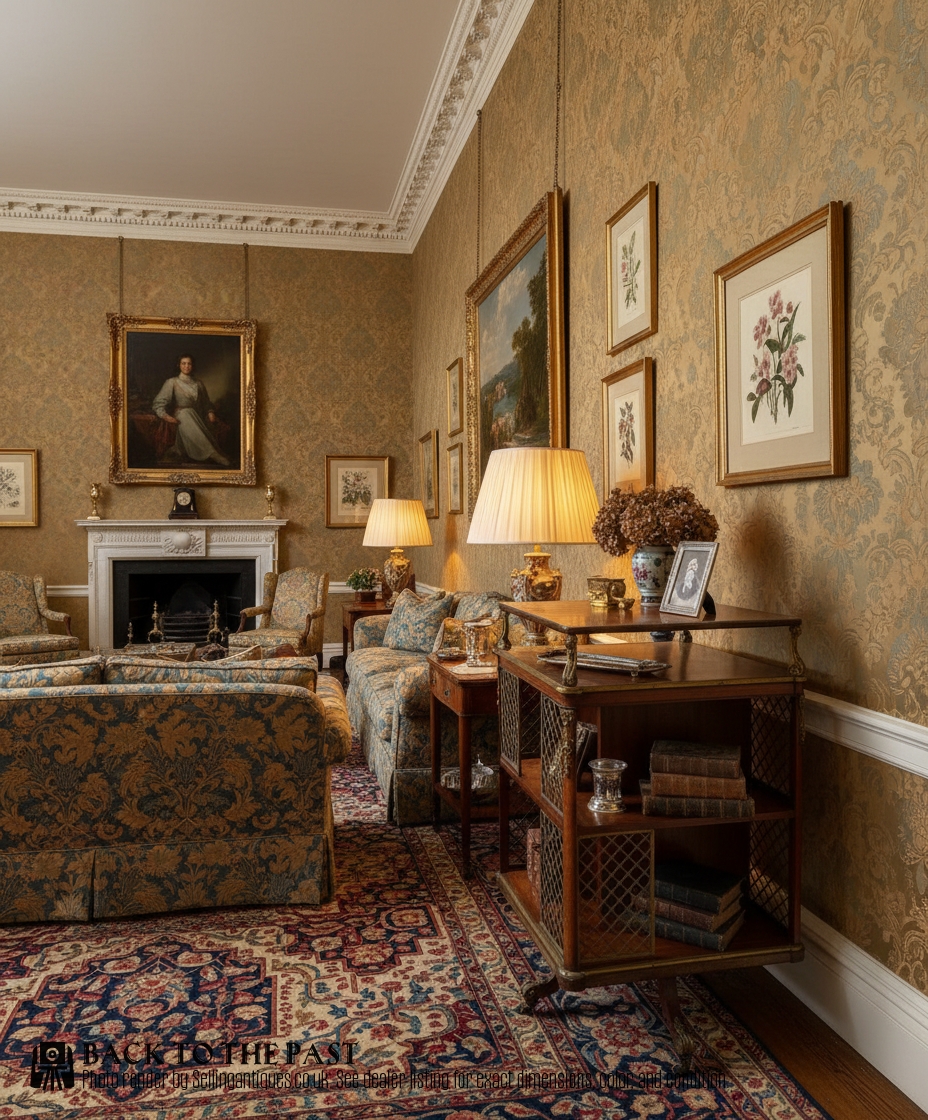
Brass Lattice Bookcase
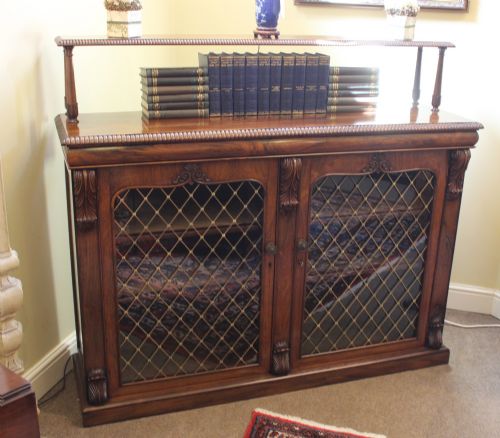
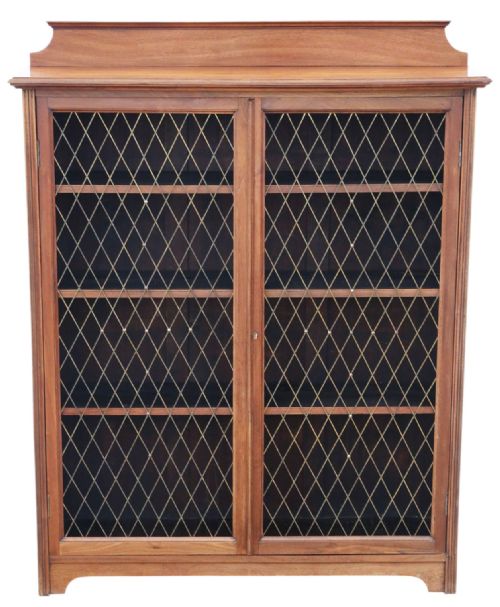
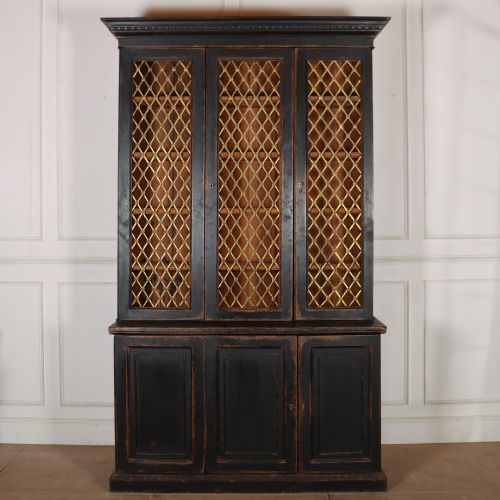
Buyers seeking a brass lattice bookcase encounter a selection spanning the Regency, Victorian, Edwardian, and William IV periods, alongside later twentieth-century interpretations. These items function primarily as bookcases, side cabinets, and display units, often combining open shelving with enclosed storage behind glass or wirework.
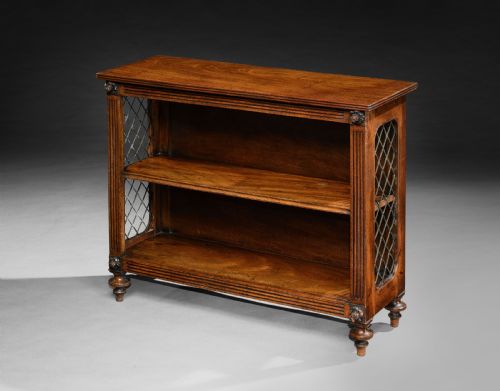
The prevailing form on this page is the low or dwarf bookcase in mahogany, rosewood, walnut, and pollard oak. Pieces frequently incorporate side cabinets, chiffoniers, and breakfront designs that reflect Regency and Victorian sensibilities.
Origins range from formal English cabinet-making to Scottish workshops and French-influenced designs featuring ormolu mounts and exotic timbers like kingwood and ebony.
Materials and construction
Cabinet-makers relied on dense native and imported hardwoods, selecting figured mahogany, rosewood, walnut, and pollard oak for their rich grain patterns and durability. Ebony and kingwood appear as contrasting stringing or primary veneers on finer pieces.
Metalwork forms a defining characteristic, utilising brass for structural lattice grilles, mounts, and adjustable shelf fittings. Glass panels and fabric linings often accompany the metalwork within door frames and display compartments.
Brass Lattice Bookcase Retail Price Guide 2026
Typical asking prices for brass lattice bookcase among the pieces listed under this phrase on Sellingantiques today, from the lower quarter to the upper quarter. They describe what is for sale here now, not the wider market.
One revolving bookcase spins smoothly on its axis, ready to settle a family dispute over which volume to read next.
Judging the work
Quality rests on the selection of timber veneers and the precision of the brass lattice integration into the door frames. Superior examples display seamless joins in exotic woods like pollard oak and ebony, while lesser pieces rely on simpler construction without contrasting stringing.
The refinement of the cabinet architecture separates standard production from exceptional pieces. Proportions, the integration of adjustable shelving, and the crispness of brass mounts dictate the standing of each cabinet.
The Brass Lattice Bookcase Glossary
- Regency
- A style and period spanning the late eighteenth and early nineteenth centuries, characterised by classical restraint and archaeological influence. Furniture from this era often incorporates rosewood and fine brass detailing.
- Dwarf bookcase
- A low open or glazed bookcase designed to sit beneath dado height. These pieces frequently double as side cabinets.
- Pollard oak
- Oak timber taken from pollarded trees, yielding a tightly clustered, knotted grain pattern prized by nineteenth-century cabinet-makers. It appears on select decorative furniture.
- Chiffonier
- A low sideboard or cabinet featuring enclosed shelving below, developed during the nineteenth century. They often incorporate fabric panels or brass lattice work.
- Ormolu
- Gilded bronze used for decorative mounts and furniture highlights. It is frequently paired with kingwood and exotic veneers on nineteenth-century pieces.
Brass Lattice Bookcase: Frequently Asked Questions
What is a brass lattice bookcase?
A brass lattice bookcase is a storage piece featuring open or enclosed shelving where doors are fitted with woven brass wire or metal grilles.
These cabinets typically date from the nineteenth century and combine practical book storage with visible display capabilities.
How do I date these cabinets?
Dating relies on timber selection, structural form, and secondary woods used in the interior carcase. Regency and William IV examples favor mahogany and rosewood with classical proportions.
Later Victorian and Edwardian pieces introduce alternative woods like walnut and heavier proportions or distinct revival styling.
Are the shelves adjustable?
Many nineteenth-century bookcases feature adjustable shelving systems utilising brass rack plates or wooden support strips.
This adaptability allows the storage of varying book heights and display objects within the same cabinet.
Where should I place one?
Low dwarf bookcases and side cabinets suit living rooms and libraries where wall space above requires pictures or mirrors.
Their reduced height preserves sightlines across a room while offering secure storage behind glass or lattice doors.