
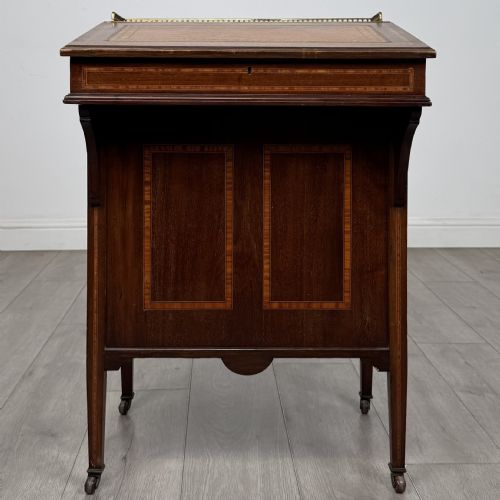
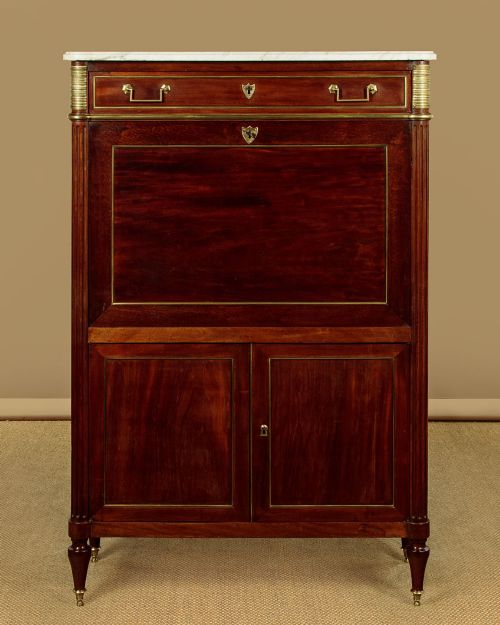

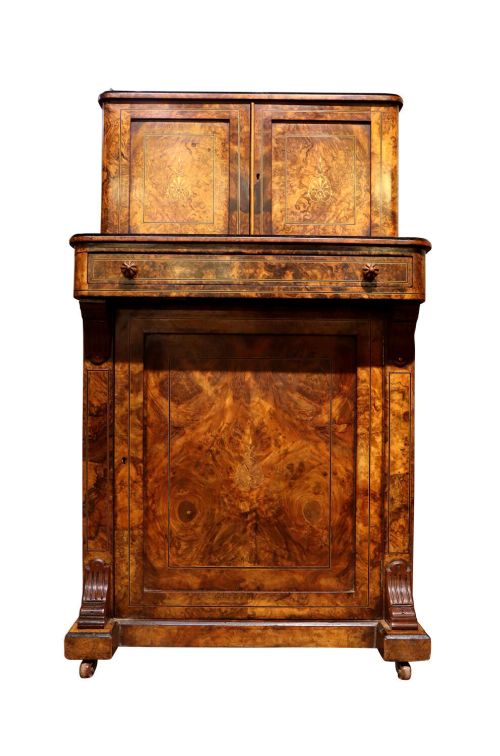
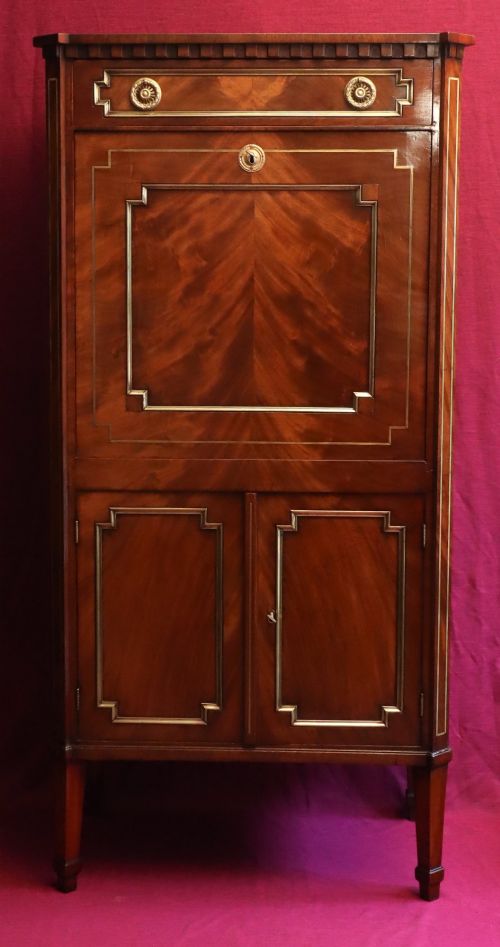
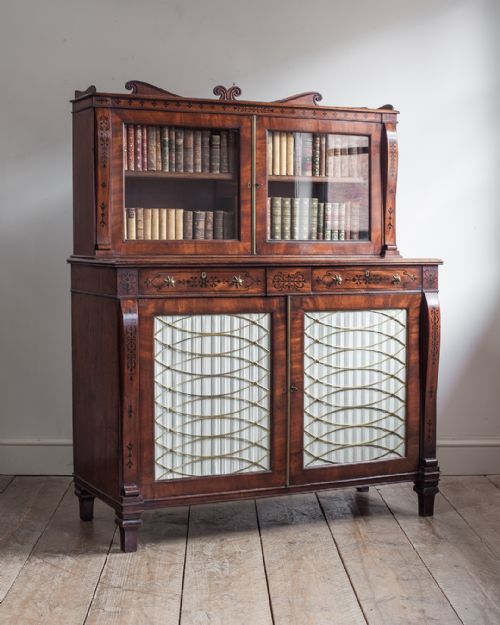


Brass Inlay Writing Cabinet
A brass inlay writing cabinet brings together fine cabinet timbers and precise metalwork to create a refined workspace.
Brass Inlay Writing Cabinet
A brass inlay writing cabinet combines a secure storage carcase with a dedicated writing surface, often taking the form of a secretaire cabinet, bureau de dame, or bonheur du jour. These pieces serve as elegant writing furniture designed for correspondence and the safekeeping of papers.
The selections span several distinct periods including the Regency, Georgian, and Victorian eras, alongside later nineteenth century revivals. Most examples rely on rich timber foundations shaped into distinct writing desks, chiffoniers, and bureau bookcases.
Buyers will encounter various formats ranging from compact ladies writing desks to larger bureau bookcase combinations. Each piece integrates decorative brass inlay to accent the grain of the underlying wood.
Materials and construction
Cabinetmakers constructed these pieces primarily using dense hardwoods such as mahogany and rosewood, frequently incorporating ebonised wood, satinwood, and burr walnut for contrast. Surfaces often feature intricate brass inlay set flush into the timber alongside occasional marquetry details.
Interior fittings frequently include leather writing surfaces and glass panel doors, paired with functional locking mechanisms and hidden compartments. The combination of cabinet timbers and precision metalwork defines the structural approach of the period.
Listings feature eighteenth and nineteenth century periods alongside Regency, Victorian, and Edwardian Sheraton Revival styles.
Markers of craftsmanship
Quality rests upon the precision of the brass inlay work and the selection of figured timber veneers such as rosewood and burr walnut. Finer examples display seamless integration of metal into wood alongside carefully chosen secondary timbers.
The complexity of the interior arrangement and the execution of associated carving or marquetry further separate standard production from superior cabinetmaking. Superior pieces maintain crisp detailing across both the exterior display surfaces and the concealed writing compartments.
Edwards & Roberts·John McClean
The Brass Inlay Writing Cabinet Glossary
- Secretaire abattant
- A tall writing cabinet featuring a drop-down front that reveals a fitted interior of small drawers and pigeonholes. This vertical format offers substantial storage while maintaining a compact footprint.
- Bonheur du jour
- A light ladies writing desk usually fitted with a small cabinet or shelving superstructure on top. The form gained popularity during the nineteenth century for use in private sitting rooms.
- Escritoire
- A traditional writing cabinet or desk equipped with drawers and a writing flap. The term often applies to upright furniture designed specifically for correspondence.
- Boulle
- A style of ornate marquetry incorporating brass and tortoiseshell inlay named after the famous French cabinetmaker. Pieces employing this technique display striking metallic contrast against dark ebonised carcases.
- Chiffonier
- A low cabinet featuring shelving or a drawer structure, sometimes adapted to include writing functions. These versatile pieces sit lower than standard bookcases.
Brass Inlay Writing Cabinet: Frequently Asked Questions
What is a brass inlay writing cabinet?
A brass inlay writing cabinet is a piece of antique furniture designed for correspondence that combines timber construction with decorative metallic inlay. These pieces typically feature enclosed writing surfaces and storage compartments.
They appear in various formats such as bonheur du jour cabinets, escritoires, and secretaire chiffoniers across nineteenth century styles.
How do I date a writing cabinet?
Dating relies on examining the secondary woods, construction techniques, and stylistic markers associated with periods like Regency and Victorian. The presence of specific revival styles or timber choices helps narrow the manufacturing window.
Comparing hardware, dovetailing, and veneer thickness against established historical benchmarks provides a reliable chronological guide.
Where were these cabinets used?
These cabinets served primarily in private libraries, drawing rooms, and boudoirs as personal writing desks. Their enclosed compartments kept private papers secure.
They functioned both as decorative furniture and practical workstations for writing letters and managing household accounts.
How should I care for rosewood and mahogany?
Maintain these timbers by keeping them away from direct sunlight and maintaining stable room humidity. Gentle dusting with a dry cloth preserves the polished surface.
Avoid harsh chemical cleaners and periodically feed the wood with appropriate conservator wax to protect the grain and brass inlay.