
Brass Inlay Wooden Box
A brass inlay wooden box brings tactile warmth and precise metalwork together, offering a practical container for correspondence, tea, or keepsakes.
Brass Inlay Wooden Box
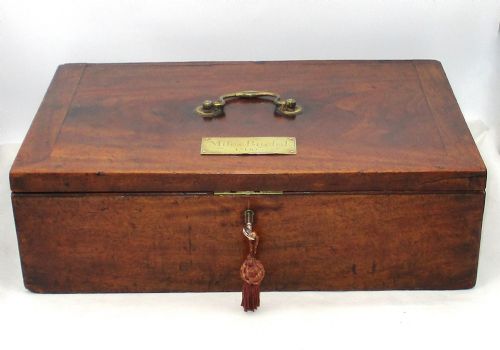
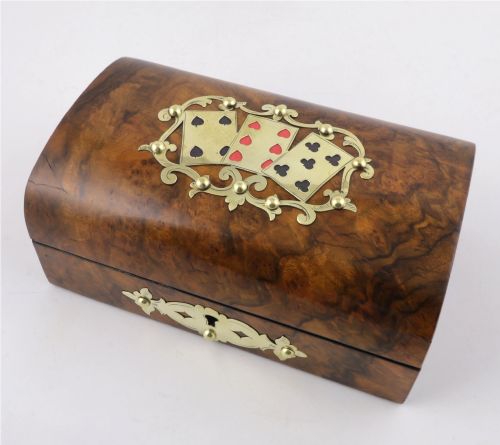
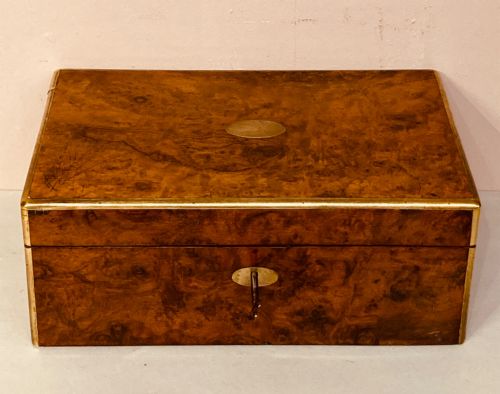
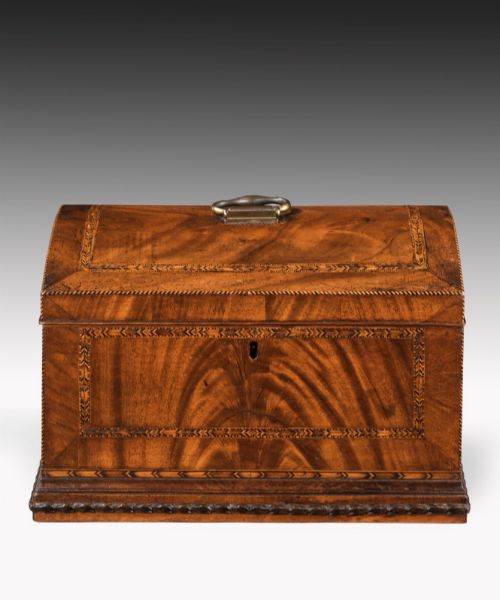
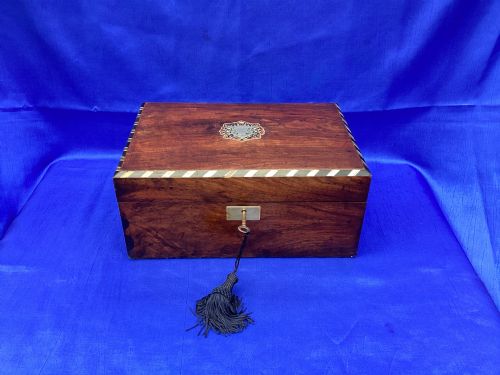
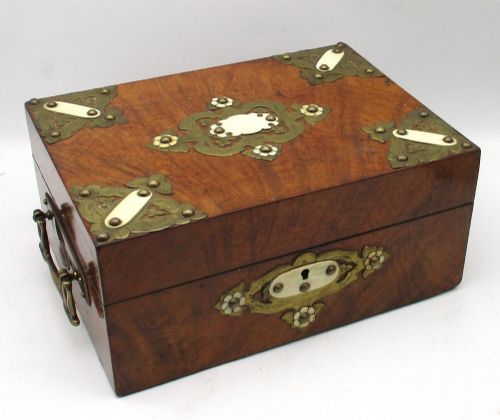
A brass inlay wooden box covers a broad selection of functional containers designed for desks, drawing rooms, and travel during the Georgian, Regency, and Victorian eras. These items include writing slopes, tea caddies, jewellery boxes, and document cases built to secure valuable possessions.
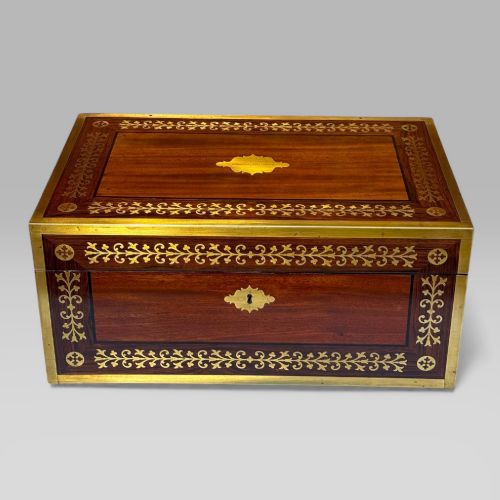
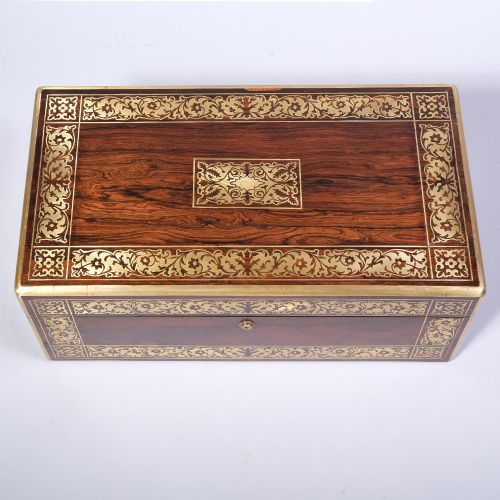
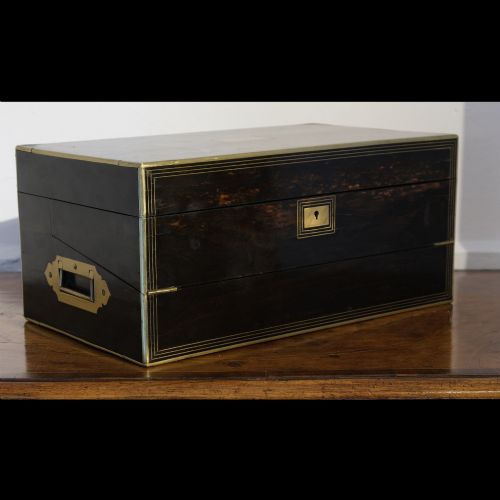
The version most commonly met on this page is the nineteenth-century writing slope or tea caddy, frequently fashioned from dense dark timbers and fitted with flush brass handles, corner brackets, and intricate stringing.
Pieces span the eighteenth through to the early twentieth centuries, encompassing English campaign styles, French Napoleon III designs, and later Arts and Crafts interpretations.
Materials and Technique
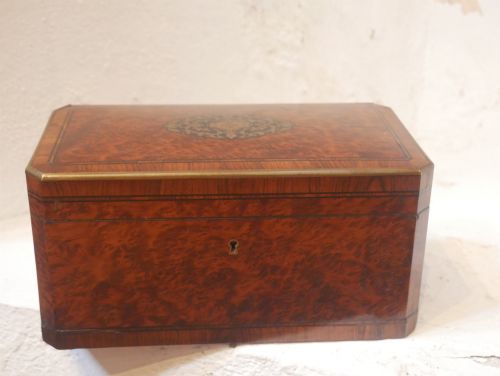
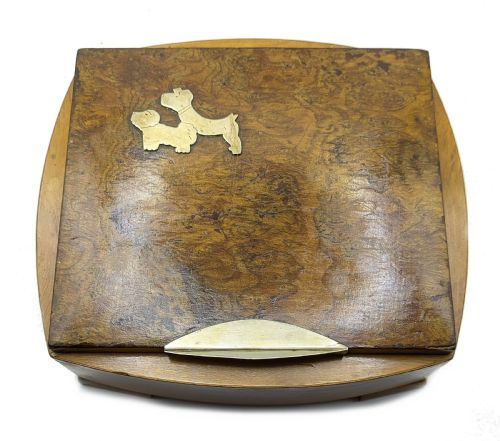
Cabinetmakers utilised rich hardwoods such as mahogany, rosewood, walnut, and coromandel as the primary substrate for these containers, often selecting burr veneers for decorative grain patterns.
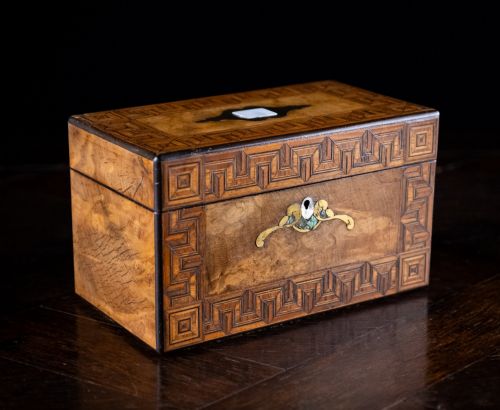
Brass was sawn, filed, and set flush into channels carved directly into the timber surface, frequently complemented by mother of pearl or boxwood elements to form geometric stringing and floral motifs.
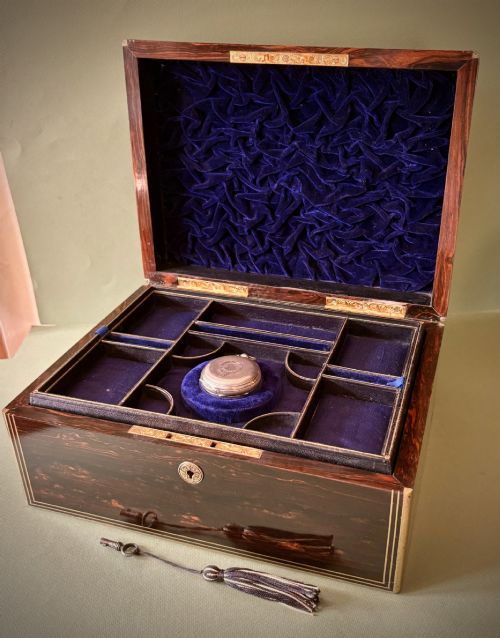
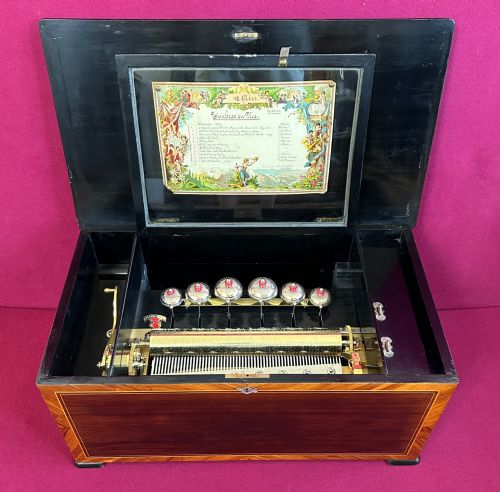
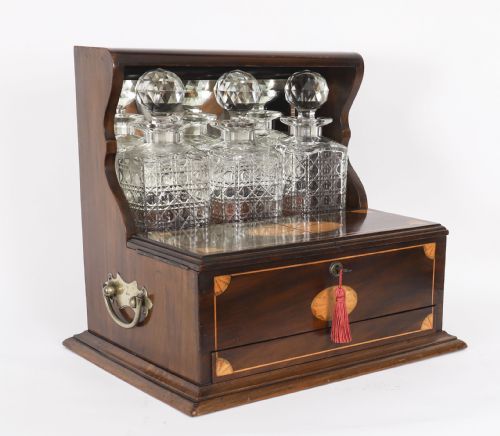
Interiors required precise joinery to accommodate fitted trays, secret compartments, glass decanters, or velvet and silk linings designed for specific domestic uses.
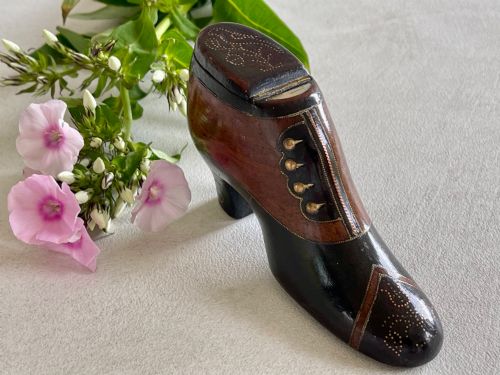
Among the small treen containers are carved wooden snuff shoes featuring double openings and tiny inlaid birds.
Standards of Craftsmanship
The distinction between tiers of production lies in the precision of the metal inlay and the selection of the timber grain, where tighter joinery and more ambitious brass cartouches separate standard workshop output from bespoke commissions.
Internal architecture dictates overall standard, with fully fitted compartments, original working locks bearing manufacturer stamps, and undamaged secondary timbers indicating higher original cost and superior execution.
Tahan Paris·Holtzapffel and Co·H Mitchell·Erhard and Sohne
The Brass Inlay Wooden Box Glossary
- Writing slope
- A portable desk hinged to open at an angle, providing a slanted leather-lined writing surface and internal storage for paper and inkwells.
- Tea caddy
- A container built to store loose tea leaves securely, frequently featuring internal lidded compartments and lockable lids to protect expensive commodities.
- Campaign box
- Furniture constructed for travel with recessed brass carrying handles, flush hinges, and reinforced corners to withstand frequent movement.
- Stringing
- Thin inlaid lines of contrasting timber or metal used to outline panels and geometric borders on cabinet furniture.
- Treen
- Small handmade wooden objects created for domestic use, encompassing items from snuff boxes to shoe-shaped containers.
Brass Inlay Wooden Box: Frequently Asked Questions
What is a brass inlay wooden box used for?
These containers served specific domestic and administrative functions, housing correspondence, writing implements, loose tea, jewellery, and gaming pieces.
Built for secure storage in the home or during travel, they kept valuable personal items organised and protected behind locked lids.
How do I identify a Regency brass inlaid box?
Regency examples typically employ dark rosewood or mahogany timbers combined with bold brass scrollwork, classical motifs, and robust brass lion mask handles or campaign hardware.
Proportions tend to be architectural and symmetrical, reflecting the neoclassical design preferences of the early nineteenth century.
Are the interiors usually original?
Many surviving pieces retain their fitted wooden trays, velvet or silk linings, and original glass inkwells or mixing bowls, though delicate fabric elements frequently show replacement.
Examining the secondary woods and lining paper inside secret compartments helps confirm whether the interior configuration remains intact.
How should I care for antique wood and brass?
Maintenance requires stable indoor humidity levels and protection from direct sunlight to prevent timber shrinkage and the loosening of delicate metal inlays.
Gentle dusting with a dry cloth preserves the patina, avoiding harsh modern polishes that can seep beneath flush brass stringing.