



Brass Inlay Tea Box
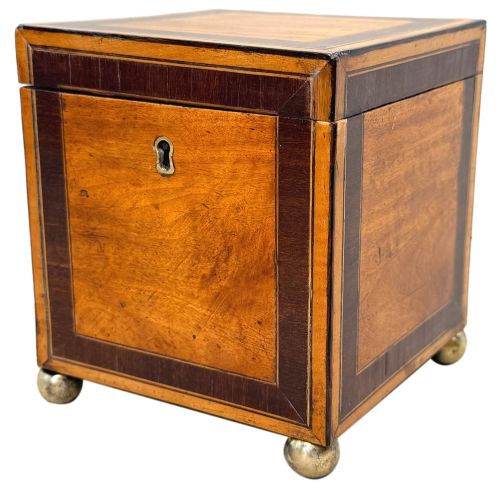
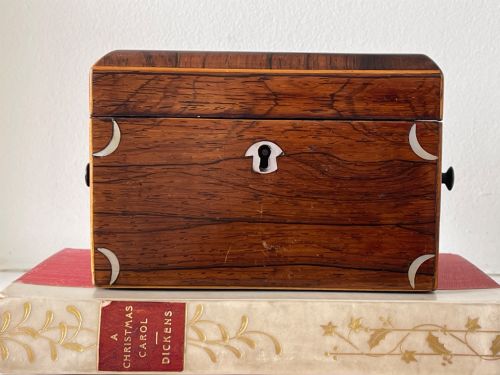
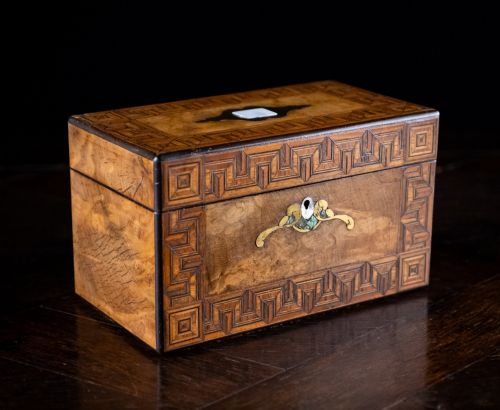
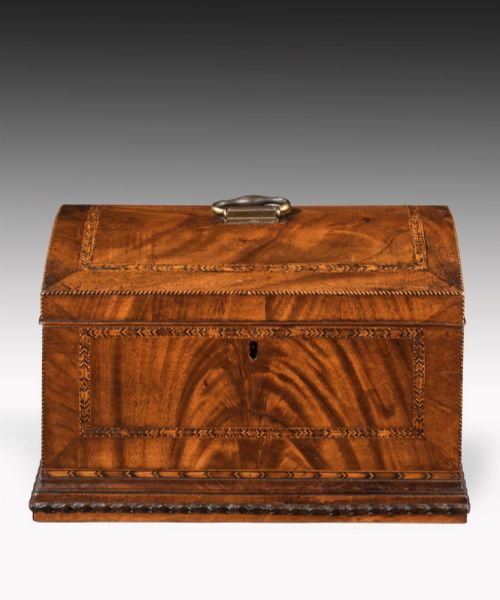
A brass inlay tea box is a timber chest designed to store dried leaves securely, offering refined brass decoration that appeals to collectors of period treen.
Brass Inlay Tea Box
The versions most frequently met on this page date from the Regency period, often constructed from dark exotic timbers and detailed with precise brass stringing or geometric motifs. Alongside traditional tea caddies, you also find related forms like sewing boxes sharing similar decorative traits.
Materials and Construction
Cabinet makers utilised dense hardwoods including rosewood, mahogany, walnut, and satinwood as the primary structural bodies for these boxes. Timber selection dictated the weight and colour of the piece, providing a dark contrasting background for metallic ornamentation.
Artisans embedded brass inlay, mother-of-pearl, and tortoiseshell directly into the timber surface to form classical borders, floral patterns, or complex boullework. Interior compartments frequently retained fitted wooden canisters, mixing bowls, or metal linings designed to protect the contents.
Brass Inlay Tea Box Retail Price Guide 2026
Typical asking prices for brass inlay tea box among the pieces listed under this phrase on Sellingantiques today, from the lower quarter to the upper quarter. They describe what is for sale here now, not the wider market.
Some nineteenth-century boxes include secret hidden drawers activated by tiny concealed wooden pins.
Distinctions in Quality
The precision and complexity of the metallic inlay separate standard examples from superior pieces, with fine lines and secure seating indicating skilled labour. The choice of carcass timber also matters, as figured rosewood, burr elm, and coromandel elevate the visual depth of the object.
Internal completeness significantly alters the standing of a box, particularly the presence of original internal canisters, functioning locks with keys, and intact mixing bowls. The crispness of carved mounts, such as lion mask handles or brass feet, marks the distinction between workshop grades.
The Brass Inlay Tea Box Glossary
- Tea caddy
- A box or chest designed for storing loose tea leaves. The term derives from the Malay word kati, a unit of weight.
- Teapoy
- A freestanding tea caddy mounted on a central pillar with a tripod or pedestal base. They often incorporate internal mixing bowls and storage compartments.
- Boullework
- A type of marquetry using brass and tortoiseshell inlaid in contrasting patterns. It appears on French and English pieces from the nineteenth century.
- Sarcophagus shape
- A box design featuring a steep, flared lid and a tapered body resembling a traditional stone coffin. This form became popular during the Regency period.
- Stringing
- A narrow strip of contrasting wood or metal inlaid flush into the surface of furniture. It creates delicate linear borders around panels and lids.
Brass Inlay Tea Box: Frequently Asked Questions
What is a brass inlay tea box?
A brass inlay tea box is a lidded timber container made to hold dried tea leaves securely under lock and key.
These pieces reflect the high status of tea in historic households, combining functional storage with decorative exterior craftsmanship.
How were these boxes used originally?
Households used these containers to store expensive black and green teas safely away from dampness and theft.
The mistress of the house kept the key herself, measuring out daily portions for the household using the internal compartments.
How do I date a Regency tea box?
Regency boxes often feature dark rosewood carcasses decorated with precise brass line inlay and sarcophagus or rectangular proportions.
Examining the construction methods, interior fittings, and secondary timbers helps confirm the early nineteenth-century timeline.
Can I use an antique tea box for modern storage?
These boxes function well for storing small personal items, jewellery, or keepsakes while maintaining their decorative presence on a table.
The original interior compartments and velvet-lined spaces accommodate modern trinkets just as effectively as historic items.