



Brown Rosewood Tea Chest
A brown rosewood tea chest is a substantial timber container designed for storing loose leaf tea during the Georgian, Regency, and Victorian eras.
Brown Rosewood Tea Chest
A brown rosewood tea chest is an enclosed wooden container made to preserve precious tea leaves in the drawing room. These items survive primarily from the Georgian, Regency, William IV, and Victorian periods.
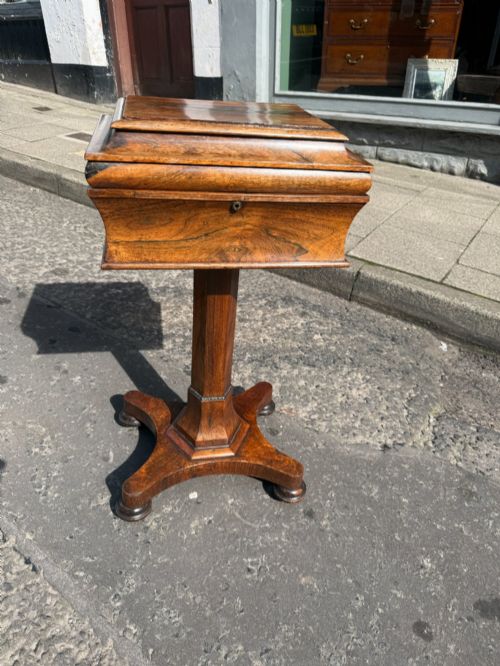
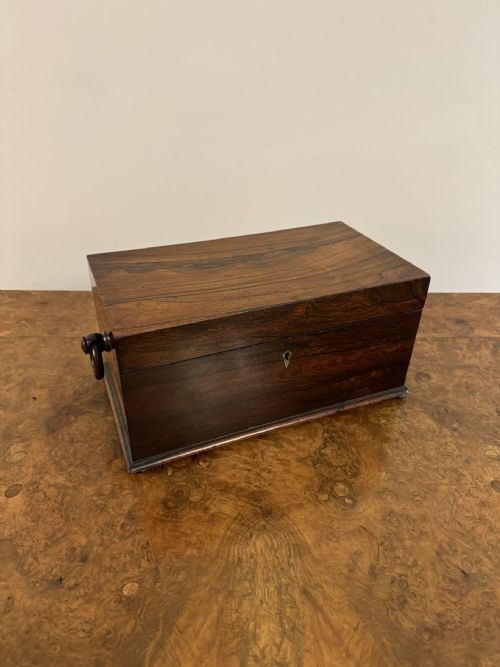
The versions most commonly met on this page take the form of sarcophagus shaped tea caddies, oblong tapered boxes, and domed top tea caddies. Some examples include larger freestanding teapoys designed to stand on the floor.
The search phrase brown rosewood tea chest encompasses both lidded table boxes and larger tea caddies produced in England across the nineteenth century.
How they were made
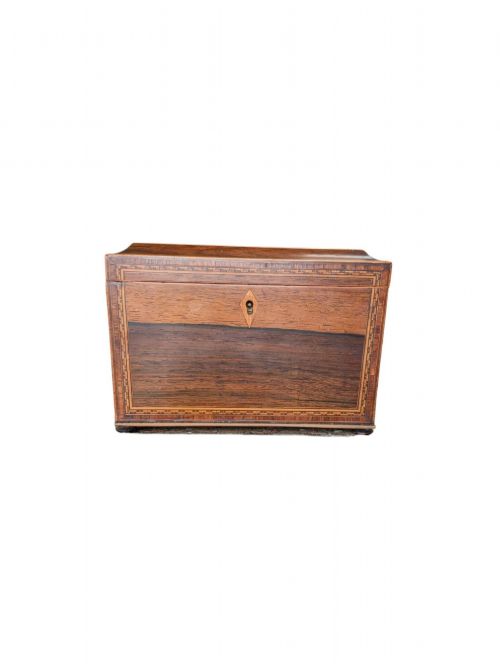
Cabinet makers constructed these pieces using solid or veneered rosewood timber, frequently incorporating brass, boxwood, bone, or mother-of-pearl for decorative inlay. Wood inlay and specialised Tunbridge Ware mosaic techniques appear across the surfaces of these chests.
Interior compartments often feature fitted lids and mixing bowls, utilising native woods for secondary framing elements and internal partitions.
Brown Rosewood Tea Chest Retail Price Guide 2026
Typical asking prices for brown rosewood tea chest among the pieces listed under this phrase on Sellingantiques today, from the lower quarter to the upper quarter. They describe what is for sale here now, not the wider market.
A tiny bone key once guarded the precious leaves inside.
What varies in quality
Quality depends upon the precision of the timber selection and the complexity of the decorative techniques applied to the exterior. Elaborate brass inlay, fine shell motifs, and detailed Tunbridge Ware micro-mosaic panels distinguish finer pieces from plain constructions.
The integrity of the internal fittings, such as original mixing bowls and matching internal tea canisters with lids, alters the standing of an individual piece within the range.
Henry Hollamby
The Brown Rosewood Tea Chest Glossary
- Tea caddy
- A small box or chest designed for storing tea leaves. The word derives from catty, a Chinese unit of weight.
- Teapoy
- A freestanding tea chest supported on a central pillar and pedestal base. It functions as a small table in the drawing room.
- Sarcophagus
- A monumental chest form with a sloping lid resembling an ancient stone coffin. Cabinet makers adopted this classical shape during the Regency and William IV periods.
- Tunbridge Ware
- Woodware decorated with mosaic patterns formed from thousands of tiny tinted wood blocks. This specialised craft centred on Tunbridge Wells in Kent.
- Loose leaf case
- An internal division or compartment within a tea chest intended to hold loose tea leaves securely.
Brown Rosewood Tea Chest: Frequently Asked Questions
What is a brown rosewood tea chest?
A brown rosewood tea chest is a timber box constructed to store and protect valuable tea leaves in nineteenth century homes. These containers sat upon tables or sideboards in the drawing room.
Cabinet makers utilised dense rosewood timbers, frequently embellishing the exteriors with brass inlay or delicate mosaic work. They remain collected today for their craftsmanship and material richness.
How were these tea chests used?
Households used these chests to keep expensive loose leaf tea secure under lock and key. The hostess prepared the brew in the drawing room using internal compartments and mixing bowls.
Tea was an expensive commodity during the Georgian and Victorian eras, making these locked containers a necessity in the home.
How do I date a rosewood tea caddy?
Dating relies upon observing the overall form, construction methods, and decorative styles. Regency and Georgian examples often feature sarcophagus silhouettes and bold brass stringing, whereas Victorian pieces incorporate varied inlay and domed profiles.
Comparing the internal layout and secondary timbers provides further clues to the period of manufacture.
What is Tunbridge Ware?
Tunbridge Ware describes wooden items decorated with intricate mosaic patterns made from tiny segments of naturally coloured woods. Craftsmen arranged these wooden blocks to create geometric or pictorial designs.
This decorative technique appears on the surface of specific nineteenth century tea caddies listed on this page.
How do I care for a rosewood tea chest?
Keep the timber away from direct sunlight and sudden temperature shifts to protect the rosewood veneer and internal linings. Maintaining a stable environment preserves the structure of the box.
Apply gentle dusting with a soft cloth and avoid chemical polishes that might damage the historic finish.