


Brass Inlaid Work Table
When you search for brass inlaid work table, you find pieces designed for needlework and small tasks that double as decorative centrepieces.
Brass Inlaid Work Table
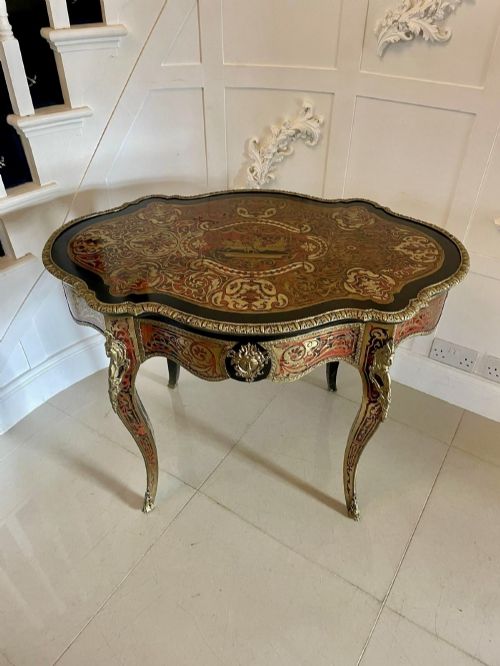
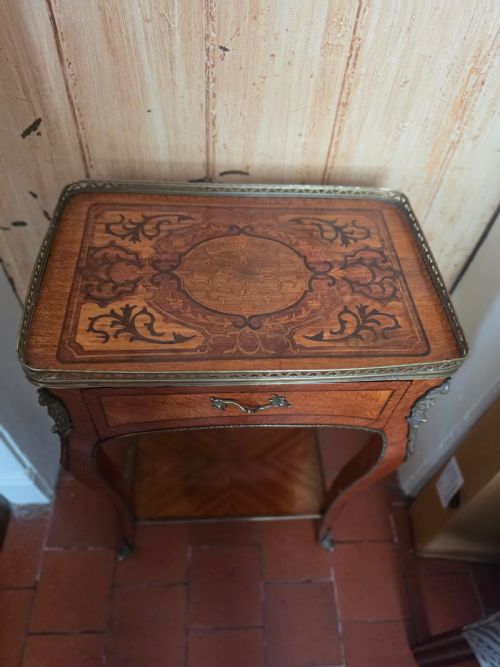
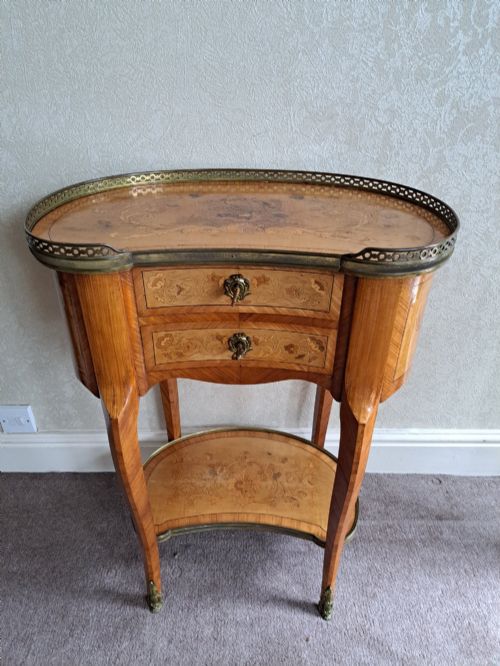
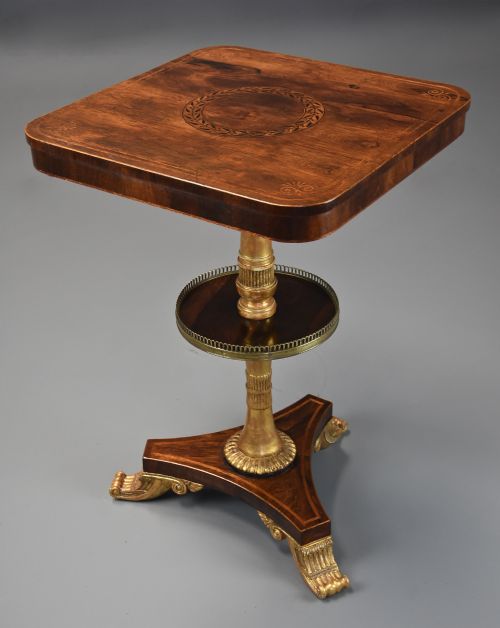
A brass inlaid work table is typically encountered from the Regency and Victorian periods, constructed in forms that served sewing, games, and writing. These tables frequently appear in rosewood or mahogany, often fitted with drawers and internal compartments for craft materials.
The selection ranges from early nineteenth-century Regency examples to later French styles including Napoleon III and revival designs. Alongside standard work tables, buyers encounter sewing tables and combination games tables sharing the same characteristic brass inlay.
Materials and technique
Cabinet makers utilised dense timbers such as rosewood and mahogany as the primary carcase, complemented by decorative elements in brass, ormolu, and ebonised wood. Boulle work pieces incorporate tortoiseshell alongside brass inlay, fixed into the timber ground.
Inlay techniques involve precise cutting of metal strips and floral motifs embedded directly into the wood surface. Structural joins rely on traditional cabinet-making methods, supporting hinged lids, drop leaves, and fitted drawer interiors.
Listings feature brass inlaid work tables spanning the Regency period through to the late nineteenth century in rosewood, mahogany, and ebonised wood.
Design and execution
Quality rests in the crispness of the brass cutting and the fidelity of the timber grain selected for the top. Finer examples display meticulous geometric or floral inlay work that remains flush with the surrounding wood.
The integrity of the internal fittings, such as original silk bags, divided trays, and functioning drawer locks, separates standard production from superior cabinet work.
Maison Millet·John MaClean·Charles Topino·Wilkinson Leicester·Barrett London·Payne London
The Brass Inlaid Work Table Glossary
- Boulle work
- Marquetry technique utilising tortoiseshell and brass inlay, popular in French furniture production. The method creates a contrasting pattern of metallic gold and dark tortoiseshell tones.
- Work table
- Small domestic table fitted with storage for needlework, threads, and sewing implements. These pieces often feature an attached fabric bag or internal compartment below the main surface.
- Regency
- British design style spanning the early nineteenth century, characterised by classical motifs and brass stringing. Furniture from this period frequently employs dark exotic timbers.
- Ormolu
- Gilded bronze mounts applied to furniture edges, feet, and corners for decorative effect. The technique provides a bright metallic contrast against dark wood surfaces.
Brass Inlaid Work Table: Frequently Asked Questions
What is a work table used for?
A work table served as a functional piece of furniture for holding sewing equipment, threads, and unfinished needlework projects. Ladies utilised the top surface for writing or reading while keeping tools organised inside the fitted drawers.
Many designs incorporated compartments and fabric bags underneath to contain textiles. Over time, these pieces transitioned into versatile occasional tables placed beside seating areas.
How do I identify a Regency brass inlaid table?
Regency tables typically feature dark rosewood or mahogany timbers accented with precise brass stringing and inlaid motifs. The silhouettes follow classical proportions, often incorporating pedestal bases or elegant slender legs.
Examining the construction of the drawers and the style of the brass work helps confirm the early nineteenth-century origin. Secondary woods and traditional joinery provide further evidence of period manufacture.
Where does Boulle work come from?
Boulle work originates from French cabinet-making traditions, particularly associated with tortoiseshell and brass marquetry. The technique gained renewed popularity during the nineteenth century in Napoleon III and revival pieces.
These decorative surfaces require skilled craftsmanship to cut and fit the delicate brass and tortoiseshell elements together. Such tables often serve as striking centrepieces within a room.
Can I use a work table as a desk?
Many work tables function adequately as compact writing surfaces due to their comfortable height and fitted drawers. Combination pieces often include spaces specifically adapted for letters and writing materials.
Users should check the interior clearance and knee space beneath the drawer to ensure comfortable seating. The presence of a flat top surface determines suitability for daily writing tasks.