

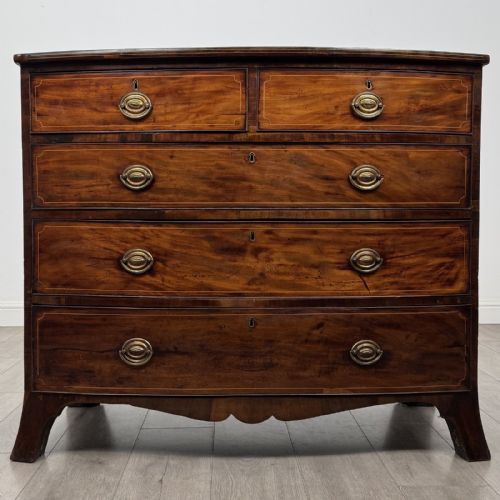
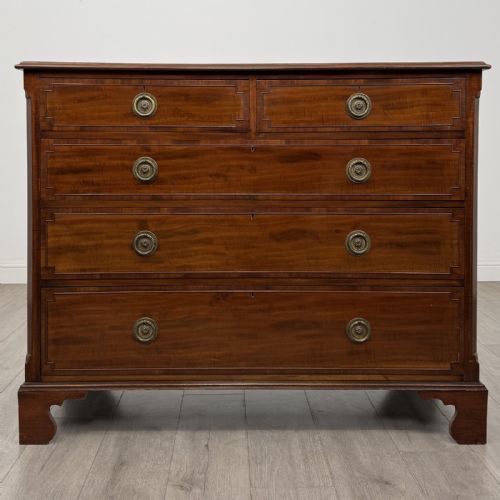
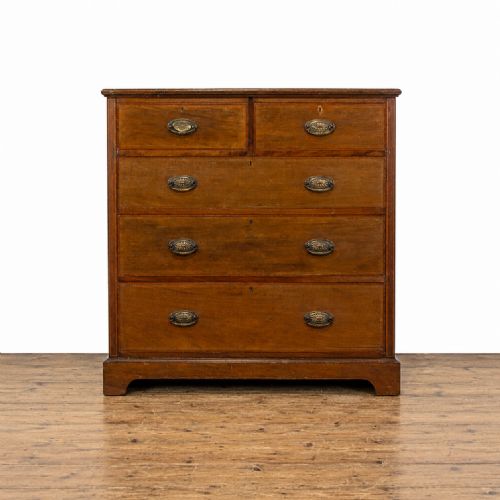
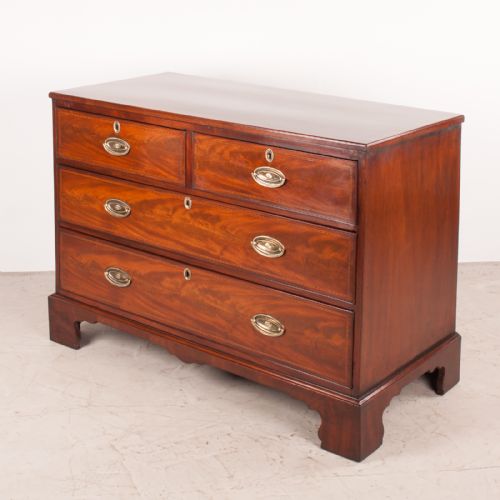
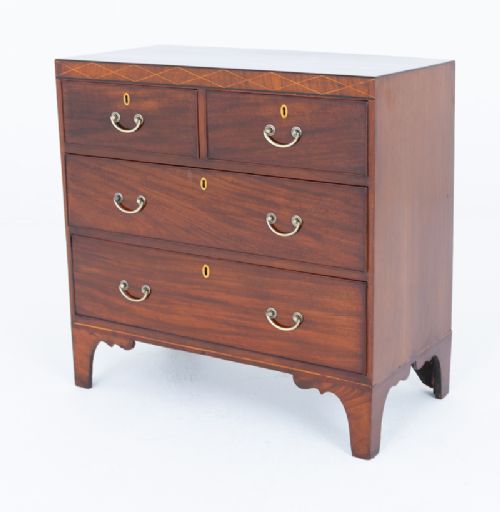

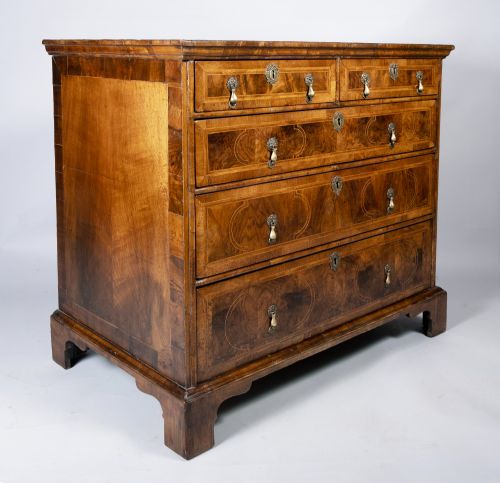
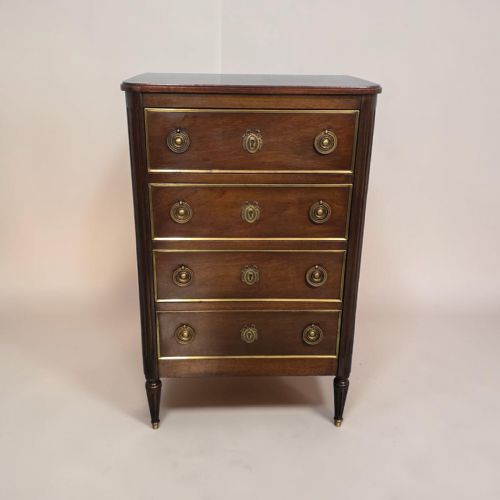


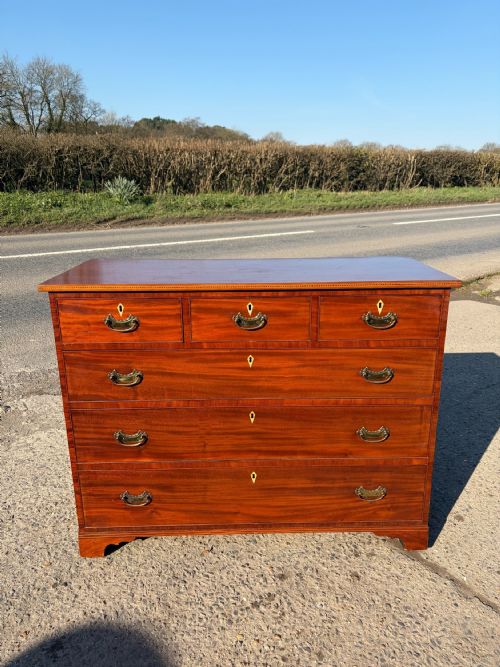
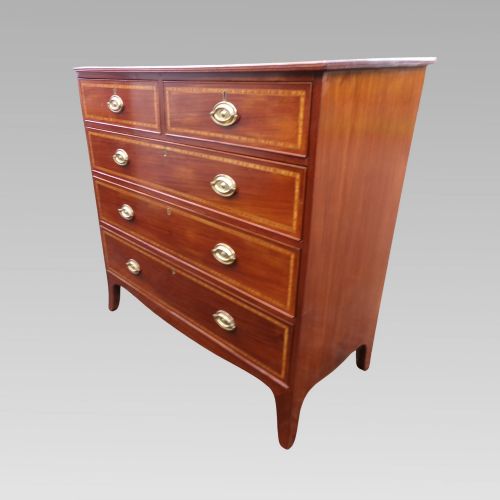


Brass Inlaid Tallboy Chest
These brass inlaid tallboy chest pieces offer vertical storage and striking detail, bringing genuine period presence to any room.
Brass Inlaid Tallboy Chest
A brass inlaid tallboy chest combines high-capacity vertical storage with contrasting metal detail embedded directly into the timber. Buyers seeking this phrase encounter tall chests, chests on stands, and tallboy forms originating from periods ranging from the 18th century through the Edwardian era.
Materials and construction methods
Cabinet makers constructed these pieces using dense hardwoods such as mahogany, walnut, and oak as the primary structural timbers. Selected veneers, boxwood, and satinwood provided contrasting borders and decorative surfaces.
Brass wire and sheet metal were carefully channelled into recessed grooves cut into the wood surface to form linear stringing and geometric patterns. Bone elements occasionally appeared alongside boxwood inlay to accent the primary timber grain.
Brass Inlaid Tallboy Chest Retail Price Guide 2026
Typical asking prices for brass inlaid tallboy chest among the pieces listed under this phrase on Sellingantiques today, from the lower quarter to the upper quarter. They describe what is for sale here now, not the wider market.
Early makers occasionally added secret compartments behind decorative brass inlay to hide small valuables from wandering eyes.
Assessing craftsmanship and execution
The standard of timber selection and the precision of the brass inlay determine the relative standing of individual examples. Sharp, flush fitting of metal into the wood grain without visible gaps distinguishes superior cabinet work.
Internal drawer construction, including dovetail joints and matching secondary timbers, indicates the level of care invested by the maker. The integrity of the original surfaces and the crispness of any crossbanding further separate standard production from finer work.
Mawer & Stephenson
The Brass Inlaid Tallboy Chest Glossary
- Tallboy
- A tall chest of drawers, often built as one chest stacked upon another or upon a separate stand, designed to maximise storage capacity without increasing floor footprint.
- Inlay
- A technique where pieces of a contrasting material, such as brass, boxwood, or satinwood, are embedded into recesses cut into the primary wood surface to form patterns.
- Crossbanding
- A border band of veneer laid around the perimeter of a drawer front or top so that the wood grain runs perpendicular to the central panel.
- Caddy top
- A raised furniture top with moulded edges reminiscent in profile of the lids found on antique tea caddies.
- Stringing
- Thin, narrow lines of contrasting wood or metal inlaid into the surface of furniture to frame panels and drawers.
Brass Inlaid Tallboy Chest: Frequently Asked Questions
What is a tallboy chest?
A tallboy is a tall chest of drawers that provides significant vertical storage capacity while occupying a compact floor area. These pieces often take the form of a chest on stand or a stacked chest construction.
They were traditionally used in bedchambers and dressing rooms to store linens and garments where floor space was limited.
How do I date these chests?
Dating relies on examining the timber species, construction techniques, and prevailing decorative styles. Georgian and Regency pieces display distinct proportions and moulding profiles compared to later Victorian or Edwardian interpretations.
Hardware, drawer dovetailing, and the type of secondary woods used internally provide further chronological markers.
Where should I place one?
These tall chests suit rooms with high ceilings where standard furniture might appear under-scaled. Their vertical orientation makes them practical for bedrooms, hallways, or living spaces requiring substantial storage.
Ensure the placement protects the timber and brass inlay from direct heat sources and strong, prolonged sunlight.
How do I care for the brass inlay?
Maintenance involves dusting regularly with a soft, dry cloth and avoiding harsh chemical polishes that can discolour the metal or degrade the surrounding wood. Waxing the timber periodically helps preserve the finish.
Careful handling prevents moisture from seeping into the channels where the brass meets the wood.