



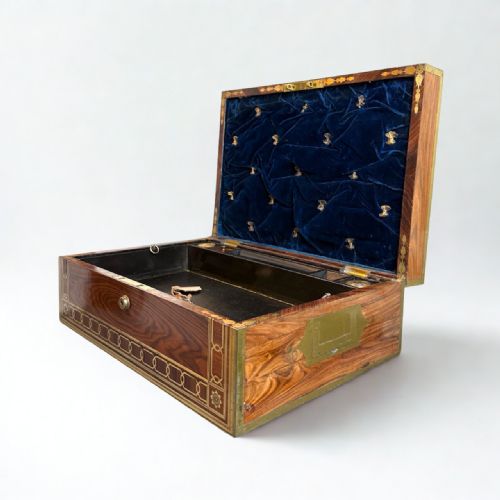


Brass Inlaid Rosewood Box
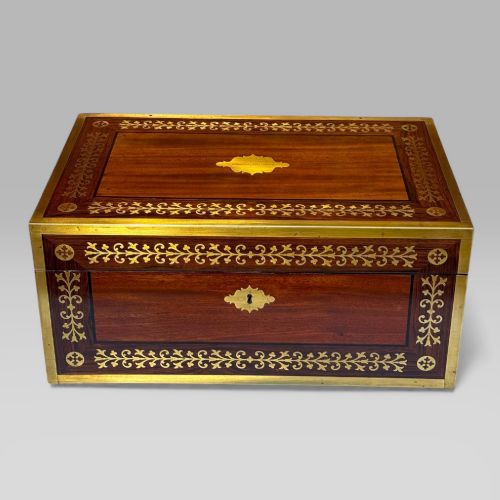
A brass inlaid rosewood box brings architectural precision and rich timber grain together into a portable container designed for correspondence, writing, or jewellery.
Brass Inlaid Rosewood Box
When you search for a brass inlaid rosewood box, you encounter pieces originating primarily from the Regency, Georgian, and Victorian periods, spanning the nineteenth century. These objects take many functional forms, most frequently appearing as writing slopes, correspondence boxes, tea caddies, and jewellery storage.
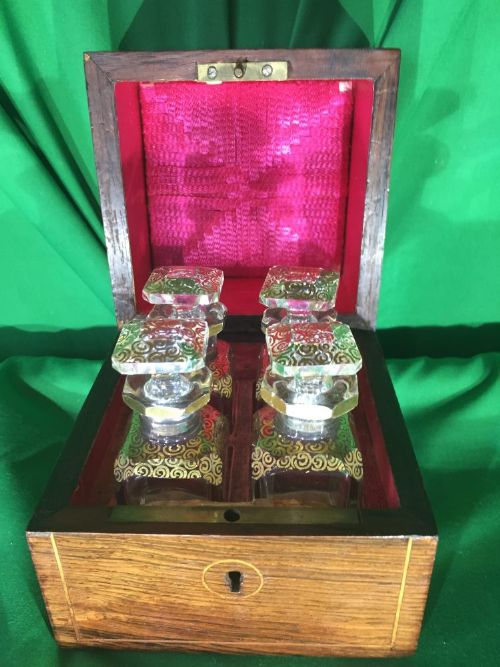
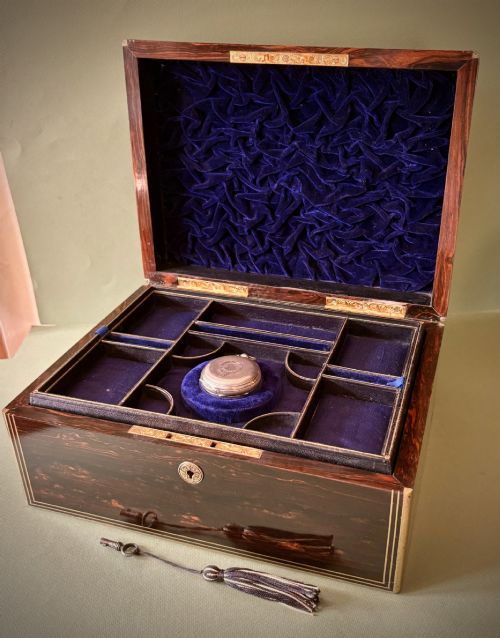
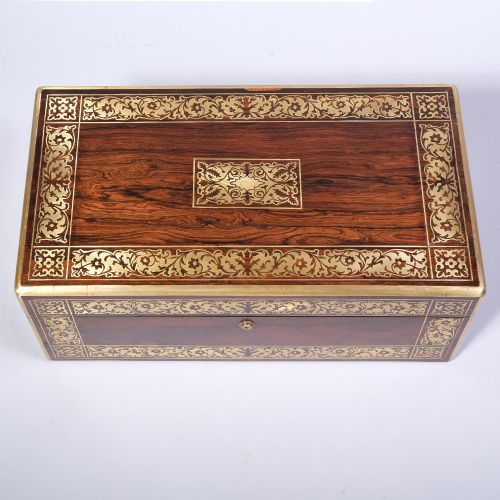
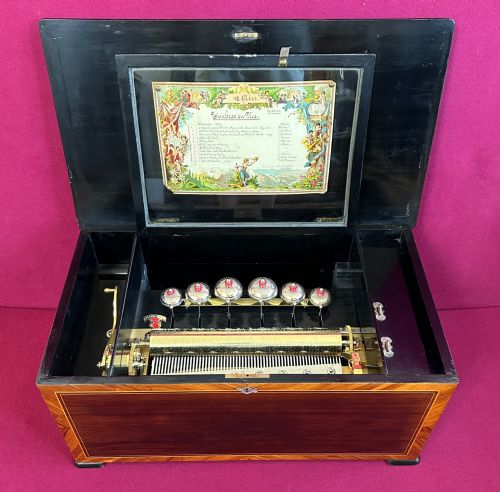
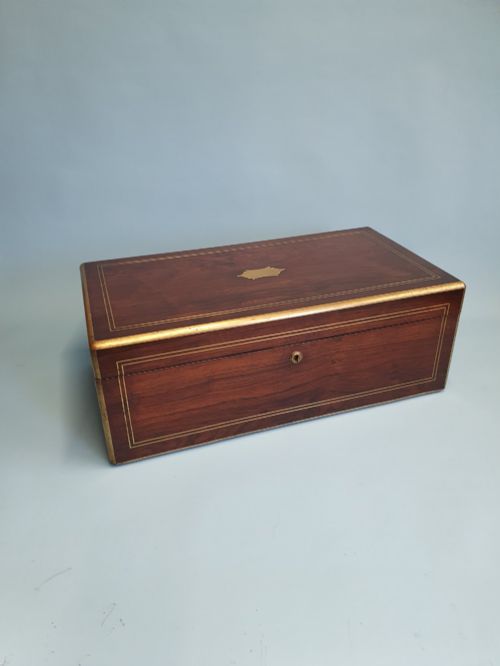
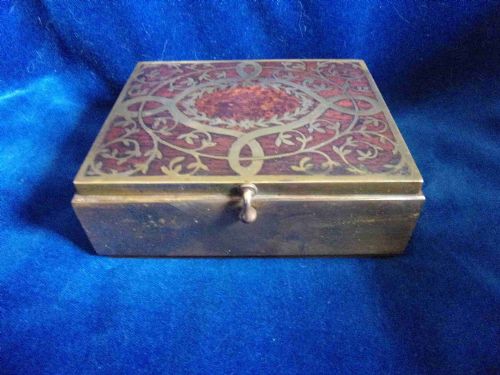
The Regency era provides the largest share of these pieces, often featuring characteristic brass banding or intricate cut-brass foliage laid directly into the dark heartwood. Later Victorian examples continue the tradition through fitted interiors lined with velvet and glass accessories, alongside specialised pieces like music boxes and work tables.
Originating as practical luxury items for travellers and wealthy households, these boxes display meticulous carpentry designed to house valuables securely. Surviving examples range from simple document caskets to fully fitted campaign writing desks with secret drawers and inkwells.
Materials and Construction
The primary construction relies on dense rosewood timber, selected for its deep purple-brown colour and pronounced dark grain, frequently reinforced with secondary woods like boxwood or mahogany beneath the surface. Artisans channelled the timber to recess thin sheets of polished brass, creating geometric lines, cartouches, or elaborate foliate scrolls.
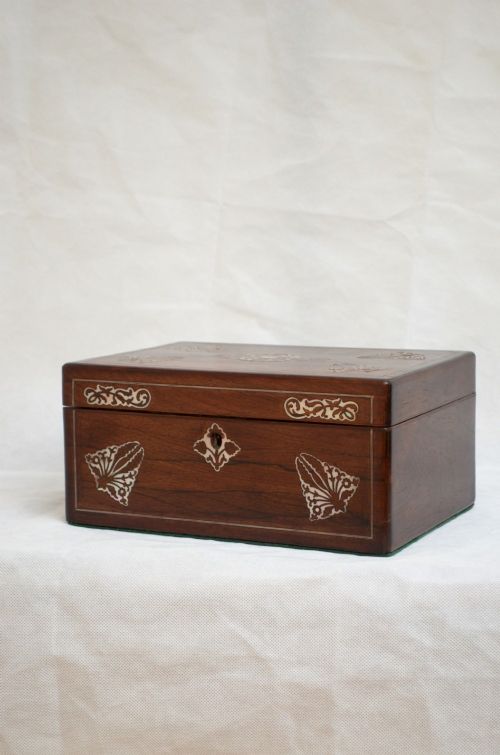
Metal inlay was secured with tiny brass pins or strong adhesives, then filed flush with the wood surface to create a smooth tactile finish. Interior compartments utilised velvet linings, glass inkwells with screw tops, and steel hardware alongside mother-of-pearl accents.
Listings feature nineteenth century writing slopes, tea caddies, and jewellery boxes constructed from rosewood with brass and mother-of-pearl inlay.
Distinctions in Execution
Quality in these pieces depends heavily on the precision of the brass inlay work and the integrity of the timber joints. Finely executed examples display tight, seamless metal fitting without gaps or lifting edges, whereas lesser pieces show wider kerf lines filled with dark mastic.
The complexity of the interior fittings also separates standard containers from superior ones. Fully fitted writing slopes featuring secret compartments, matching cut-glass bottles, and original working locks with keys represent higher workshop standards than plain lined boxes.
Erhard and Sohne·Thomas Briggs
The Brass Inlaid Rosewood Box Glossary
- Writing slope
- A portable desk featuring a hinged, sloping lid that opens to reveal a writing surface, pen trays, and inkwell compartments. These boxes often include secret drawers hidden beneath the stationary partitions.
- Tea caddy
- A container designed to store loose tea leaves securely, often featuring internal lidded compartments to keep different blends dry. Regency and Georgian examples frequently incorporate glass mixing bowls or central lion mask handles.
- Campaign box
- A sturdy portable chest or writing box reinforced with brass banding and corner brackets to withstand the rigours of travel. These items were built for military officers and colonial administrators on the move.
- Sarcophagus
- A box style characterised by an inverted trapezoid shape resting on bun feet or a plinth base, reminiscent of ancient stone coffins. This architectural form was particularly popular for large tea caddies during the Georgian period.
- Work table
- A multi-functional piece of furniture incorporating a rosewood box top with internal storage for sewing and needlework supplies. They rest on column supports above platform bases.
Brass Inlaid Rosewood Box: Frequently Asked Questions
What is inside a writing slope?
Writing slopes contain hinged writing surfaces that fold down to reveal compartments for paper, nibs, and dip pens. Many also house glass inkwells with screw tops and secret drawers hidden behind false partitions.
These internal spaces were engineered to keep writing materials organised and secure during transit in the nineteenth century.
How do I care for rosewood?
Rosewood requires stable humidity levels and protection from direct sunlight to prevent the timber from drying out or splitting. Dust the surface regularly with a dry cloth and apply occasional specialist wax to maintain the grain.
Avoid using modern liquid polishes, which can seep into the brass inlay channels and damage the surrounding wood.
Were these boxes used for travel?
Many examples were constructed specifically for travel, featuring brass bound edges, reinforced corners, and robust carrying handles. They allowed owners to transport personal correspondence and valuables safely on long journeys.
Stationary boxes and tea caddies remained primarily on desks or side tables within domestic settings.
How do I date a brass inlay box?
Dating relies on stylistic clues, such as the transition from geometric brass stringing found in Regency pieces to the bolder foliate motifs of the Victorian era. The construction of the internal compartments and the type of secondary wood also provide chronological markers.
Documented pieces and maker signatures help confirm exact decades of production.