


Brass Inlaid Etagere
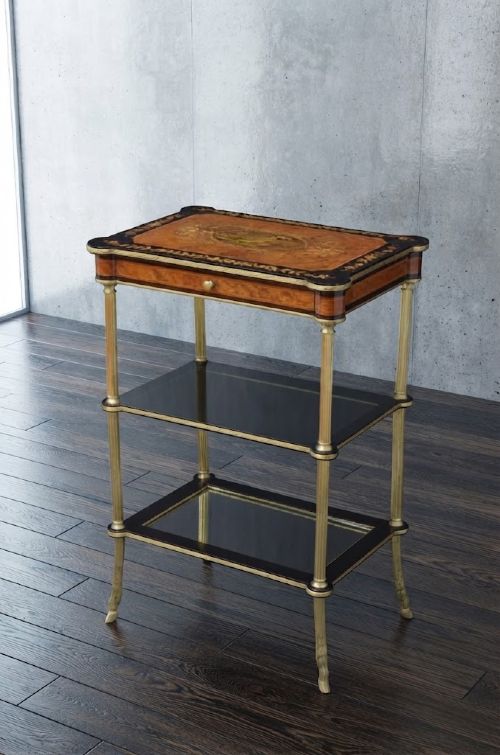
When you search for a brass inlaid etagere, you seek a tiered display piece that combines metalwork with fine timber.
Brass Inlaid Etagere
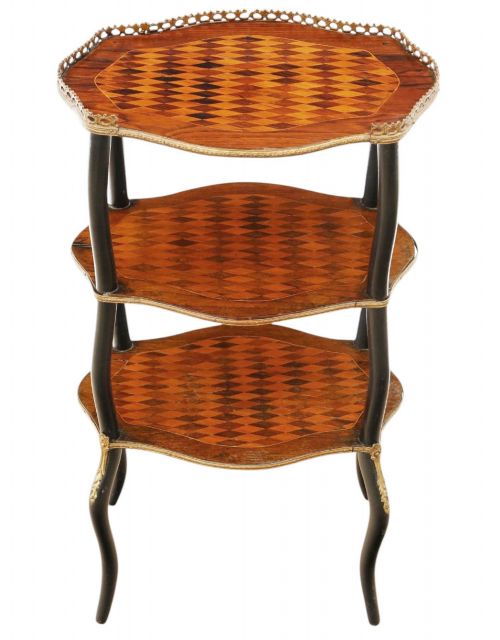
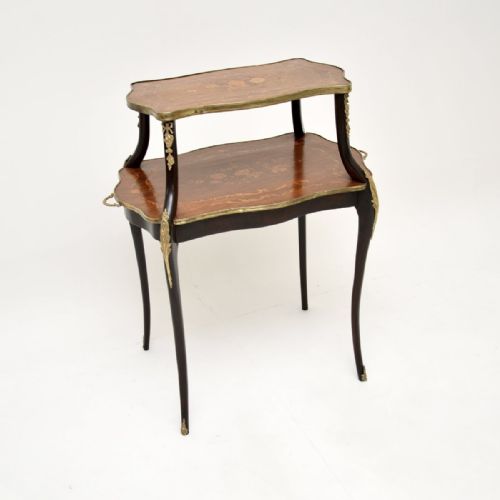
A brass inlaid etagere provides tiered shelving for display and occasional use within the home. These pieces appear most frequently in 19th Century and Edwardian forms, originating largely from French and English workshops.
The inventory on this page centres on multi-tier tables, whatnots, and display stands. Walnut, mahogany, and ebonised wood form the primary structures for these tiered surfaces.
Makers utilised French Louis XV Style, Napoleon III, and Sheraton Revival aesthetics to shape these items. Buyers encounter designs ranging from compact tabletop versions to freestanding two and three-tier furniture.
How they were made
Craftsmen built these pieces using timber carcasses of walnut, mahogany, kingwood, rosewood, and satinwood, often applying ebonisation to the wood. Artisans then set brass stringing, mounts, and frames directly into the surfaces.
Marquetry and parquetry inlays decorate the panels alongside brass components and sometimes nacre-shell panels. Ormolu mounts and glass tiers also appear across the construction of these multi-level stands.
Periods represented span from the mid-nineteenth century through the Edwardian era into the early twentieth century.
What varies in quality
The fineness of the marquetry and the precision of the brass inlay determine the standing of an individual piece. Sharper detail in the floral patterns and tighter joints separate superior examples from simpler iterations.
The choice of secondary timbers and the complexity of the tiers dictate the overall calibre. Pieces featuring multiple mirrored levels, integrated ormolu, and balanced proportions occupy the upper tier of the range.
The Brass Inlaid Etagere Glossary
- Etagere
- A piece of furniture consisting of a set of open shelves for displaying small objects. These tiered stands function as side tables or freestanding display units.
- Marquetry
- Decorative woodwork in which pieces of fine timber are fitted into a veneer to form geometric or floral designs. This technique decorates the top panels of many tiered tables.
- Ormolu
- Gilded bronze used for decorative mounts and framing on furniture. Workshops applied these cast metal elements to highlight the corners and edges of tables.
- Whatnot
- A Victorian term for an open set of shelves used for ornament or books. These tall display stands share a functional lineage with tiered etageres.
- Parquetry
- A geometric mosaic of wood pieces used for floors and furniture surfaces. Artisans arranged contrasting timbers in repeating patterns across the tabletops.
Brass Inlaid Etagere: Frequently Asked Questions
What is an etagere used for?
An etagere serves as a display surface for small decorative objects, porcelain, and books across multiple open tiers. These tiered tables function effectively as occasional furniture in sitting rooms and hallways.
Historically, they held ornamental items that owners wished to showcase. Today, they accommodate lamps, drinks, and modern display collections while maintaining a compact footprint.
How do I date a brass inlaid etagere?
Dating relies on examining the timber species, inlay techniques, and prevailing stylistic influences. Pieces from the Victorian period and the Napoleon III era often feature ebonised wood and intricate brass stringing.
Edwardian and Sheraton Revival examples tend to utilise lighter woods such as satinwood and mahogany. Comparing the joinery methods and the style of the mounts helps narrow the decade of production.
Are these pieces French or English?
The recorded inventory shows a strong presence of both French and English origin. French examples frequently display Napoleon III or Louis XV styles with rich marquetry and ormolu.
English pieces often follow Sheraton Revival lines utilising mahogany and satinwood. Many items blend these continental and domestic design traditions through shared cabinet-making methods.
How do I care for inlaid wood furniture?
Care involves keeping wooden furniture away from direct sunlight and maintaining stable room humidity. Sudden temperature shifts can cause timber to move and brass inlay to lift from its channels.
Gentle dusting with a soft cloth preserves the polish on walnut and mahogany surfaces. Avoid liquid polishes that might seep into the joints of the marquetry panels.