



Brass Inlaid Desk Stand
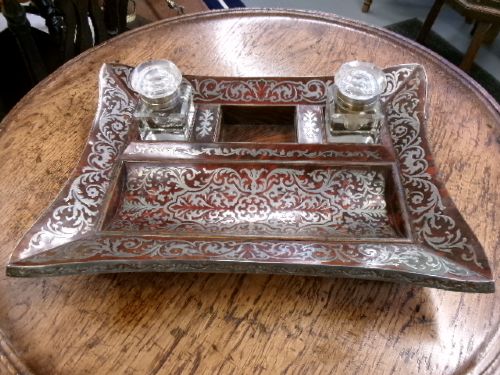
A brass inlaid desk stand is a fine writing accessory designed to hold inkwells and pens, offering both organisation and elegance to a desk.
Brass Inlaid Desk Stand
The materials used in these pieces range from rich timbers such as rosewood, walnut, and coromandel to exotic tortoiseshell. Many examples reflect specific design movements including French Napoleon III and Regency styles.
How they were made
Cabinet makers constructed these stands using dense tropical hardwoods such as rosewood and coromandel as a dark foundation for decoration. Artisans then routed precise channels into the wood to receive hand-cut brass wire and foliate motifs.
Inlaid brass work was frequently combined with other decorative techniques, including Boulle work featuring tortoiseshell or delicate applications of mother of pearl. Glass inkwells were shaped and fitted with hinged metal collars to complete the functional components of the stand.
Brass Inlaid Desk Stand Retail Price Guide 2026
Typical asking prices for brass inlaid desk stand among the pieces listed under this phrase on Sellingantiques today, from the lower quarter to the upper quarter. They describe what is for sale here now, not the wider market.
Listings for brass inlaid desk stands feature pieces from the Regency, William IV, and Victorian periods, executed in rosewood, coromandel, and tortoiseshell.
What varies in quality
The quality of a brass inlaid desk stand is determined by the precision of the metalwork and the selection of the timber grain. Finer examples display meticulous alignment where the brass meets the wood, without gaps or crude filler.
The choice of base material influences the distinction between standard and superior pieces, with richly figured rosewood, coromandel, and genuine tortoiseshell commanding greater regard. Additionally, the presence of matching original glass inkwells with functioning brass hardware elevates the integrity of the piece.
The Brass Inlaid Desk Stand Glossary
- Boulle work
- An elaborate form of marquetry using brass and tortoiseshell inlaid together, popular in French furniture and decorative accessories. This technique creates a contrasting pattern of metallic shine and dark shell.
- Coromandel
- A dense, heavily figured timber imported from Asia, prized for its dark brown colour and striking black streaks. It was frequently utilised for luxury nineteenth-century desk accessories.
- Inkstand
- A portable tray or stand fitted to hold one or more inkwells, sanders, and pen holders. These objects sat upon writing tables to keep writing materials orderly.
- Regency
- An English design period spanning the early nineteenth century, characterised by classical restraint and refined ornamentation. Pieces from this era often incorporate precise brass inlay against dark rosewood.
- Tortoiseshell
- The mottled brown and amber material derived from the shell of certain turtle species, used as a decorative veneer. It provides a translucent background for inlaid brass designs.
Brass Inlaid Desk Stand: Frequently Asked Questions
What is a brass inlaid desk stand?
A brass inlaid desk stand is a portable writing accessory designed to hold inkwells, pens, and sealing wax upon a table or bureau. These pieces combine a wooden base of rosewood or walnut with decorative brass wirework.
They served as functional desk organisers for correspondence in nineteenth-century homes and offices. Today, they function as decorative desktop objects that retain their original utility.
How do I identify a Regency desk stand?
Regency desk stands are distinguished by clean classical proportions and restrained brass foliate inlay set into dark timbers like rosewood. They typically date from the early nineteenth century and reflect the neoclassical tastes of the period.
Unlike later Victorian examples, Regency pieces lean towards geometric harmony and architectural simplicity. The brass work is often delicate and follows precise linear or floral paths.
What woods were used for these stands?
Cabinet makers utilised dense, dark exotic hardwoods that provided a strong visual contrast against bright brass inlay. Rosewood and coromandel are the most frequently encountered timbers on these stands.
Mahogany and walnut also appear, particularly in pieces associated with specific nineteenth-century revival styles. These durable woods ensured the stands could support the weight of heavy glass inkwells.
Are the inkwells usually original?
Many desk stands retain their original cut-glass or moulded inkwells, often fitted with hinged brass or silver-plated collars. Because inkwells were handled frequently, replacement glass inserts are sometimes found in older stands.
Checking the fit within the wooden apertures helps determine whether the inkwells belong to the piece. Matching glass lids and collars add considerable character to an antique desk accessory.
How should I care for a tortoiseshell stand?
Tortoiseshell surfaces require gentle treatment to avoid scratching and protection from direct sunlight and excessive heat. Dusting with a soft, dry cloth is sufficient for routine maintenance.
Harsh chemical cleaners must be avoided on both the shell and the surrounding brass inlay. Maintaining a stable indoor environment preserves the stability of the wood and the delicate veneers.