
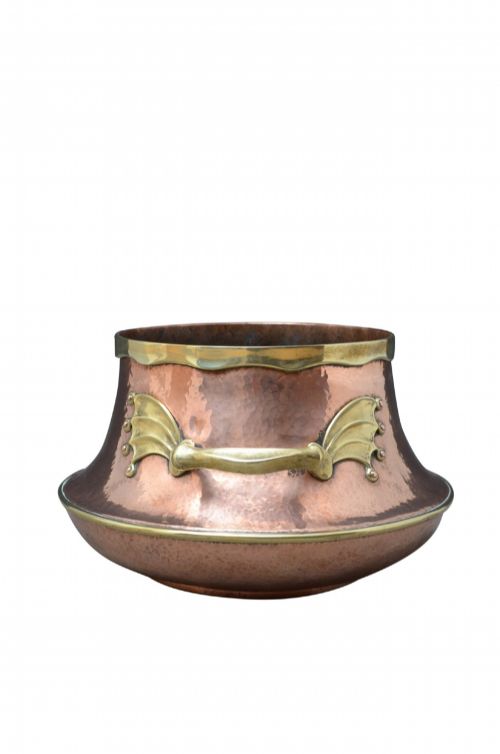


Brass Indoor Pot Holder
These brass indoor pot holder items bring warmth and green life inside, offering solid Victorian and Edwardian craftsmanship to suit any plant.
Brass Indoor Pot Holder
When you search for brass indoor pot holder pieces, you encounter a range of jardinières, cachepots, and plant stands designed to hold foliage within domestic rooms. These vessels largely date from the nineteenth century into the early twentieth century, spanning Victorian, Edwardian, and Art Nouveau periods.
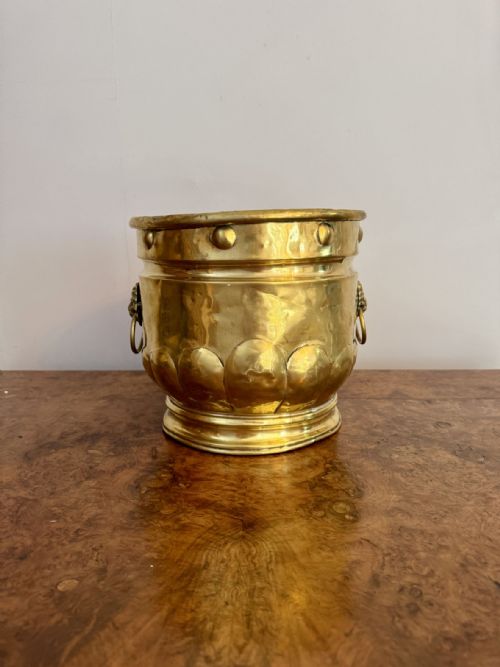
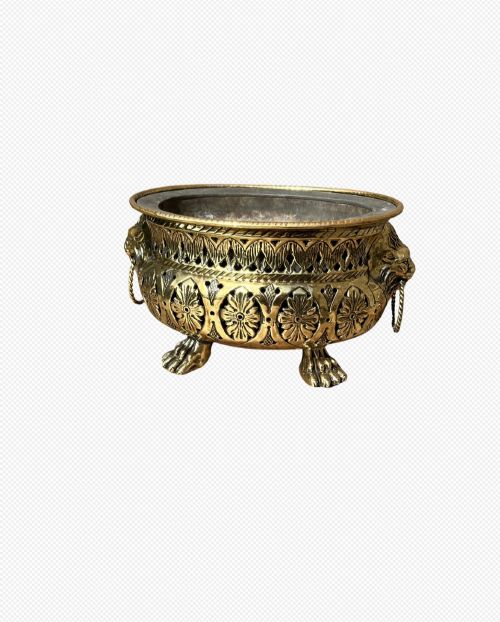
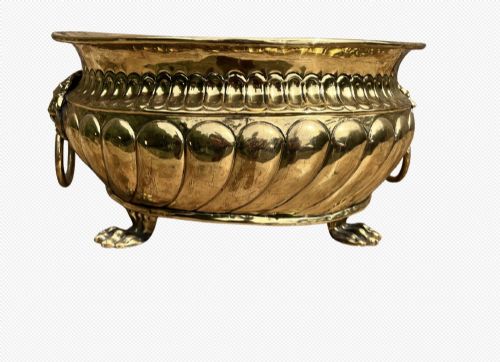
The objects take forms such as cylindrical planters, square stands, and coopered barrels made from English oak and brass. Many incorporate handles, including lion mask motifs, or feature pierced and hammered surface work.
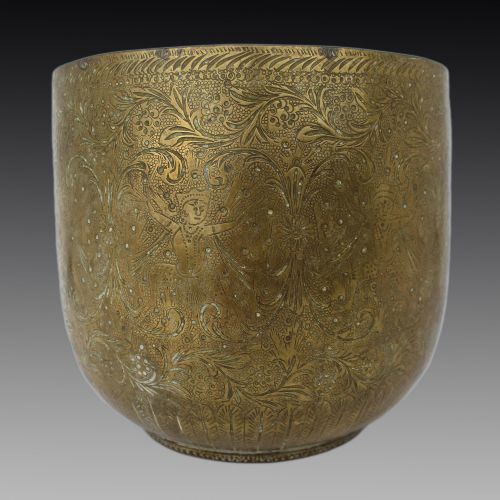
Origin details in the evidence point towards English, French, and Anglo-Indian workshops. A buyer most frequently meets polished brass and mixed metal vessels designed to sit upon the floor or on furniture surfaces.
How they were made
Makers utilised sheet brass and copper, hammering and piercing the metal to create patterned cachepots and jardinieres. Some pieces combine metals with English oak, utilising coopered barrel construction techniques for plant stands.
Surface treatment involved polishing or leaving the brass and copper with textured hammer marks. Artisans applied cast elements like lion mask handles to heavy body vessels during the Victorian and Edwardian eras.
Listings span the nineteenth and early twentieth centuries, including Victorian, Edwardian, Art Nouveau, and Aesthetic Movement styles.
What varies in quality
The distinction between standard vessels and finer examples lies in the weight of the metal and the depth of the hand craftsmanship. Heavy, substantial brass and deep relief hammer work indicate superior making.
Design articulation separates simple cylindrical forms from pieces with stylistic Art Nouveau contours or detailed pierced brass galleries. The integration of mixed materials like oak staves also influences the character of a piece.
The Brass Indoor Pot Holder Glossary
- Jardiniere
- An ornamental pot or stand for holding flowers or plants, usually made of metal or ceramic. These vessels sit indoors to display greenery.
- Cachepot
- An ornamental pot used to conceal an ordinary flowerpot, preventing water damage to surfaces. The French term translates as hiding pot.
- Coopered barrel
- A cylindrical container built from wooden staves bound with metal hoops, used here for plant stands in English oak and brass.
- Pierced brass
- Metalwork decorated by perforating or cutting patterns through the sheet. This technique creates openwork designs around the body of the planter.
- Art Nouveau
- A stylistic movement from around 1900 characterised by organic, flowing lines. Planters from this period reflect natural plant and stem motifs.
Brass Indoor Pot Holder: Frequently Asked Questions
How were brass indoor pot holders used?
These vessels functioned primarily as cachepots or jardinieres to house potted plants inside Victorian and Edwardian homes. They protected interior surfaces from water while displaying ferns and palms.
Larger versions stood directly on the floor or on plant stands, while smaller cylindrical vessels sat upon tables and mantelpieces.
Are these planters waterproof?
Many historic metal planters require a secondary inner pot to hold soil and water safely. Original metal liners or soldered seams can degrade over time.
Using a modern plastic pot inside the brass vessel protects the antique metal from moisture damage and corrosion.
How do I clean brass and copper?
Maintenance depends on whether you prefer a bright polished shine or an aged patina. Gentle dusting and mild soapy water preserve the historic surface.
Avoid harsh chemical abrasives that strip the original character and thin the antique metal over time.
How do I date an antique planter?
Dating relies on stylistic clues, manufacturing techniques, and materials recorded in the design. Victorian pieces often feature Gothic Revival or heavy cast handles, while Art Nouveau examples show flowing organic lines.
Edwardian items frequently incorporate mixed materials like English oak alongside brass fittings.