

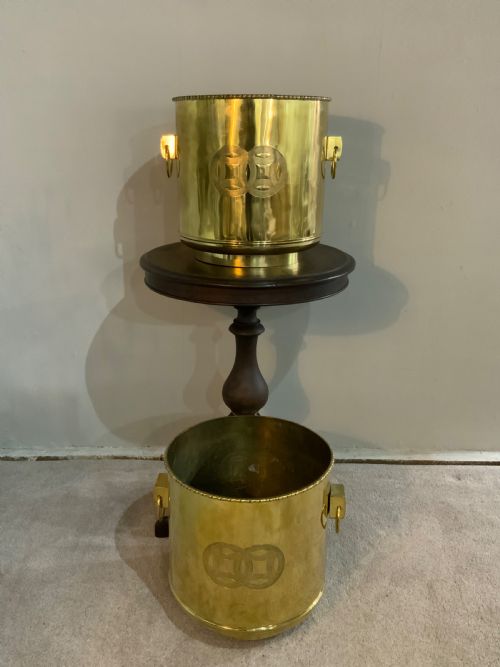


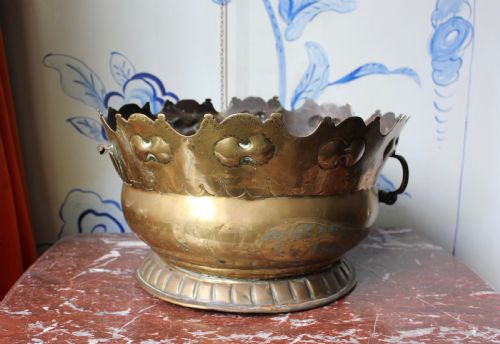


Brass Ice Bucket
A brass ice bucket brings weight and gleam to a room, holding ice or wine with effortless hospitality.
Brass Ice Bucket
A brass ice bucket is a stout vessel designed to chill wine, hold champagne, or serve ice at table, appearing across periods from the eighteenth century to the twentieth. When you search for a brass ice bucket, you encounter a range of forms that also double as wine coolers, cellarettes, jardinières, and planters.
The pieces listed here span Georgian, Victorian, Regency, and early twentieth-century eras, reflecting diverse regional styles such as Anglo-Indian, French Art Nouveau, and Dutch design. Mahogany and brass bound buckets sit alongside heavy cast metal pieces and gilt bronze mounts, showing how domestic service vessels evolved over generations.
How they were made
Metalworking techniques combine sheet brass, hammered copper, and cast mounts, often secured with iron or brass bands around timber staves in mahogany wine coolers. Artisans shaped metal through beating, casting, and polishing, joining components with rivets or dovetails depending on whether the vessel is purely metallic or wood-bodied.
Materials such as cut glass, zinc linings, and gilt bronze provide structural contrast and functional water resistance inside the outer shell. Cabinetmakers turned timber staves and applied brass binding for coopered vessels, whilst metalworkers cast lion mask handles and decorative feet for freestanding brass bodies.
Brass Ice Bucket Retail Price Guide 2026
Typical asking prices for brass ice bucket among the pieces listed under this phrase on Sellingantiques today, from the lower quarter to the upper quarter. They describe what is for sale here now, not the wider market.
Periods represented span from the eighteenth century through Georgian, Regency, and Victorian eras into the twentieth century.
What varies in quality
Quality rests upon the integrity of the construction, whether it is the tight fit of mahogany staves bound in heavy brass or the crispness of cast brass ornamentation. Substantial gauge metal and well-defined detailing on handles and mounts distinguish robust domestic pieces from lighter decorative items.
The survival of original linings, such as zinc or glass inserts, influences the character and completeness of the piece. Proportion, the harmony between brass bands and timber grain, and the weight of the metal itself dictate the standing of an individual vessel.
The Brass Ice Bucket Glossary
- Cellarette
- A lockable container used for storing bottles of wine near the dining table. They frequently appear in mahogany with brass binding during the Georgian period.
- Monteith
- A type of scalloped cooling bowl used in the eighteenth century to chill wine glasses by their stems. The notched rim held the glasses securely in ice water.
- Jardiniere
- An ornamental pot or stand for holding plants or flowers. Many examples share forms and materials with wine coolers and ice buckets.
- Coopering
- The method of constructing wooden staves held together by metal hoops. This technique produced watertight mahogany buckets used for ice and wine.
- Gilt bronze
- Copper alloy treated with a gold layer to create a decorative, durable surface finish. It appears as mounts on coolers and champagne vessels.
Brass Ice Bucket: Frequently Asked Questions
What is a brass ice bucket?
A brass ice bucket is a historic vessel used for chilling wine, cooling champagne, or holding ice during dining and entertaining.
These objects combine functional metalwork with decorative styles from Georgian, Victorian, and later periods, serving equally well as planters or decorative containers.
How were these buckets used historically?
Historically, these vessels stood beside the dining table or sideboard to keep wine bottles cold in ice and water.
Wealthy households utilised coopered mahogany buckets with brass bands or solid brass containers to manage drinks during long meals and social gatherings.
Are these buckets watertight?
Many period buckets feature internal zinc, copper, or glass liners designed to hold ice and melting water without damaging the outer structure.
Wooden coopered versions rely on tight joints and metal bands to maintain integrity, though checking individual linings is sensible before active use.
How do I distinguish Georgian from Victorian pieces?
Georgian pieces often favour restrained mahogany construction with neat brass binding and classical proportions typical of the eighteenth century.
Victorian and later examples frequently introduce heavier cast ornamentation, lion mask handles, and diverse revival styles including Art Nouveau and French Rococo.
Can I use an antique bucket for plants?
Many ice buckets and wine coolers double effectively as jardinières or plant stands, a practice recorded across multiple historic periods.
Using a suitable inner pot protects the historic metal or wood interior from moisture and soil damage whilst displaying house plants.