
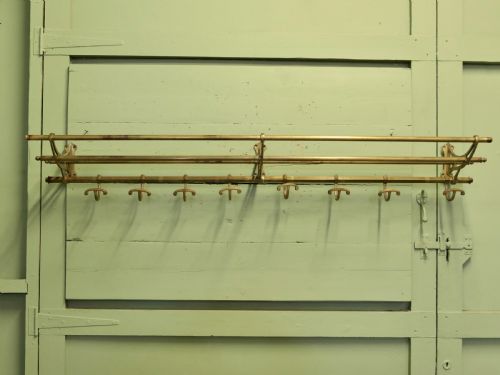


Brass Hook Hall Stand
A brass hook hall stand combines sturdy timber framework with metal hardware to organise entranceways, offering both practical hanging space and decorative presence.
Brass Hook Hall Stand
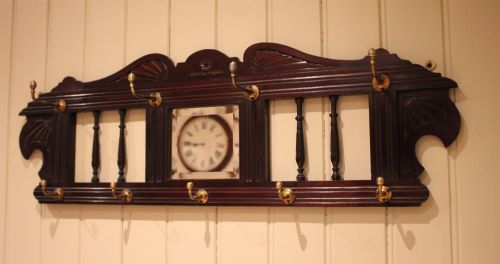
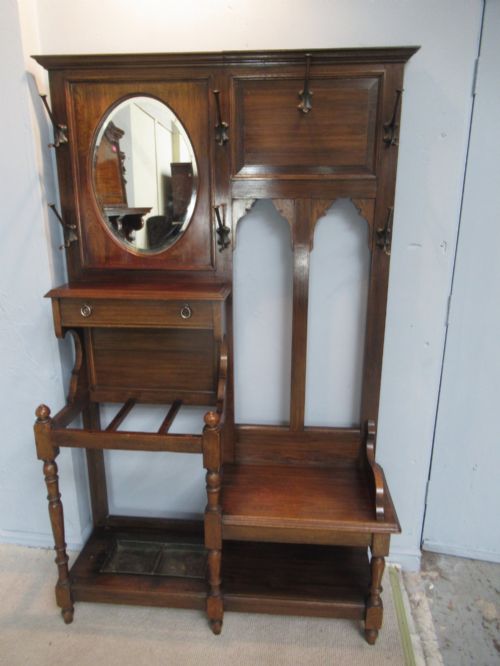
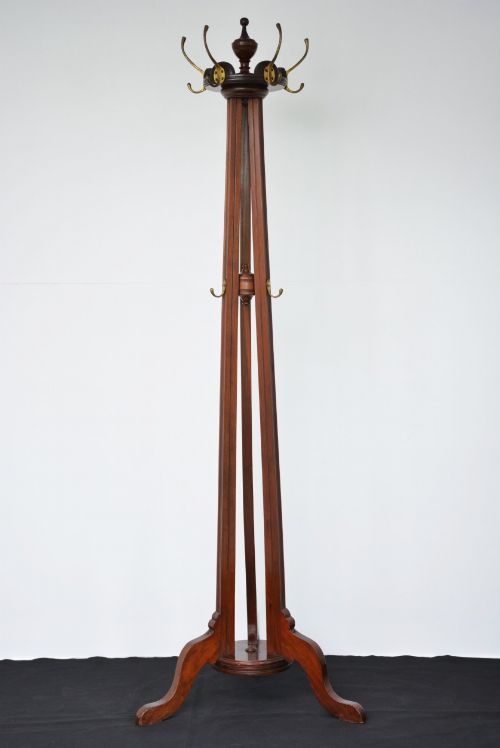
When you search for a brass hook hall stand, you encounter entrance furniture designed to hold coats, hats, and accessories. These pieces range from compact wall-mounted racks to large freestanding hall trees equipped with mirrors.
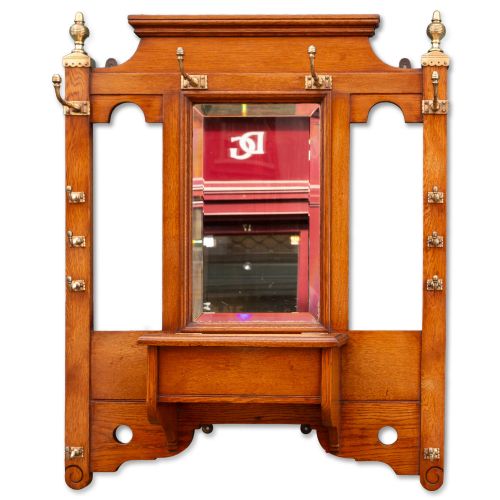
The versions most frequently met on this page span the Victorian and Edwardian eras through to the Arts and Crafts period and Art Deco designs. Common forms include oak and mahogany wall racks, walnut stands, and French portmanteaus.
Makers such as Jas. Shoolbred contributed to these designs during the late nineteenth and early twentieth centuries. Buyers select these items to bring functional period character into hallways and reception spaces.
Materials and construction methods
Construction relies heavily on traditional hardwoods like oak, mahogany, and walnut, providing structural stability for heavy garments. Wood surfaces are frequently polished or left in a golden oak finish to highlight the natural grain.
Pieces span the Victorian, Edwardian, Arts and Crafts, and Art Deco periods.
Distinctions in quality and finish
Quality rests on the density and selection of the timber, distinguishing solid walnut and oak frames from simpler constructions. The weight and casting detail of the brass hooks also indicate the standard of production.
Consideration is given to the integration of bevelled glass mirror plates and the preservation of original hardware. Pieces featuring substantial dimensions and specialised elements like umbrella wells or barometer dials demonstrate superior craftsmanship.
Jas. Shoolbred
The Brass Hook Hall Stand Glossary
- Hall tree
- A freestanding piece of hallway furniture combining a mirror, coat hooks, and often a seat or umbrella stand. This form provides comprehensive storage for entranceways.
- Portmanteau
- A wall-mounted rack featuring brackets and shelves designed for hats and coats. French examples often incorporate decorative brass work and scalloped hooks.
- Bevelled plate
- A mirror glass with angled edges that catch the light. This detail indicates finer domestic manufacture in Victorian and Edwardian furnishings.
- Arts and Crafts
- A design movement prioritising visible construction and solid materials. Pieces from this style avoid excessive ornamentation in favour of honest craftsmanship.
Brass Hook Hall Stand: Frequently Asked Questions
How do I install a wall mounted coat rack?
Wall-mounted versions require secure fixing into solid masonry or wall studs to support the weight of heavy winter garments.
Ensure that screws match the load capacity and that the backplate sits flush against the wall surface.
What woods were used for hall stands?
Cabinetmakers predominantly utilised oak, mahogany, and walnut for their strength and rich grain patterns. Golden oak finishes gained particular popularity during the Arts and Crafts period.
These durable timbers withstand daily use in busy entrance halls.
How do I care for brass hooks?
Brass hardware benefits from gentle dusting and occasional cleaning with appropriate metal polish if you wish to maintain a bright shine. Many owners prefer to leave an aged patina intact.
Avoid harsh abrasives that might scratch the surrounding wood framework.
What is a French portmanteau?
A French portmanteau is a specialised wall rack featuring multiple brackets and decorative brass hooks designed for hats and coats. These often include original mirrored plates.
They offer an ornate alternative to standard British hallway storage.
How do I distinguish Victorian from Edwardian stands?
Victorian pieces tend to feature heavier, darker timbers and dense carved ornamentation. Edwardian and later Arts and Crafts examples often display lighter golden oak tones and simpler lines.
Examining the mirror bevels and hook designs also helps determine the period.