




Brass Hinge Wall Cabinet
A brass hinge wall cabinet is a hanging timber corner cupboard intended for domestic storage, offering period craftsmanship and practical room organisation.
Brass Hinge Wall Cabinet
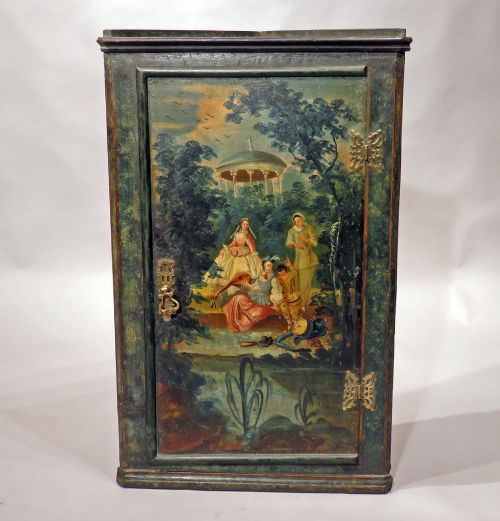
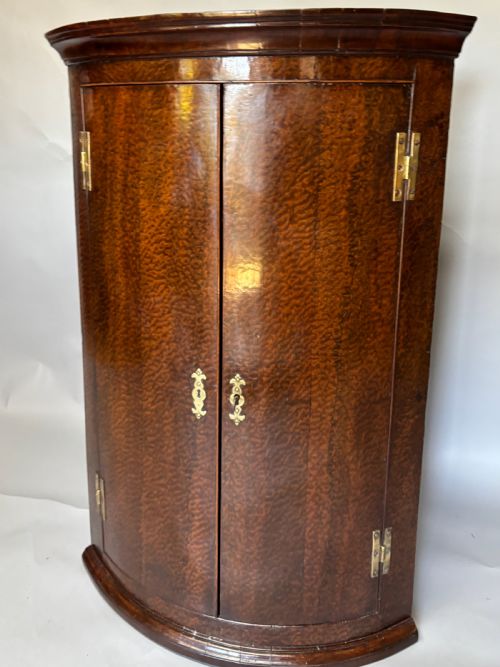
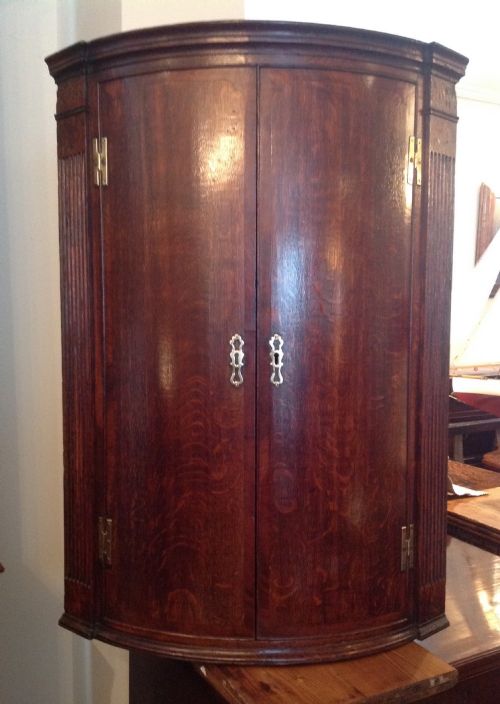
A brass hinge wall cabinet primarily appears on this page as a corner cupboard or hanging display cabinet. These wall-mounted pieces utilise vertical corner space efficiently in domestic interiors.
The selections span the Georgian period, the eighteenth century, and the Victorian era, including Aesthetic Movement and Arts and Crafts examples. Forms range from flat-fronted hanging units to bow front designs.
Makers and workshops of the eighteenth and nineteenth centuries constructed these cabinets to hold provisions, porcelain, or personal documents. Their survival demonstrates the enduring utility of timber wall storage.
How they were made
Cabinet makers constructed these wall cupboards using solid timbers such as oak, mahogany, plum pudding mahogany, flame mahogany, and pine. Many examples also feature early painted finishes or glazed doors.
Construction methods relied on traditional joinery suitable for hanging weight, secured with exposed or concealed brass hinges that articulate the cabinet doors.
Brass Hinge Wall Cabinet Retail Price Guide 2026
Typical asking prices for brass hinge wall cabinet among the pieces listed under this phrase on Sellingantiques today, from the lower quarter to the upper quarter. They describe what is for sale here now, not the wider market.
These clever corner cupboards prove that previous generations understood how to make an awkward room angle do actual work.
What varies in quality
The distinction between standard domestic utility pieces and finer examples rests upon timber selection and surface figure. Mahogany cabinets displaying strong flame patterns or rich plum pudding grain sit higher in the range than plain painted pine.
Original brass hardware and well-preserved timber patination elevate an individual cabinet. The precision of the corner mitres and the integrity of the hanging mechanism also define the standard of execution.
John Moyr Smith
The Brass Hinge Wall Cabinet Glossary
- Bow front
- A convex curved cabinet front that projects outward from the wall. This shape softens the angular geometry of a corner installation.
- Hanging cabinet
- A wall-mounted storage unit designed to be secured directly to wall studs rather than resting upon the floor. These pieces save valuable floor space in smaller rooms.
- Flame mahogany
- A veneer figure characterised by flamelike patterns created by slicing through boughs or branch junctions. It provides a striking visual texture on cabinet doors.
Brass Hinge Wall Cabinet: Frequently Asked Questions
What is a brass hinge wall cabinet?
A brass hinge wall cabinet is a wall-mounted wooden cupboard designed to fit neatly into a room corner. These pieces provide enclosed storage while occupying minimal floor space.
Most examples date from the Georgian period through to the late Victorian era. They utilise durable timbers and functional metal hinges to secure their doors.
How were corner cupboards used?
Historical households utilised corner cupboards to store tableware, dry goods, and valuable ceramics. Their triangular footprint made effective use of unused room angles.
Many featured glazed upper doors or shelved interiors to display prized household items. Today they serve a similar decorative and storage function in period homes.
How do I hang an antique wall cabinet safely?
Hanging an antique cabinet requires locating solid wall studs or masonry support points to bear the weight of the solid timber. Proper wall fixings ensure the piece remains secure.
Professional installation is recommended due to the heavy nature of period hardwoods like oak and mahogany. Ensure the internal structure and original hinges support the door alignment before loading shelves.
How do I distinguish Georgian from Victorian pieces?
Georgian cabinets typically exhibit restrained classical proportions, often executed in solid oak or rich mahogany with simple architectural mouldings. Eighteenth-century pieces frequently employ hand-cut dovetails and pegged joints.
Victorian pieces from the Arts and Crafts or Aesthetic Movement display different stylistic influences, sometimes incorporating painted surfaces or distinctive decorative hardware. Examining the wood species and construction techniques helps clarify the period.