

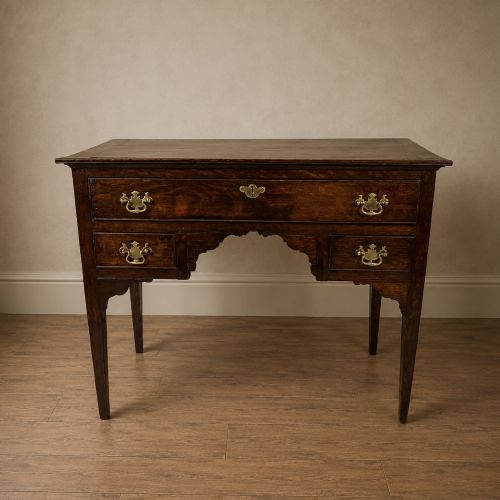
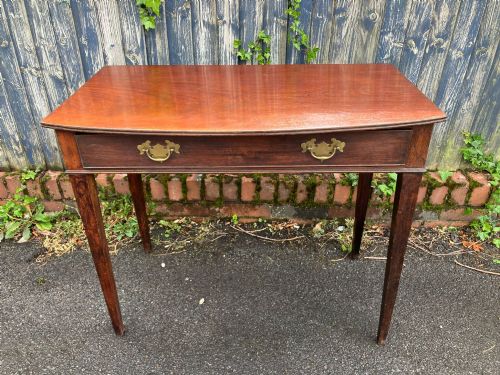
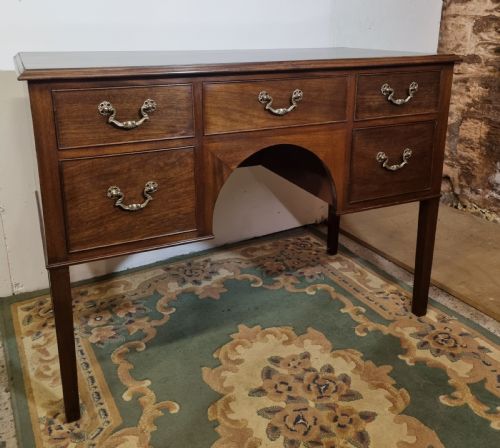
Brass Handled Dressing Table
A brass handled dressing table brings together period timber and functional metalwork for daily use.
Brass Handled Dressing Table
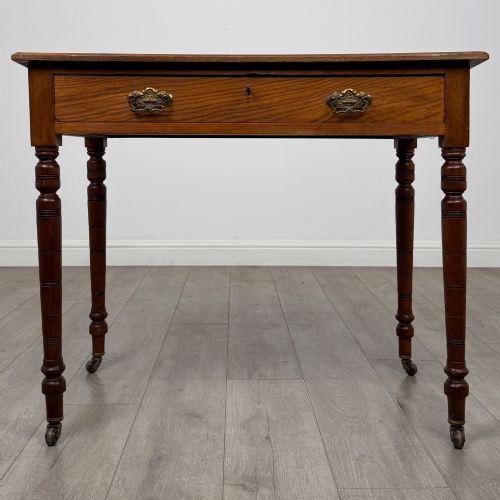
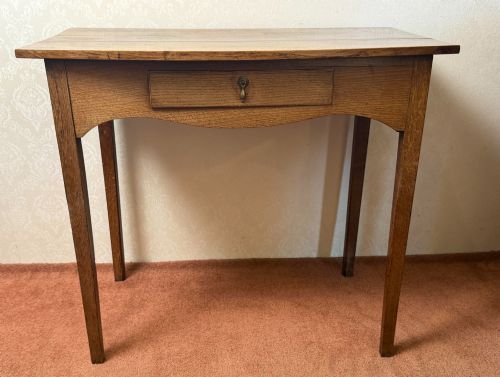
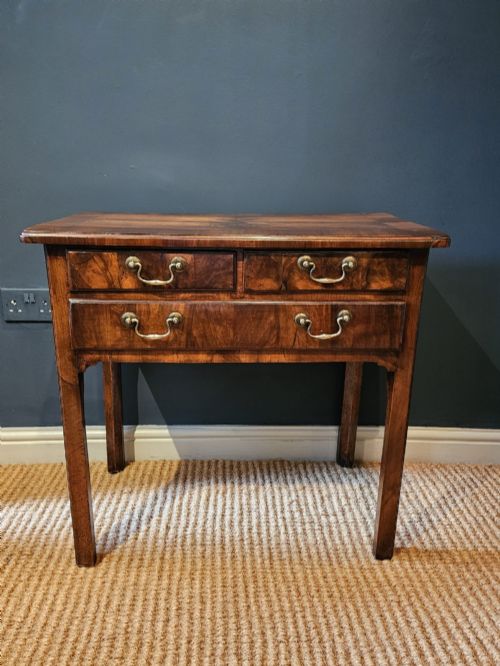
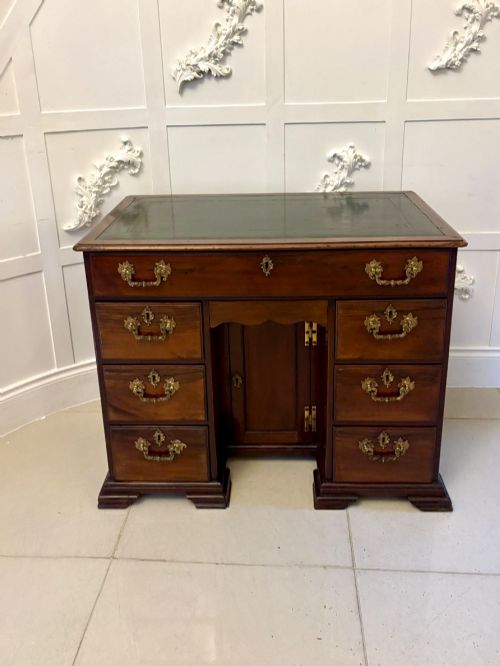
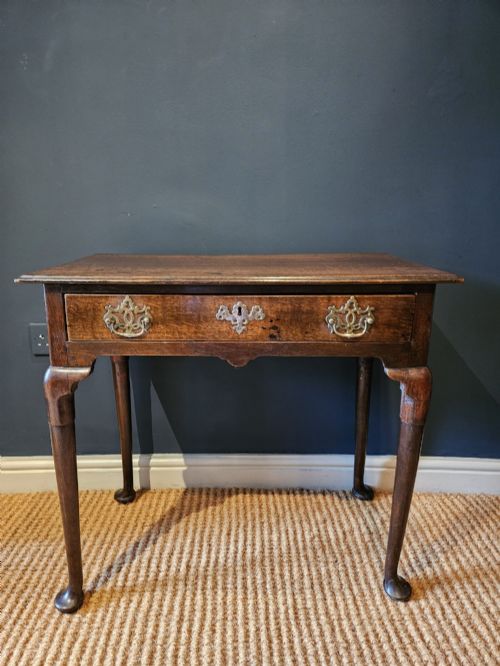
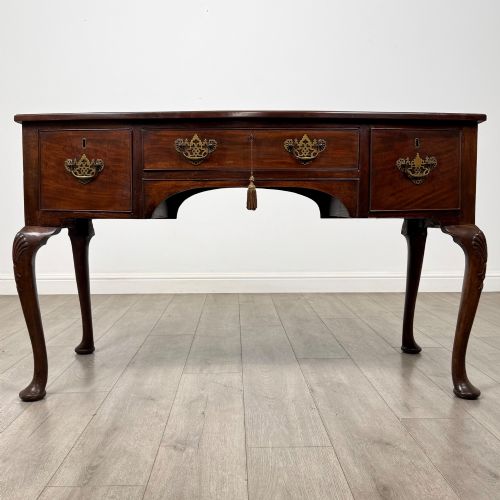
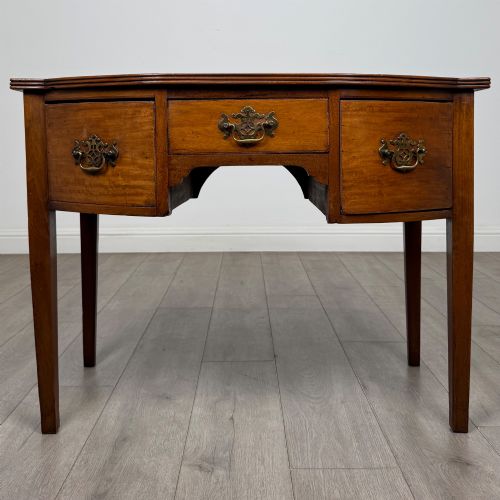
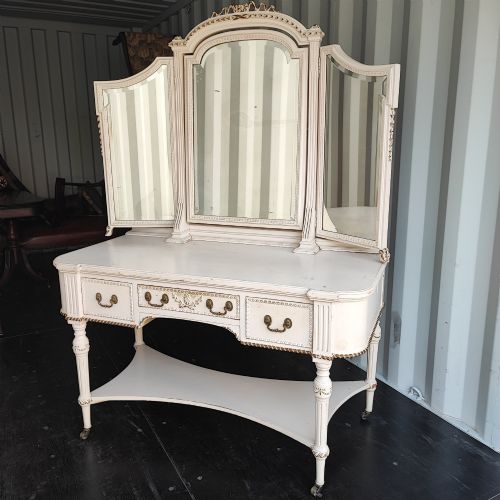
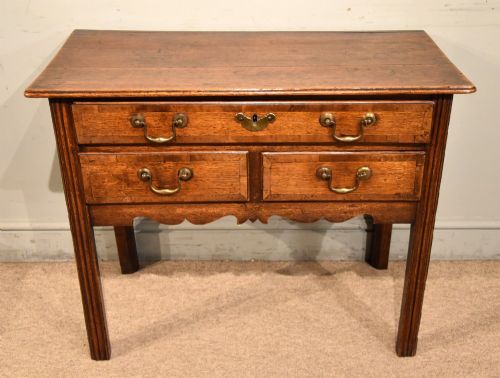
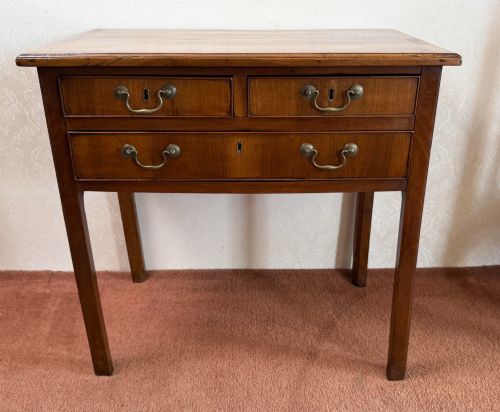
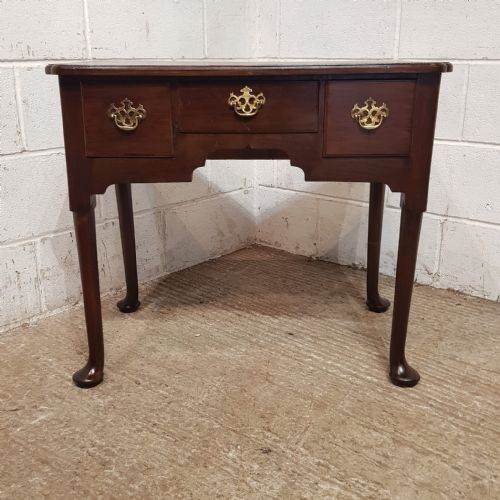
A brass handled dressing table encompasses lowboys, kneehole desks, and writing tables equipped with brass drawer hardware. These pieces originate primarily from the Georgian, Victorian, and Edwardian eras, spanning the eighteenth and nineteenth centuries.
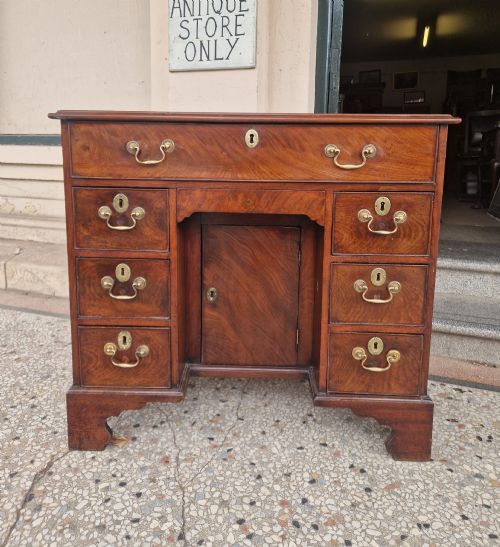
The most common form encountered on this page is the lowboy or kneehole desk in mahogany, oak, or walnut, often featuring fitted drawers with brass handles.
Makers and workshops across these periods utilised timbers such as burr walnut and golden oak, building furniture designed for domestic chambers and dressing rooms.
Materials and Construction
Makers constructed these tables using solid hardwoods and decorative veneers, notably mahogany, oak, and walnut, frequently accented with burr walnut figuring.
Drawer construction relies on traditional joinery, paired with cast brass handles, drop pulls, or swan neck hardware fixed to the drawer fronts.
Materials span solid mahogany, figured burr walnut, and golden oak, complemented by glass and leather elements.
Judging Quality and Execution
Quality rests on the selection of timber and the precision of the cabinetwork, from the figuring of the walnut veneer to the crispness of the drawer dovetails.
The integration of the brass hardware relative to the timber proportions marks the distinction between standard workshop production and finer furniture.
Maples of London
The Brass Handled Dressing Table Glossary
- Lowboy
- A small table with one or more drawers, commonly used as a dressing table or side table during the eighteenth century. These pieces typically stand on slender cabriole or straight legs.
- Kneehole desk
- A desk or dressing table featuring a recessed cupboard or space for the knees beneath a central drawer, flanked by banks of smaller drawers.
- Dovetail
- A joint used in drawer construction, formed by interlocking wedge-shaped fingers that secure the sides to the front.
- Veneer
- A thin layer of figured wood, such as burr walnut, applied to a secondary timber base to create a decorative surface.
Brass Handled Dressing Table: Frequently Asked Questions
What defines a brass handled dressing table?
These tables are period writing desks, lowboys, or dressing pieces outfitted with brass drawer furniture.
They combine utilitarian storage with the cabinet timbers of the eighteenth and nineteenth centuries.
How were these tables used originally?
Owners used them in bedrooms and dressing rooms for personal grooming, correspondence, and storing small valuables.
The fitted drawers held writing materials or dressing accessories.
How do I identify Georgian examples?
Georgian pieces display proportions and timber choices characteristic of the eighteenth century, including oak and mahogany.
Construction details like hand-cut dovetails help distinguish these earlier pieces from later revivals.
Where should I place one at home?
A lowboy or dressing table functions well in a hallway, bedroom, or living space as a side table.
The compact footprint allows them to fit into smaller rooms while providing surface and drawer storage.