

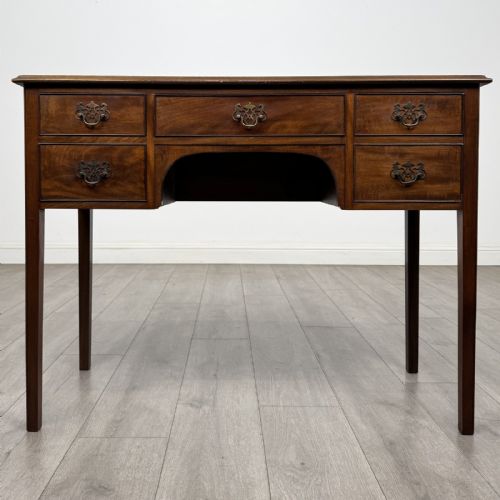
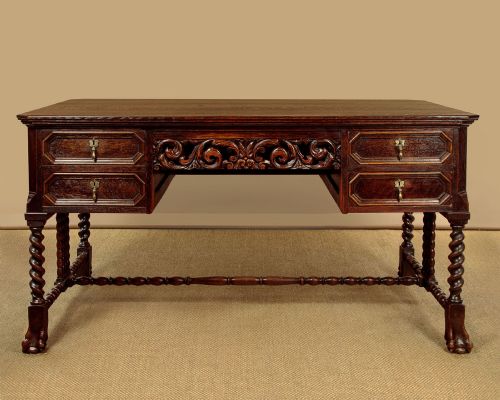
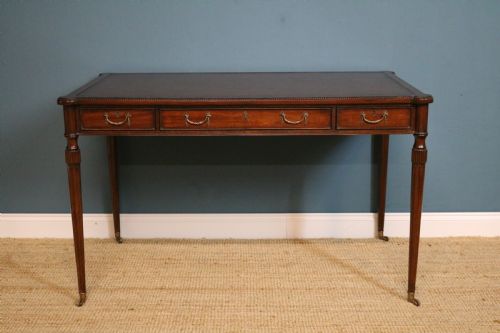
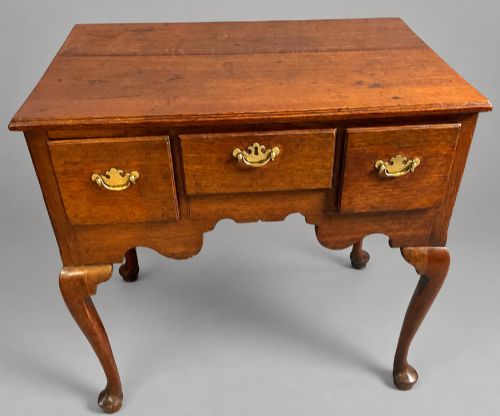
Brass Handled Desk
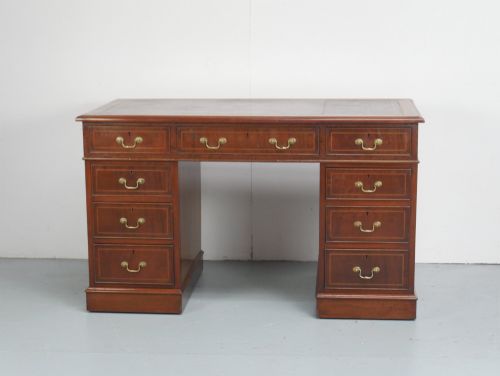
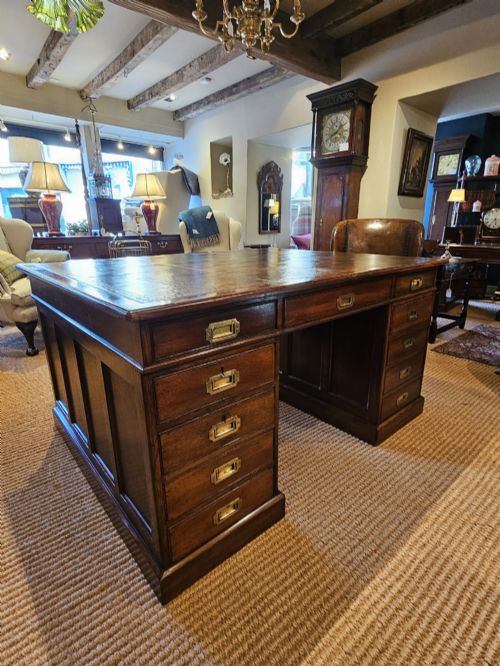
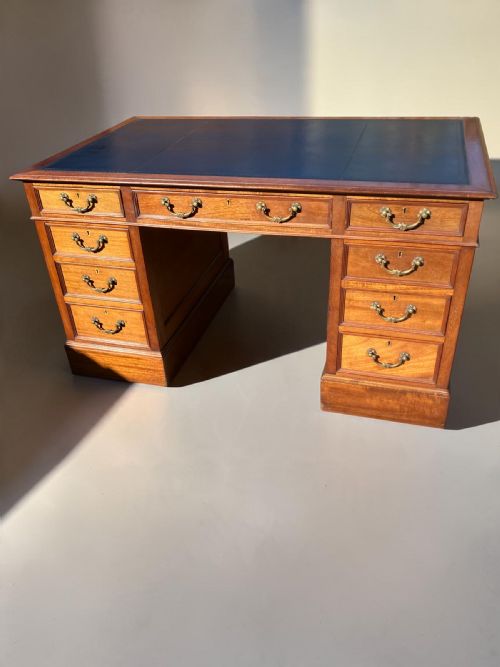
A brass handled desk brings solid timber construction and period metalwork together to anchor a study.
Brass Handled Desk
A brass handled desk unites substantial timber construction with durable metal hardware designed for daily use in a study or office. Buyers looking at this phrase encounter various forms, with kneehole desks, pedestal desks, and writing tables dominating the available pieces.
The pieces span multiple eras, stretching from early eighteenth-century examples through the Georgian and Victorian periods up to Edwardian designs. Mahogany and oak dominate the timber selection, frequently accompanied by walnut, satinwood, and camphor wood across different regional workshops.
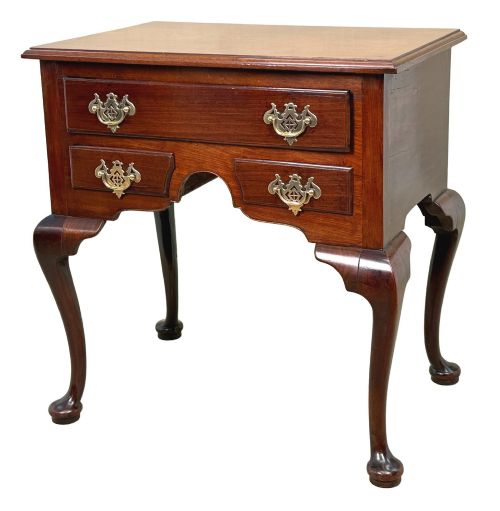
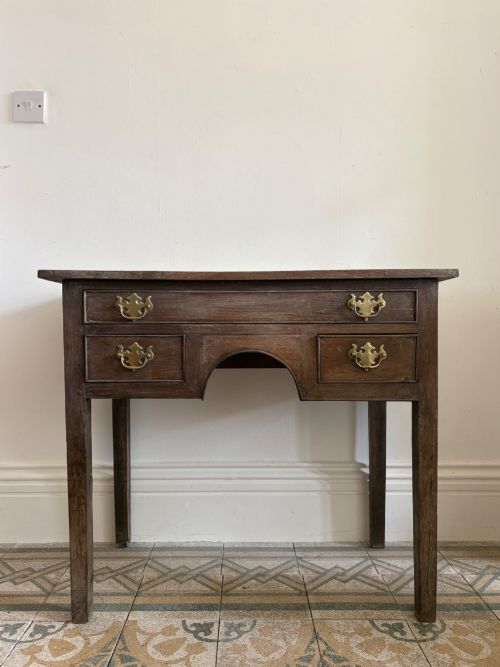
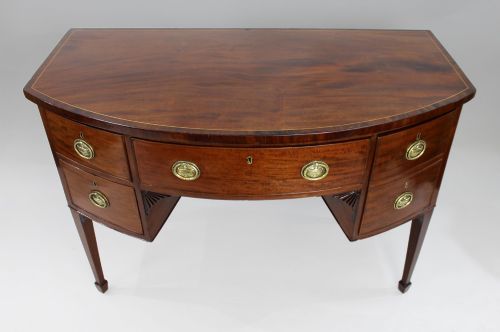
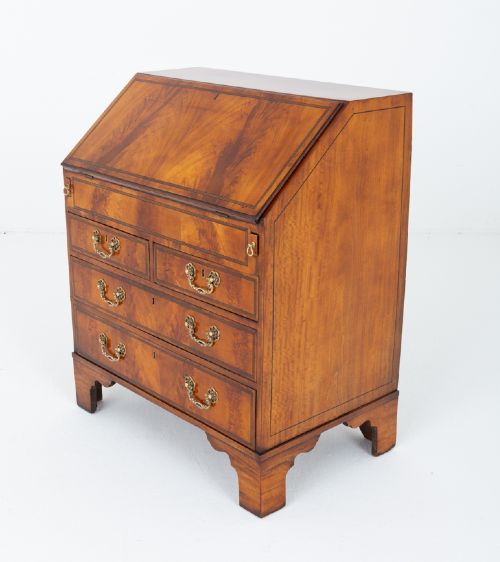
Side tables, lowboys, and bureau desks also appear within the selection, sharing the characteristic metal drawer pulls and practical working surfaces. Buyers typically find forms ranging from compact kneehole configurations to large partners desks built for dual use.
How they were made
Cabinet makers constructed these pieces primarily using solid mahogany, oak, and walnut, often applying veneers over secondary timbers on curved or decorative surfaces. Drawers incorporate traditional joinery such as dovetails, built to withstand regular opening and closing.
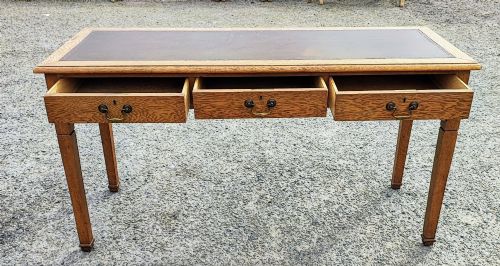
Metal hardware consists mainly of cast or stamped brass, fixed with pins or screws to secure pulls and drop handles onto the timber drawer fronts. Writing surfaces frequently integrate inset panels of leather to provide a durable and smooth writing area.
Brass Handled Desk Retail Price Guide 2026
Typical asking prices for brass handled desk among the pieces listed under this phrase on Sellingantiques today, from the lower quarter to the upper quarter. They describe what is for sale here now, not the wider market.
Camphor wood chests brought exotic scents to the campaign trail, keeping tropical moths away from an officer's paperwork.
What varies in quality
The standard of timber selection and the precision of the cabinet joinery dictate the structural integrity of each piece. Superior examples display carefully matched grain patterns across drawer fronts and sound internal framing without modern reinforcement.
Hardware contributes significantly to the overall character, with heavy cast brass handles demonstrating a higher grade of manufacture than lightweight stamped alternatives. The condition of secondary woods within drawer linings and the survival of original fitted interiors further separate standard utility pieces from finer commissions.
Howard and Sons·Trollope and Sons·Maples of London and Paris·Mappin and Webb
The Brass Handled Desk Glossary
- Lowboy
- A small dressing table or side table featuring one or more rows of drawers beneath a flat top, typically raised on slender legs. These form a common precursor to later freestanding writing tables.
- Kneehole desk
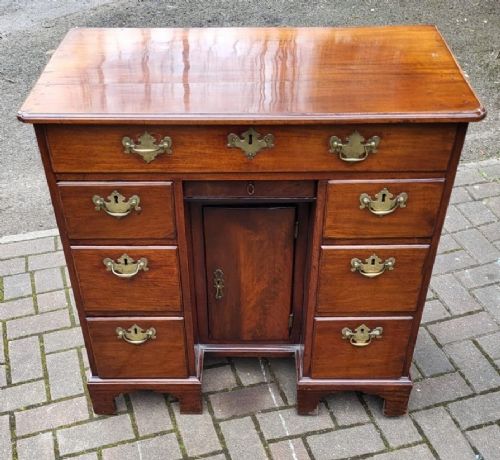
- A compact desk featuring a central recessed space for the legs, flanked by columns of small drawers. They offer substantial storage while maintaining a manageable footprint.
- Campaign chest
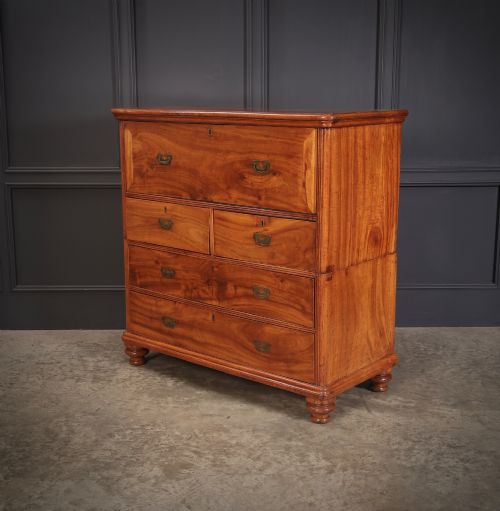
- A modular chest of drawers built in sections with recessed brass handles, designed for easy transport by military officers. The brass handles prevent snagging during travel.
- Secretaire
- A cabinet or chest incorporating a pull-down writing flap that conceals small drawers and pigeonholes. They combine the storage of a chest of drawers with the function of a desk.
- Partners desk
- A large double-sided pedestal desk designed for two people to work opposite one another. They feature drawers and cupboards accessible from both sides.
Brass Handled Desk: Frequently Asked Questions
What is a brass handled desk?
A brass handled desk is a wooden writing table or pedestal desk fitted with metal drawer pulls, built primarily during the Georgian, Victorian, and Edwardian eras. These pieces serve as functional workstations while incorporating traditional cabinet making techniques.
They appear in various timbers such as mahogany, oak, and walnut, often featuring fitted interior compartments and leather writing surfaces.
How do I identify a Georgian desk?
Georgian desks display architectural proportions, solid timber construction, and restrained decorative carving typical of the eighteenth century. They frequently utilise mahogany or oak with hand-cut dovetail joints on the drawer construction.
Examining the drawer linings and backboards reveals secondary woods and construction methods consistent with the period of manufacture.
Where were these desks used?
These desks served in domestic studies, libraries, and administrative offices as primary writing surfaces for correspondence and record keeping. Larger variants like partners desks accommodated multiple users in professional settings.
Campaign versions travelled with military personnel, designed with flush brass fittings to withstand frequent transportation.
How do I care for a vintage desk?
Maintain a vintage desk by keeping it away from direct heat sources and fluctuating humidity to prevent timber movement and veneer cracking. Regular dusting with a dry cloth and occasional application of appropriate wax preserves the polished finish.
Protect leather writing surfaces from sharp objects and moisture to maintain the integrity of the writing area.