

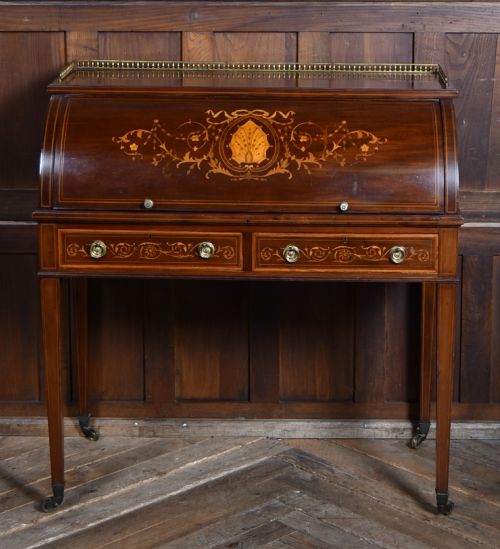
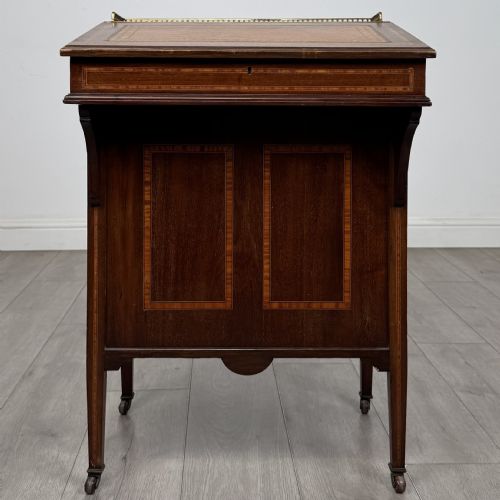
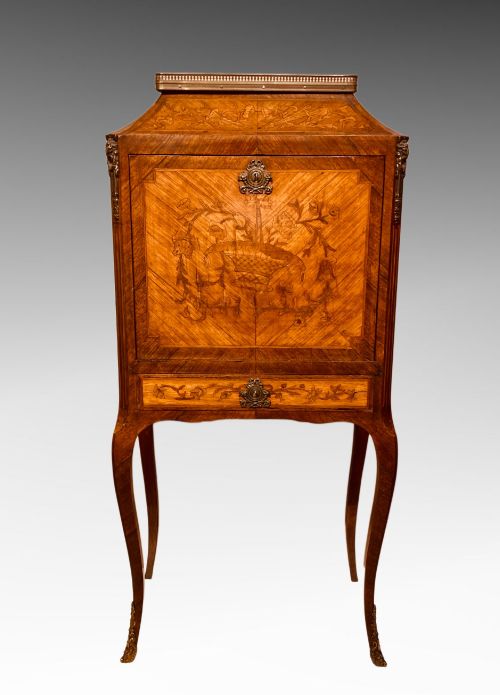
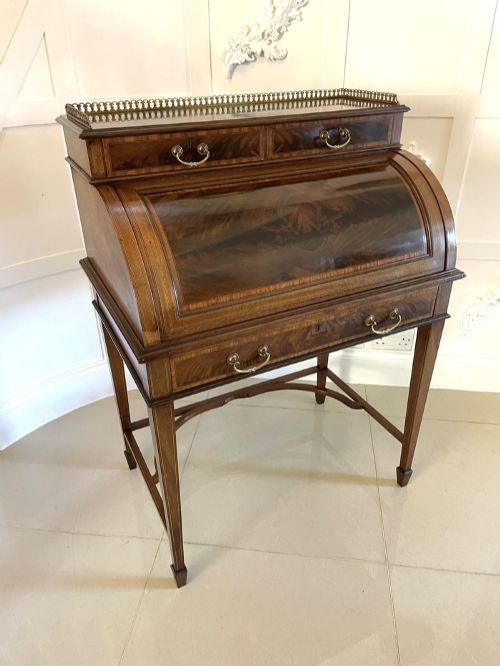
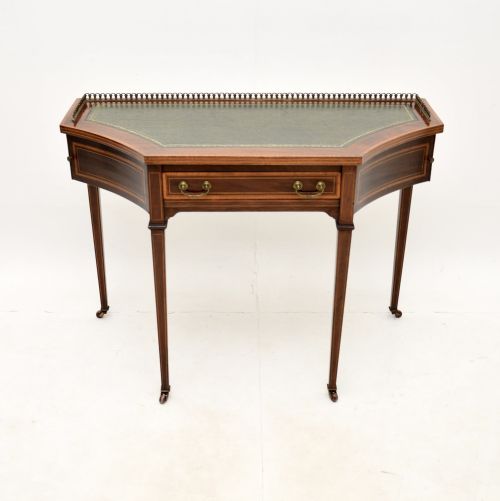
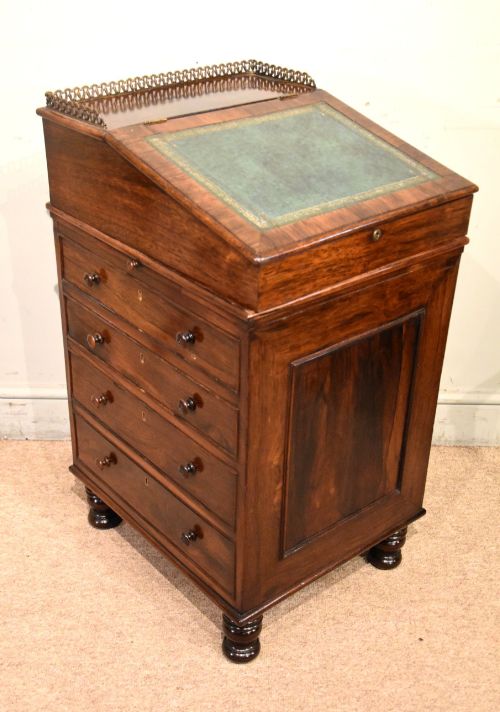
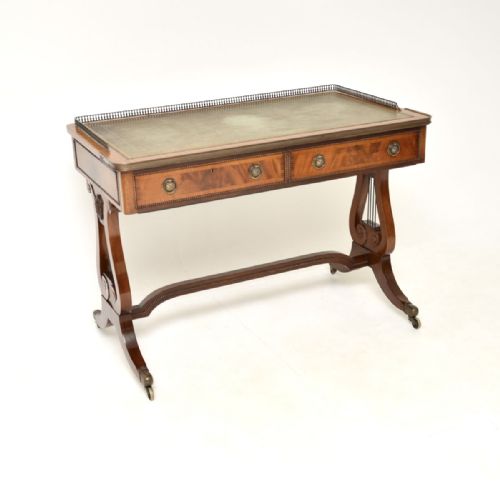

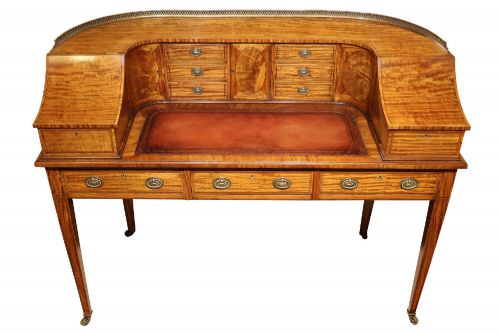



Brass Gallery Top Desk
A brass gallery top desk combines solid timber construction with a neat metal railing designed to keep inkwells and stationery secure.
Brass Gallery Top Desk
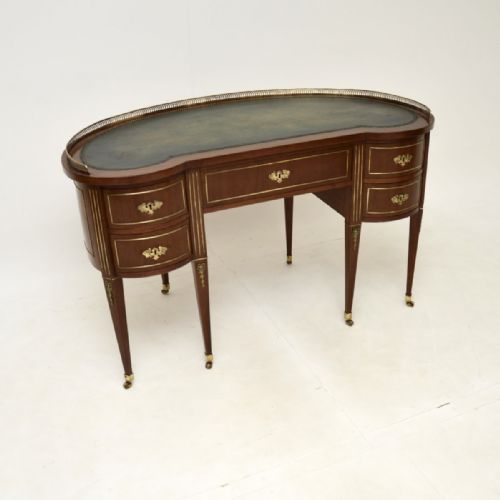
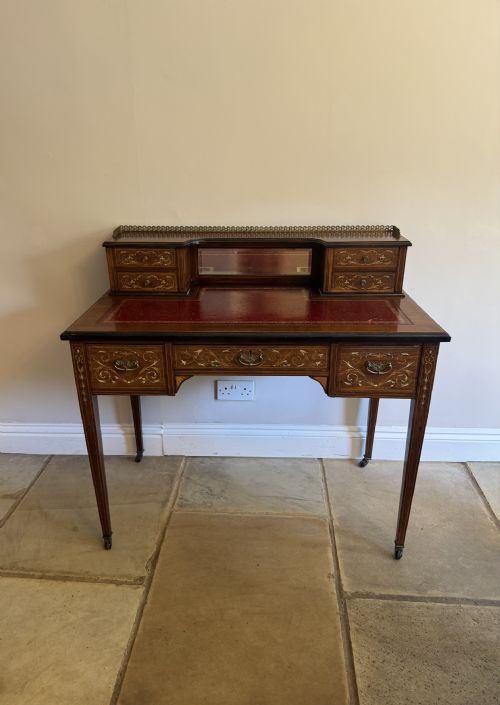
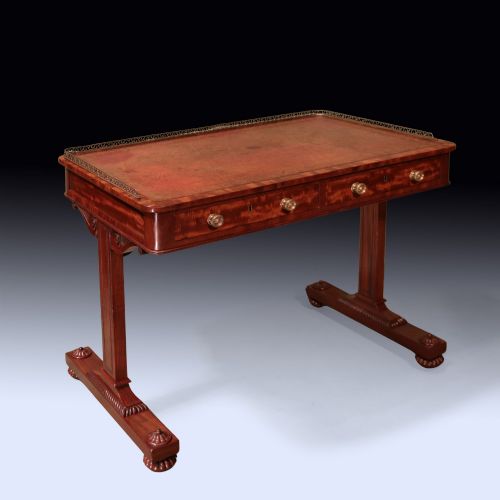
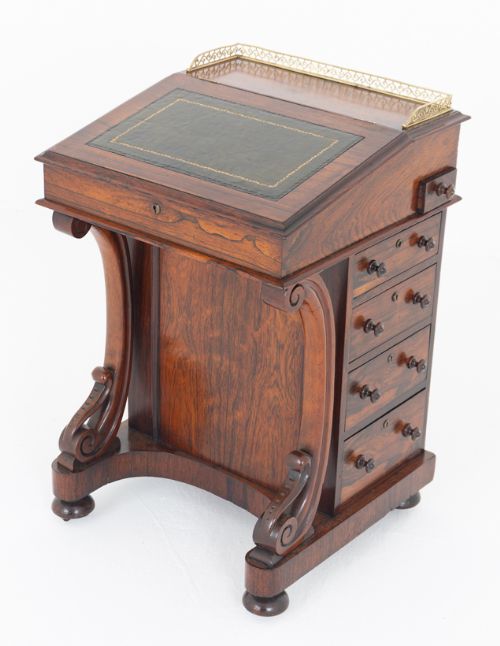
A brass gallery top desk is a writing table or bureau finished with a decorative or functional metal rail along the upper edge. Buyers searching for a brass gallery top desk usually encounter compact forms such as Davenport desks, writing tables, and Carlton House desks originating from the Georgian, Regency, Victorian, and Edwardian periods.
The layout typically incorporates inset leather writing surfaces alongside banks of drawers or pigeonholes. Woods such as mahogany, rosewood, and satinwood dominate the selection, often highlighted with fine marquetry or brass mountings.
Pieces span a considerable chronology, ranging from early nineteenth-century Regency examples to late Victorian and Edwardian interpretations. The unifying characteristic remains the metal gallery encircling the upper tier, securing ink bottles and papers against slips.
Materials and construction
Cabinet makers utilised dense hardwoods like mahogany, oak, and rosewood as the structural foundation, frequently applying veneers of satinwood, burr walnut, kingwood, or amboyna over secondary timbers. Surfaces often received hand-tooled leather writing inserts bordered by delicate stringing or floral inlay.
The metal galleries were cast or fabricated from brass, then secured to the upper perimeters of the desks by small screws or pins. Ormolu mounts and brass handles provided additional functional and decorative contrast against the dark polished wood.
Brass Gallery Top Desk Retail Price Guide 2026
Typical asking prices for brass gallery top desk among the pieces listed under this phrase on Sellingantiques today, from the lower quarter to the upper quarter. They describe what is for sale here now, not the wider market.
Listings feature periods from the Georgian era through to the Edwardian period, utilising mahogany, rosewood, oak, and satinwood.
Separating the standard from the exceptional
Quality rests upon the selection of timber veneers and the precision of the cabinet work. Superior pieces display carefully matched wood grains across drawer fronts and smooth, unwarped writing surfaces fitted neatly with well-tooled leather.
The integrity of the brass gallery itself indicates the grade of the piece, with finer examples featuring solid, crisply cast metalwork rather than thin stamped brass. Maker attribution, such as work bearing the stamp of established firms, elevates the standing of the furniture within its period.
Maple & Co·Gillow & Co·George Hepplewhite
The Brass Gallery Top Desk Glossary
- Brass gallery
- A metal rail fitted around the top surface of a desk to prevent items from rolling off. It can be pierced, cast, or formed from thin wire spindles.
- Davenport desk
- A compact box-form writing desk featuring a sloping, leather-lined lid and drawers accessed from the side. This form gained popularity during the Regency and Victorian eras.
- Carlton House desk
- A horseshoe-shaped writing desk fitted with a raised superstructure of small drawers and pigeonholes. The design is traditionally attributed to the eighteenth-century designer George Hepplewhite.
- Marquetry
- Decorative veneer patterns formed by fitting together thin pieces of wood, shell, or ivory into pictorial or geometric designs. It was widely utilised on Edwardian and Victorian inlaid writing furniture.
- Cylinder desk
- A writing table featuring a curving quarter-circle wooden shutter that rolls back to reveal the writing surface and interior compartments. This mechanism protects the desk contents when closed.
Brass Gallery Top Desk: Frequently Asked Questions
What is a brass gallery top desk used for?
These pieces function primarily as writing tables or compact workstations for correspondence and administrative tasks. The raised metal rail prevents inkwells and writing implements from sliding onto the floor.
Historically, they served in private libraries, bedrooms, and estate offices as personal writing furniture. Today, they continue to serve similar domestic functions while acting as focal points in a study.
How do I care for the leather top?
The leather writing surface benefits from occasional cleaning with a slightly damp cloth and treatment with appropriate leather dressings to prevent cracking. Avoiding direct sunlight helps preserve the colour and suppleness of the hide.
Harsh chemical cleaners should be kept away from both the leather insert and the surrounding polished wood. Gentle dusting maintains the finish of the timber frame and the brass gallery.
How do I date a brass gallery top desk?
Dating relies on observing timber choices, construction methods, and hardware styles across different eras. Regency and Georgian pieces often feature heavier mahogany construction, while Edwardian models frequently display lighter satinwood and extensive marquetry.
Secondary woods inside the drawers and the style of the brass fittings offer further clues. Maker stamps, where present, provide a direct link to specific workshops and operating dates.
Can I use these desks for modern writing?
Many traditional writing desks accommodate modern laptops and stationery within their compartments and leather-lined surfaces. Compact forms suit smaller rooms where standard office furniture might overwhelm the space.
Care should be taken to protect the historical finish from modern devices and moisture. Using desk pads helps safeguard the antique leather during daily work.