


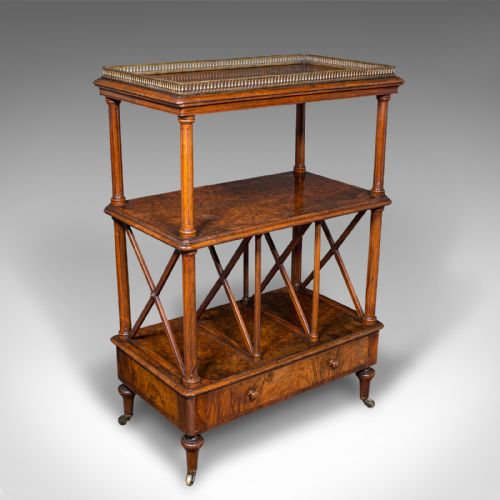


Brass Gallery Shelf
A brass gallery shelf provides both practical display and a secure retaining rail, holding your prized books and decorative objects firmly in place.
Brass Gallery Shelf
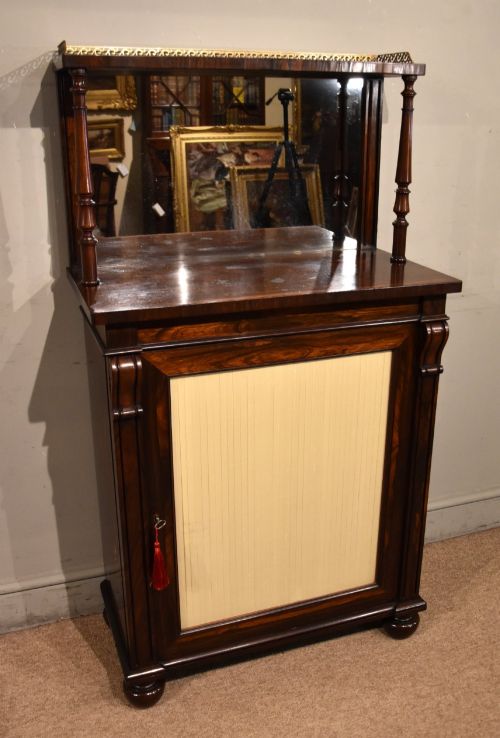
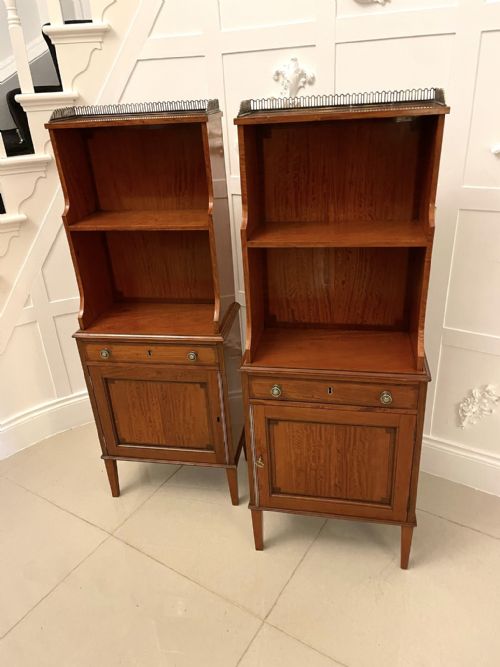
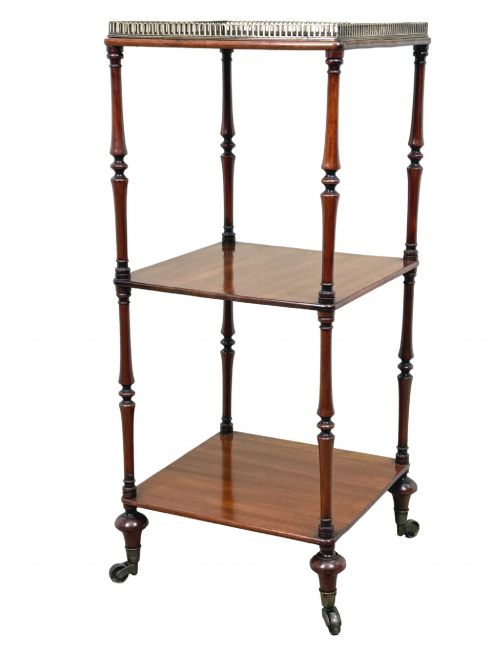
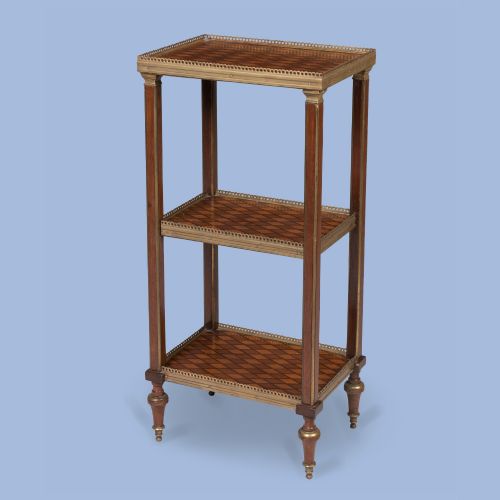
When you search for a brass gallery shelf, you are looking at items like bookcases, chiffoniers, étagères, side cabinets, and wall shelves equipped with protective metal rails. These pieces serve to keep items from sliding off tiers and tabletops during everyday use or transport.
The versions you meet on this page span the Georgian, Regency, William IV, Victorian, Edwardian, and Napoleon III periods. They appear in forms ranging from compact wall shelves and tabletop étagères to multi-tiered bookcases and side cabinets.
Makers and cabinetmakers utilised rich timbers such as mahogany, rosewood, walnut, satinwood, and amboyna alongside marble and glass. The brass gallery itself unites these diverse forms, acting as a functional signature across varied styles.
How they were made
Cabinetmakers constructed the main carcases from dense hardwoods like mahogany and exotic veneers including rosewood, walnut, and marquetry. These timbers were shaped into bookcases, side tables, and chiffoniers, often complemented by marble tops or mirrored backs.
The defining brass gallery components were cast or formed and mounted meticulously to the edges of shelves and tabletops. Additional decorative elements such as ormolu, parcel gilding, and brass mounts completed the construction of these refined furnishings.
Listings feature pieces spanning the Georgian, Regency, Victorian, and Edwardian periods, constructed from mahogany, rosewood, walnut, and marble.
What varies in quality
The refinement of the timber selection and the crispness of the brass castings distinguish the finest pieces from simpler iterations. Rich grain figures in rosewood or satinwood combined with substantial, well-cast galleries indicate superior craftsmanship.
Proportion and structural integrity define the upper tier of these furnishings. Pieces that balance delicate upright supports with secure, solid shelf construction demonstrate the maker's mastery.
Gillows
The Brass Gallery Shelf Glossary
- Étagère
- An open piece of furniture with shelves for displaying small objects or books. It often incorporates a brass gallery along the shelf edges.
- Chiffonier
- A small sideboard or cabinet featuring shelves on the back tier. These frequently display brass galleries on their upper surfaces.
- Ormolu
- Gilded bronze used as a decorative mount on furniture. It appears alongside brass galleries on French and English pieces.
- Marquetry
- Decorative veneer work formed by fitted pieces of various woods. It decorates the surfaces of tables and etageres.
- Canterbury
- A low stand with slatted or divided sections for holding music sheets or books. Some examples include tiered shelf structures.
Brass Gallery Shelf: Frequently Asked Questions
What is a brass gallery shelf used for?
These shelves provide elevated storage and display space for books, decorative objects, and tabletop accessories. The enclosing brass rail stops items from sliding off the surface.
They function across various room settings, from drawing rooms holding delicate ceramics to studies keeping working volumes close at hand.
How do I identify a Regency period piece?
Regency pieces typically display classical proportions, dark mahogany or rosewood timbers, and restrained brass or gilt mounts. Look for architectural lines and refined detailing characteristic of the early nineteenth century.
Makers of this era frequently incorporated open shelving and brass galleries into side cabinets and chiffoniers.
Are these shelves suitable for modern walls?
Wall shelves and lighter etageres require secure fixings into appropriate wall substrates to support their weight safely. Heavier timber and marble structures need proper load-bearing wall anchors.
Checking the mounting points on the back ensures the piece hangs securely without straining the frame.
What woods were used in these cabinets?
Cabinetmakers utilised dense hardwoods like mahogany, walnut, and rosewood for primary structures and structural stability. Exotic veneers such as satinwood and amboyna added decorative contrast.
Marquetry veneer and parcel gilding also appear on specific French and English decorative pieces.