
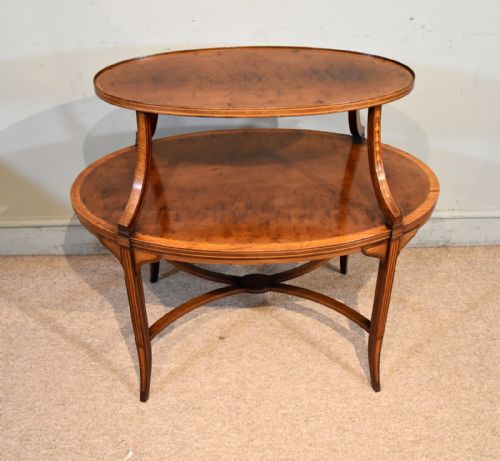


Vintage French Etagere
These vintage french etagere pieces are tiered open shelves built for display, bringing continental elegance and practical surface space into any room.
Vintage French Etagere
When you search for vintage french etagere, you encounter multi-tiered shelving units, side tables, and wall shelves designed for displaying objects. These items originate from periods spanning the nineteenth century through the early decades of the twentieth century, including Edwardian and Victorian eras.
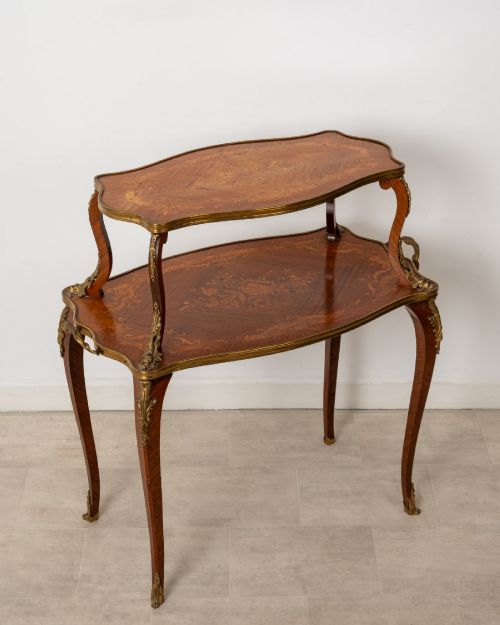
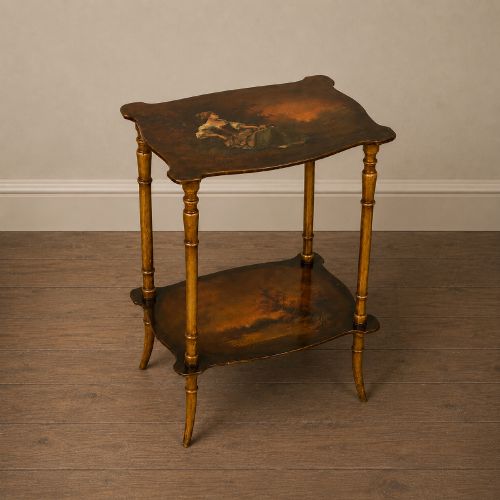
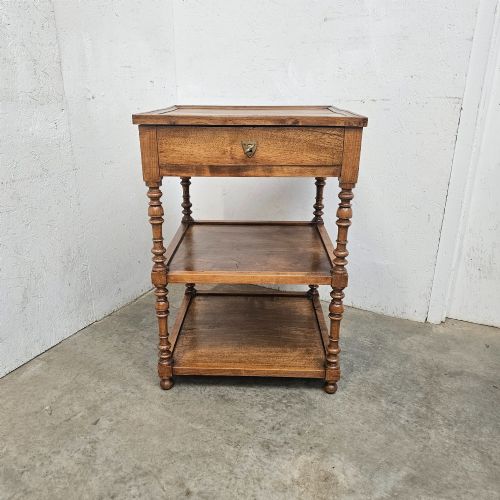
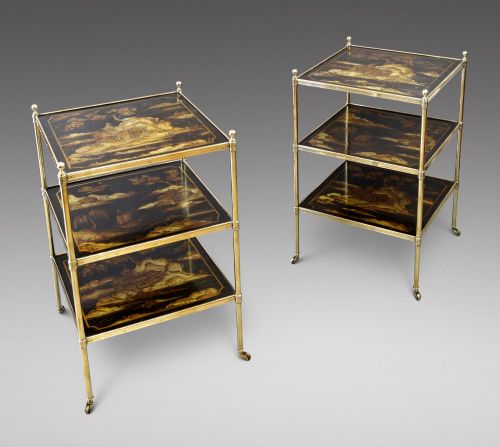
The most common formats on this page include two-tier and three-tier occasional tables, wall-hanging shelves, and floor-standing display units. Stylistic influences lean heavily toward French Louis XV, Rococo Revival, Napoleon III, and French Provincial aesthetics.
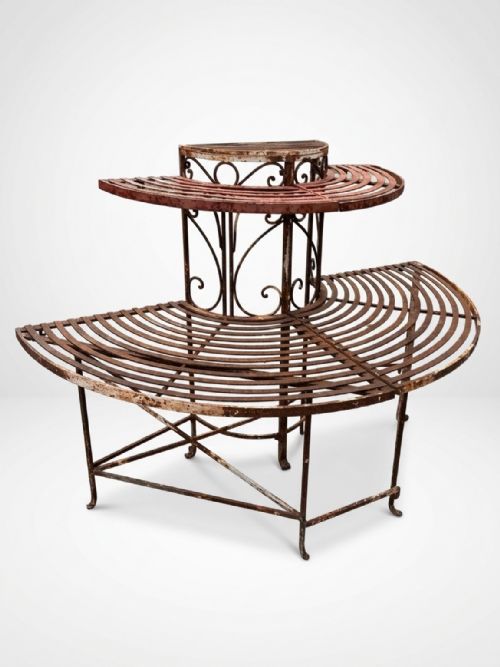
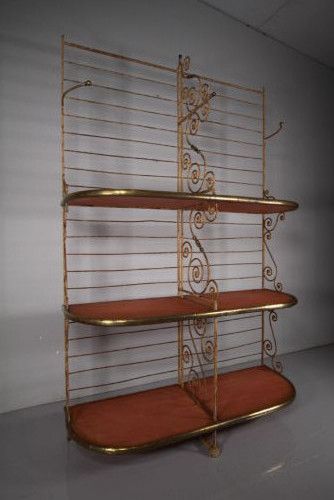
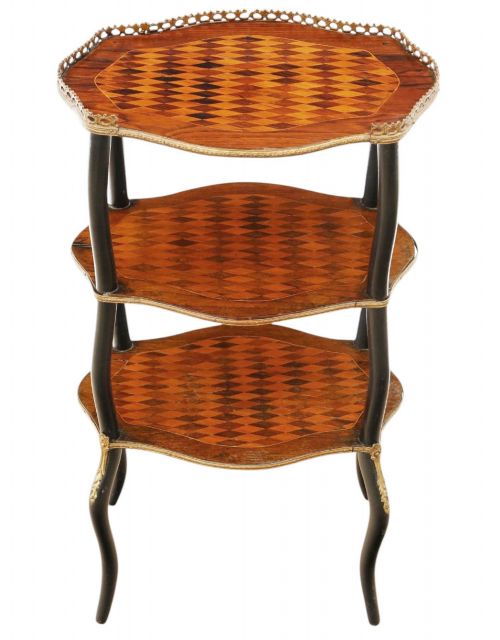
Materials vary widely across the selection, ranging from walnut, mahogany, and kingwood to wrought iron, brass, and painted finishes. Pieces range from delicate marquetry tables with ormolu mounts to utilitarian bakers racks and wirework planters.
How vintage french etagere pieces were made
Woodworking techniques rely on traditional cabinet-making methods, utilising hardwoods like walnut, mahogany, cherry, and ebonised wood alongside intricate marquetry and parquetry inlay. Surfaces often feature painted and gilt treatments, or incorporate marble tops and canework.
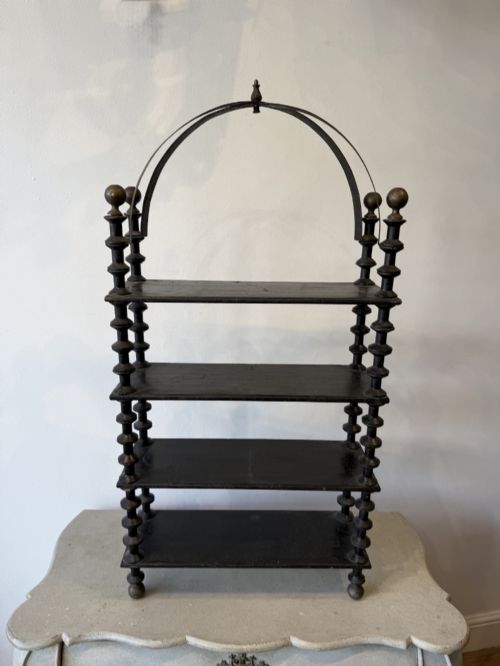
Metalwork forms an equally important structural element, with makers employing brass, bronze, ormolu mounts, and wrought iron. Glass inserts and turned or bobbin legs frequently complement the primary wooden or metal frames.
A sturdy baker's rack manages to transition seamlessly from industrial pastry preparation to holding scented candles and trailing houseplants.
What varies in quality
Quality depends heavily on the precision of the joinery and the complexity of the materials, such as finely detailed marquetry inlay versus plain painted surfaces. The inclusion of decorative ormolu mounts, cast brass details, and inset marble slabs elevates the sophistication of a piece.
The crispness of hand-carved wooden details, the stability of multi-tiered structures, and the condition of original gilt or paint finishes separate standard utility furniture from finer decorative examples.
The Vintage French Etagere Glossary
- Étagère
- An open piece of furniture with multiple tiers or shelves designed for displaying small objects, ornaments, or books. They appear as freestanding floor units or wall-hanging shelves.
- Marquetry
- Decorative woodwork where pieces of veneer are fitted together to form ornamental patterns or pictures on a wooden surface. This technique appears frequently on French tables and cabinets.
- Ormolu
- Gilded bronze mounts applied to furniture as decorative hardware and feet. Makers used these metallic accents to highlight the corners and legs of fine wooden pieces.
- Parquetry
- A geometric mosaic of wood pieces used for decorative floors and surface veneers. It creates regular patterns like squares and triangles on table tops.
- Whatnot
- A nineteenth-century term for an open multi-shelved piece of furniture used for displaying knick-knacks. These items share a similar purpose to traditional étagères.
Vintage French Etagere: Frequently Asked Questions
What is a french etagere used for?
These pieces serve primarily as open display shelving for decorative objects, books, and plants. They function in living spaces as side tables, drinks trolleys, or corner display units.
Wall-hanging versions provide elevated storage where floor space is limited. Freestanding tiered tables combine surface utility with vertical display capability.
How do I date a vintage etagere?
Dating relies on identifying period styles such as Victorian, Edwardian, Napoleon III, or Louis XV revival. Construction methods, wood types, and mounting hardware also offer clues to the era of manufacture.
Nineteenth-century examples often feature heavier timbers and hand-carved details, whereas early twentieth-century pieces incorporate lighter brass and glass elements or distinct Art Deco lines.
Are all etageres made of wood?
Not all pieces utilise wood as the primary material. Many examples combine metal frames with glass shelves, marble tops, or tile inserts.
Wrought iron and brass versions appear frequently among the listings, particularly for plant stands, bakers racks, and occasional tables.
Where should I place an etagere?
Freestanding models suit corners, empty wall spaces, or positions beside seating as occasional lamp tables. Wall-mounted shelves fit well above sideboards or desks to utilise vertical room.
Care should be taken to keep wooden and marquetry pieces away from direct heat sources and strong sunlight to protect the veneer and finish.