

Brass Gallery Occasional Table
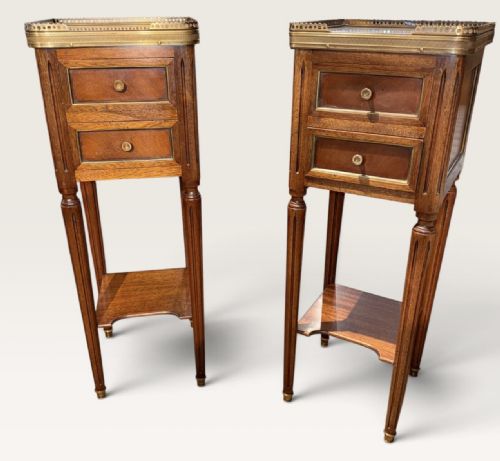
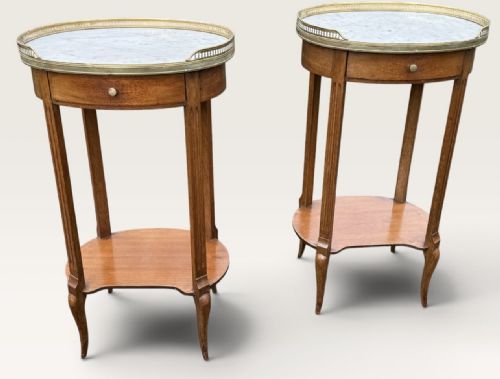
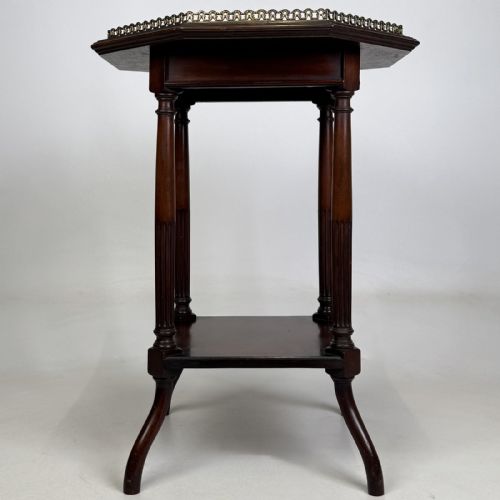
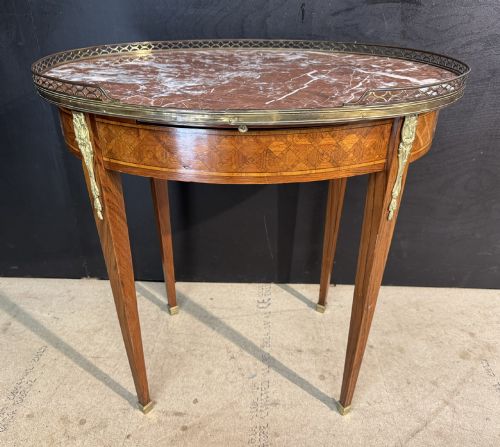
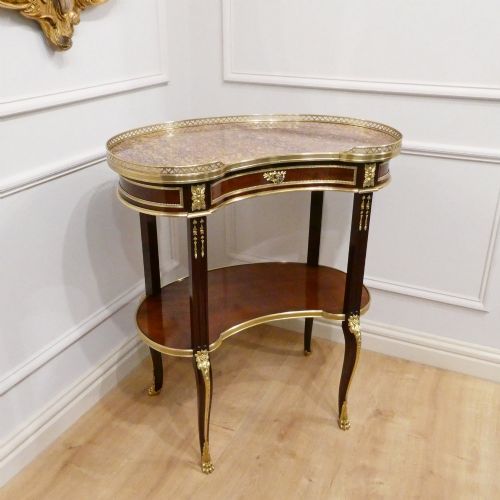
A brass gallery occasional table brings a refined metal edge to a room, framing a timber or marble top with openwork flair.
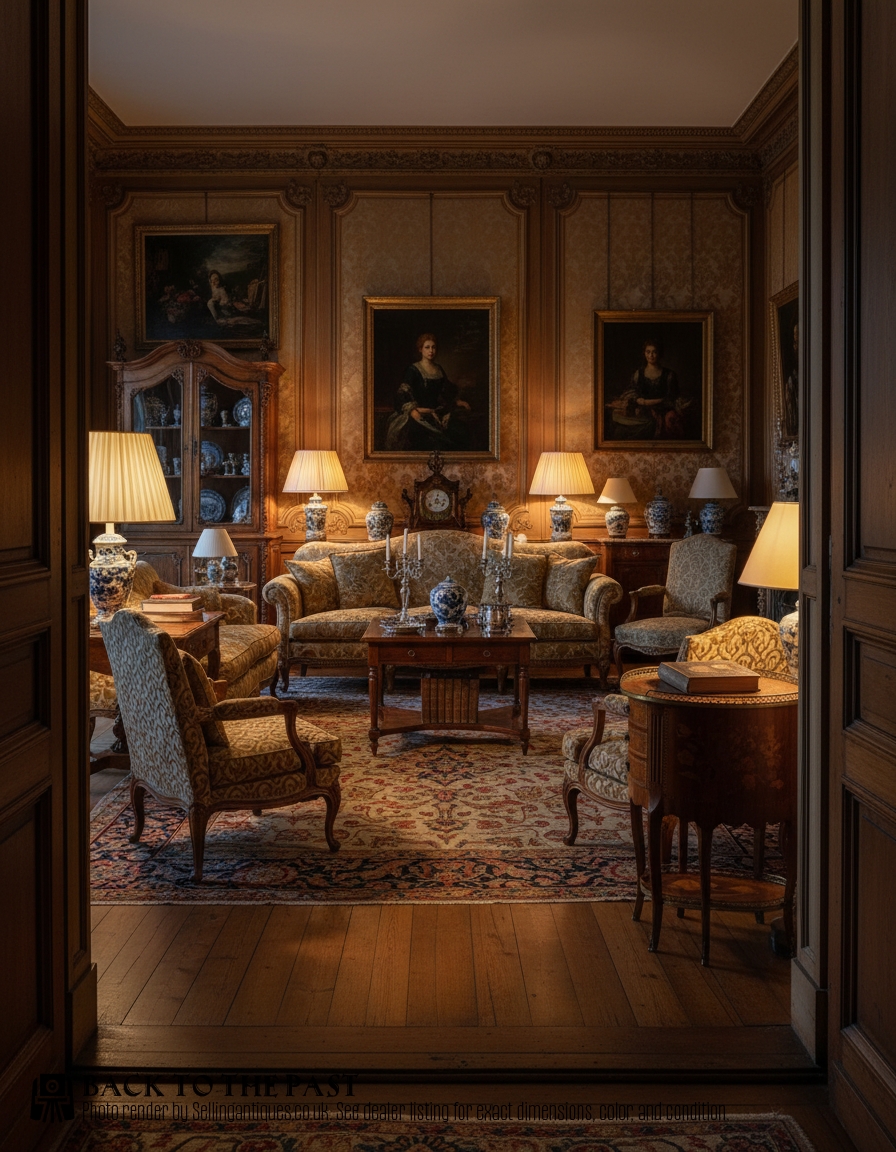
Brass Gallery Occasional Table
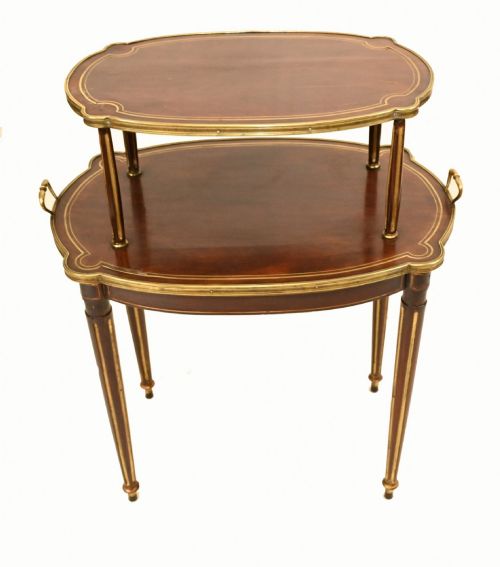
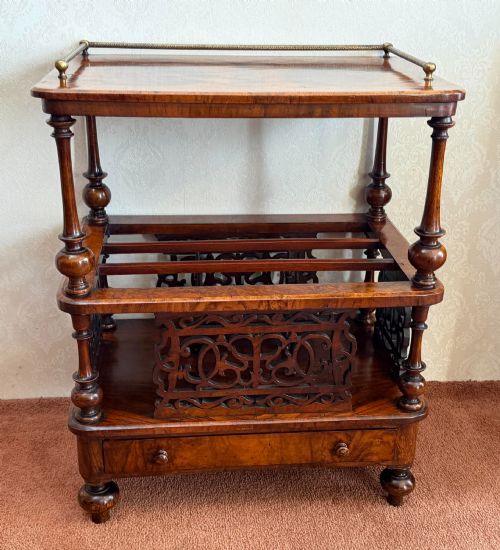
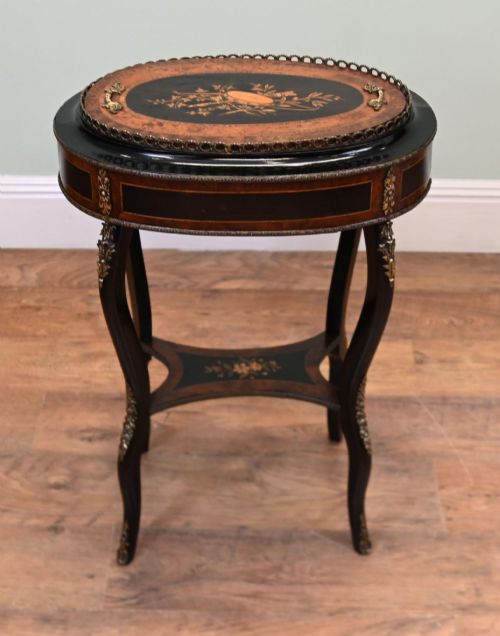
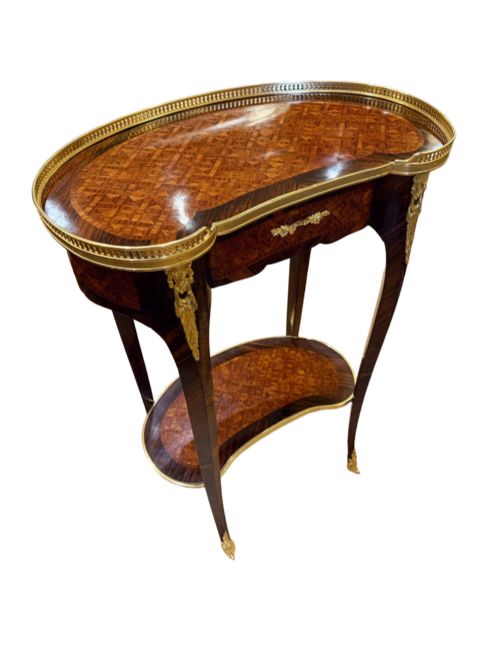
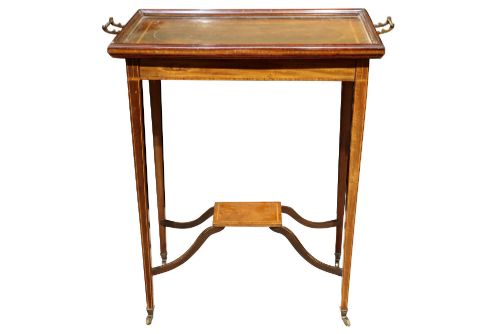
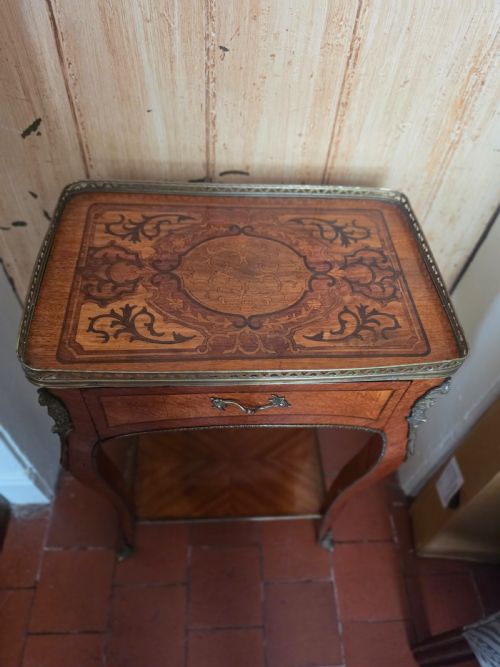
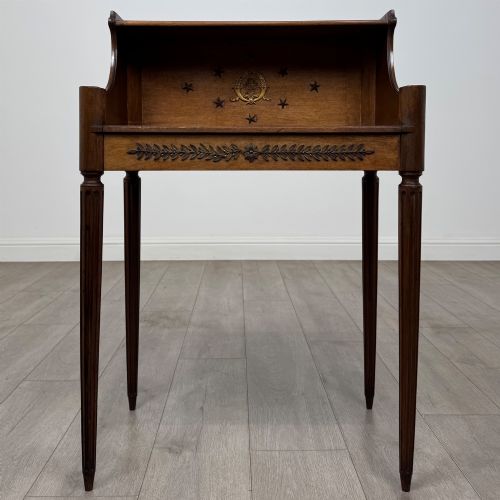
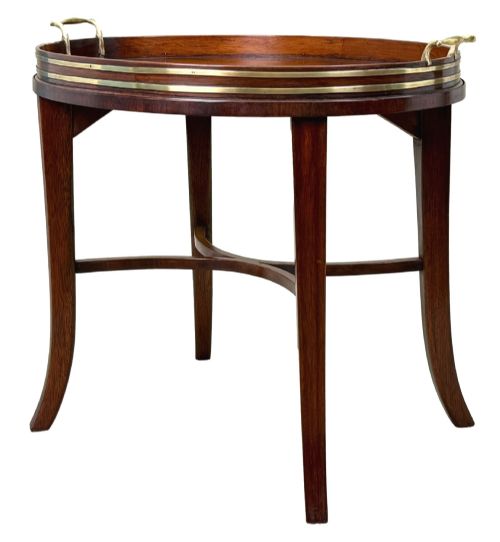
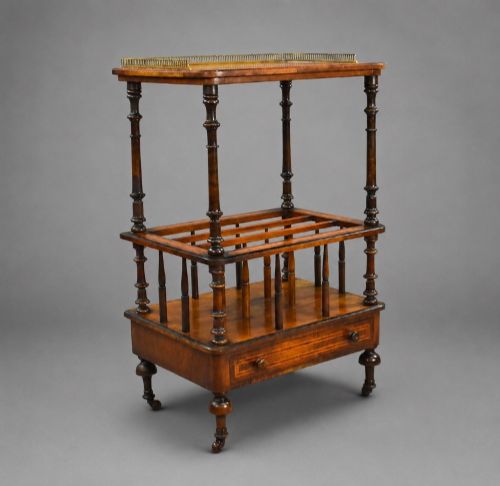
A brass gallery occasional table is a compact piece designed for flexible placement beside seating or against walls, serving multiple domestic uses. When exploring this phrase, buyers encounter various forms including circular bouillotte tables, kidney-shaped side tables, and multi-tiered étagères. The selection spans several decades, with nineteenth-century French models and Edwardian mahogany versions appearing frequently alongside Regency rosewood examples.
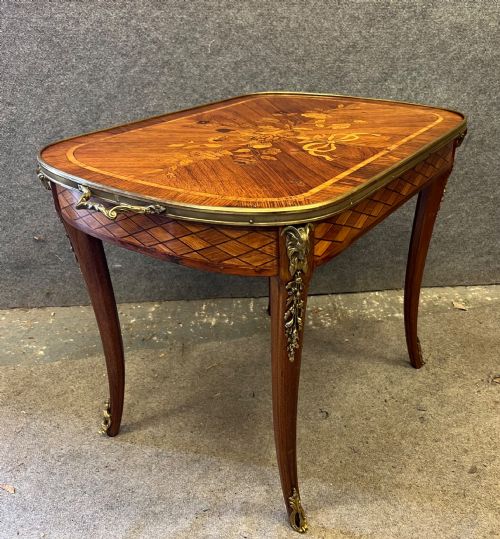
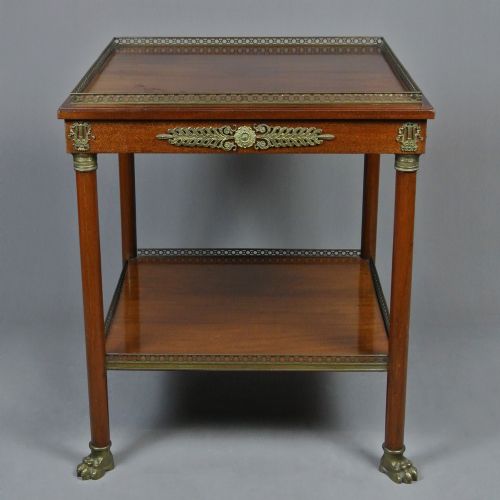
Makers often drew upon classic continental designs, producing pieces aligned with Louis XVI, French Empire, and Regency styles. Materials shift from rich hardwoods like mahogany, walnut, and rosewood to exotic kingwood and satinwood veneers. Many incorporate contrasting marble or onyx tops encircled by pierced metal borders, uniting utility with decorative refinement.
How they were made
Cabinetmakers utilised solid timbers and applied veneers, shaping mahogany, rosewood, and kingwood over sturdy carcases. Marquetry and parquetry inlay required precise hand-cutting of contrasting woods to create geometric or floral patterns across table surfaces. Tables featuring tray tops or tiered shelves relied on stable joinery to support objects without distortion.
Metal components involved casting and turning brass or ormolu, which was then pierced to form the characteristic gallery rail. These galleries were pinned or screwed directly into the wooden or marble perimeters of the tops. Ormolu mounts were often fire-gilded and chased by hand before attachment to corners and friezes.
Brass Gallery Occasional Table Retail Price Guide 2026
Typical asking prices for brass gallery occasional table among the pieces listed under this phrase on Sellingantiques today, from the lower quarter to the upper quarter. They describe what is for sale here now, not the wider market.
Listings feature woods such as mahogany, rosewood, walnut, satinwood, and kingwood, paired with marble, onyx, and cast brass elements.
What varies in quality
Quality rests in the crispness of the brass casting and the precision with which the gallery rail follows the curves of the timber or stone top. Finer examples display meticulous hand-chasing on metal mounts and tightly fitted parquetry or marquetry without gaps in the veneer. Timber selection also dictates grade, with highly figured grains and uniform colour marking superior workshop output.
Structural integrity depends on the internal joinery and the retention of original surface polishes. Tables retaining matching sets of mounts and uncompromised gallery structures demonstrate higher craftsmanship from established Parisian and British makers. The integration of high-grade white marble or onyx slabs further distinguishes workshop standards.
Maison Millet·George Bullock·A Hugnet Paris·Haentgos Freres Paris
The Brass Gallery Occasional Table Glossary
- Brass gallery
- A low pierced metal rail encircling the edge of a table top to prevent items from sliding off. This feature is characteristic of French neoclassical and revival pieces.
- Bouillotte table
- A small circular occasional table with a raised metal gallery, traditionally used for card games. They frequently feature marble tops and candle slides.
- Ormolu
- Gilded bronze used for decorative mounts and furnishings during the eighteenth and nineteenth centuries. The technique involves applying a gold amalgam to a bronze base and heating it.
- Marquetry
- Decorative patterns formed by fitting together thin veneers of various coloured woods into a wooden ground. Makers utilised this method to adorn table tops and friezes.
- Gueridon
- A small French occasional table supported by a central column or legs, often topped with marble. The form originated in the seventeenth century and evolved through subsequent revival periods.
Brass Gallery Occasional Table: Frequently Asked Questions
What is a brass gallery?
A brass gallery is a decorative metal railing fixed around the perimeter of a table top. It acts as a low fence to keep small items secure.
Craftsmen pierced and shaped the metal into openwork patterns, adding both a bright linear accent and practical containment for objects placed on the surface.
Where were these tables used?
These pieces served adaptable roles in drawing rooms, boudoirs, and libraries as convenient surfaces for lamps, books, or drinks. Their modest proportions allowed them to sit beside chairs or occupy narrow wall spaces.
Certain variations functioned specifically for card games, writing, or displaying decorative items like jardinieres and porcelain.
How do I identify a French piece?
French tables frequently incorporate distinctive wood veneers such as kingwood and tulipwood, often arranged in complex marquetry patterns. The presence of fine ormolu mounts and white marble tops also points to continental origin.
Stylistic cues draw heavily on Louis XVI or Empire design traditions, distinguishing them from simpler British domestic furniture of the same eras.