

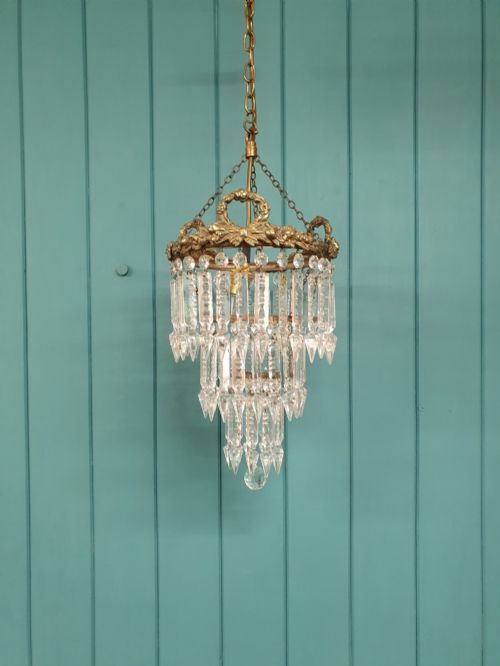


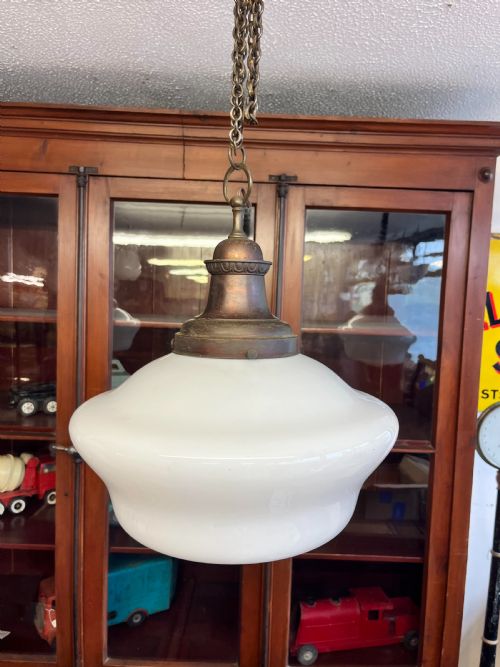

Brass Gallery Ceiling Light
A brass gallery ceiling light holds a glass or crystal shade with a metal collar, bringing warm light and period character to a room.
Brass Gallery Ceiling Light
A brass gallery ceiling light combines a functional metal mount with a glass shade, originating across the nineteenth and twentieth centuries. Buyers searching this phrase seek characterful hanging illumination from periods spanning the Edwardian era through the mid-century.
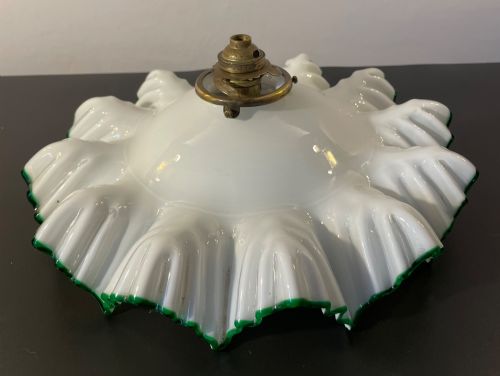
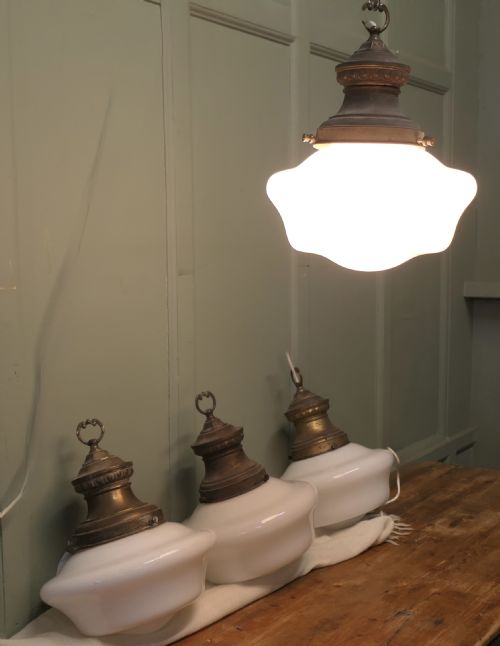
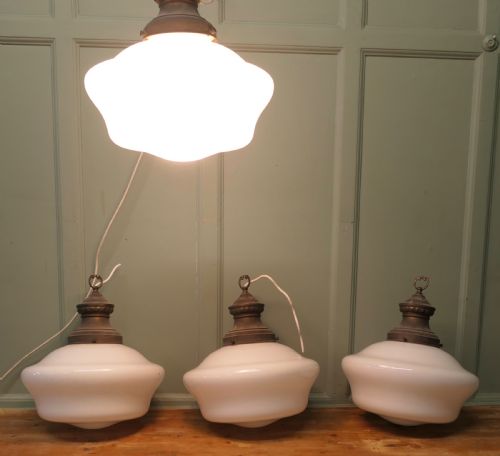
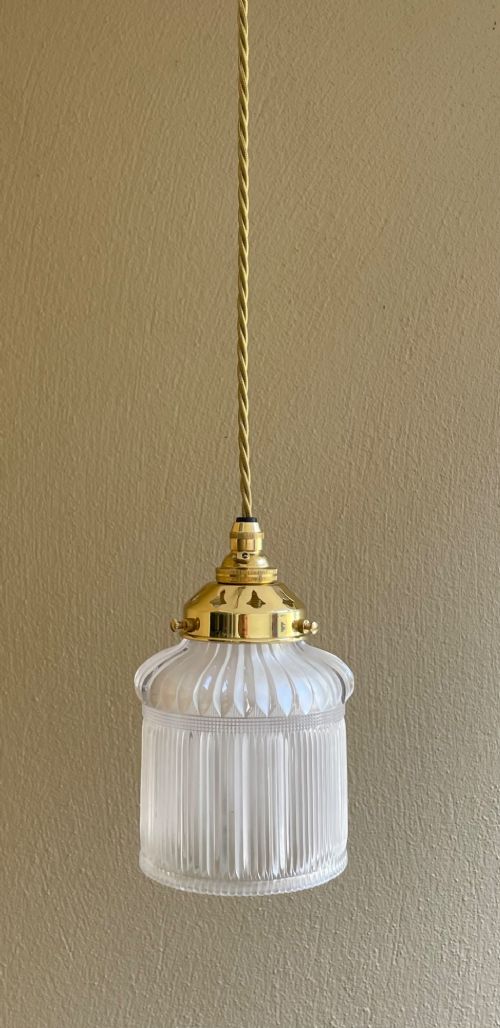
The most common examples on this page pair an opaline, prismatic, or cut glass shade with a fitted brass gallery. These pieces include single pendants, larger chapel lights, and chandeliers from the 1910s, 1920s, and 1930s.
Forms range from simple conical pendants and pear-shaped opaline shades to complex cut crystal bag chandeliers and industrial fittings. Each piece uses the brass gallery to secure the glass body directly to the ceiling suspension.
Materials and construction
The primary metal element is brass, shaped into galleries, ceiling roses, and decorative mountings through casting, stamping, or spinning. These metal collars grip the upper rim of the glass shade using thumb screws or integrated flanges.
Shades are formed from various glass types, including opaline, moonstone, milk glass, and heavy cut crystal or prismatic glass. Prismatic and cut glass varieties utilise specific optical patterns to diffuse or refract light effectively across a space.
Some Edwardian hallways still rely on a single dome of opaline glass to greet visitors after dark.
Assessing quality
Quality rests upon the weight and clarity of the glass shade alongside the substance of the brass gallery. Thicker, heavier opaline or crystal glass and robustly cast, stamped, or decorated brass fittings distinguish finer examples from standard commercial production.
The integrity of the original components also determines standard, particularly where galleries retain matching ceiling roses, original screws, or specific maker markings like Holophane patents. Uniformity in matching sets and the crispness of cut crystal facets elevate certain pieces above others.
The Brass Gallery Ceiling Light Glossary
- Gallery
- The metal ring or collar that holds a glass lampshade and connects it to the suspension cord or rod. Galleries are frequently cast or stamped from brass.
- Opaline glass
- An opaque or translucent white glass that diffuses light softly without glare. It appears frequently in Edwardian and 1930s pendant lights.
- Prismatic glass
- Glass moulded with precise optical prisms on the surface to control and direct light distribution. Holophane production is the most recognised form of this material.
- Ceiling rose
- The decorative circular plate attached to the ceiling that covers the wiring junction and anchors the light pendant. Many period fixtures retain their matching brass roses.
- Bag chandelier
- A light fixture where glass crystals are hung in a tapered, bag-like silhouette beneath a brass frame. These compact chandeliers combine formal cut crystal with simple ceiling mounts.
Brass Gallery Ceiling Light: Frequently Asked Questions
How do I hang a brass gallery ceiling light?
These lights suspend from a ceiling rose using a flex, chain, or rigid rod connected to the brass gallery. Installation requires securing the electrical wiring to a ceiling junction box.
Professional electrical installation is recommended to ensure the weight of the glass and brass components is supported safely by the ceiling structure.
Are these lights compatible with modern bulbs?
Most period fittings accommodate standard modern lamp holders once rewired to contemporary electrical standards. Standard LED or incandescent bulbs fit inside the enclosed glass shades.
Checking the internal clearance of the shade ensures the selected bulb size fits comfortably within the brass gallery dimensions.
How do I clean an opaline shade?
Opaline and milk glass shades wash safely in warm soapy water using a soft cloth. Removing the shade from the brass gallery prevents damage to the metal and screws during cleaning.
Avoid harsh abrasive cleaners that might scratch the surface of antique glass or strip the aged patina from the brass gallery.
How do I date a brass gallery light?
Dating relies upon stylistic markers in the glass shape, manufacturing techniques of the brass gallery, and historical design periods. Edwardian pieces often feature softer opaline or moonstone tones, while 1930s examples lean towards geometric or industrial forms.
Cast stamps on the brass and specific optical ribbing on prismatic glass shades offer further clues to the precise decade of manufacture.