





Brass Footed Hall Table
A brass footed hall table brings together sturdy timber and bright metal mounts, offering an understated surface for any entryway.
Brass Footed Hall Table
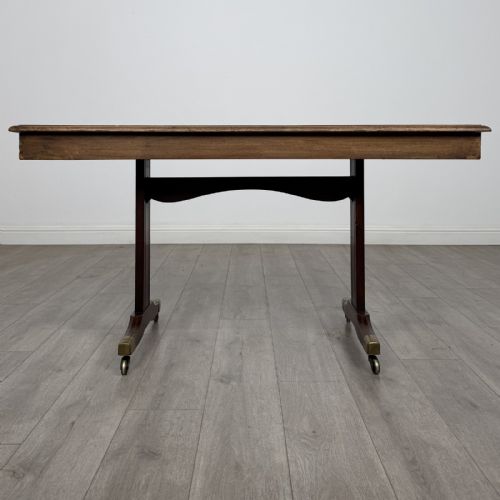
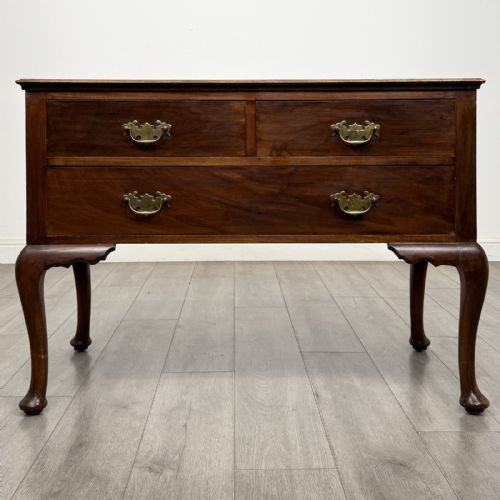
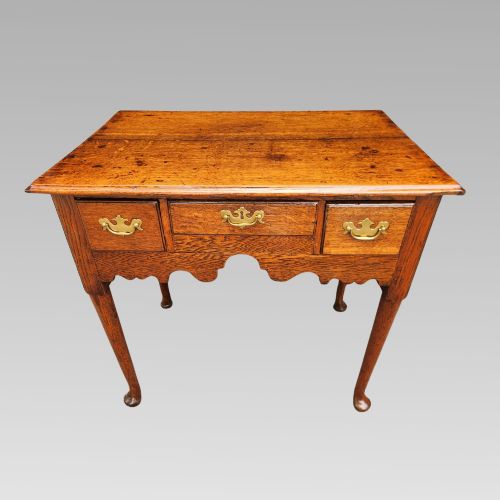
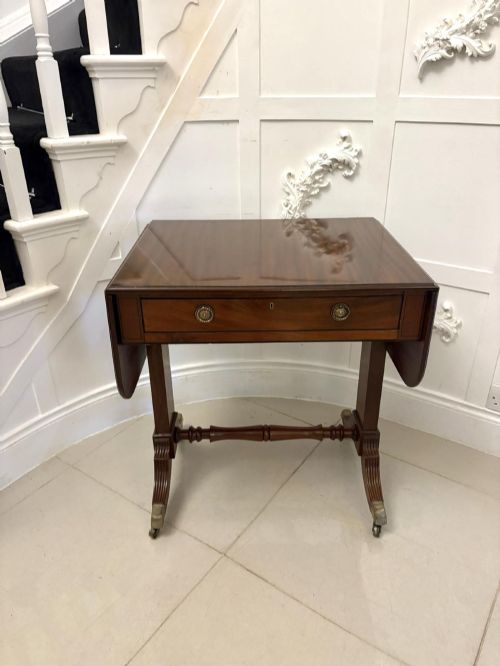
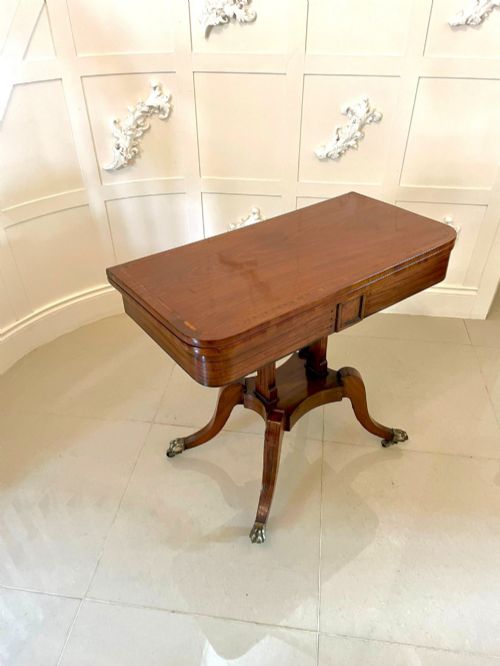
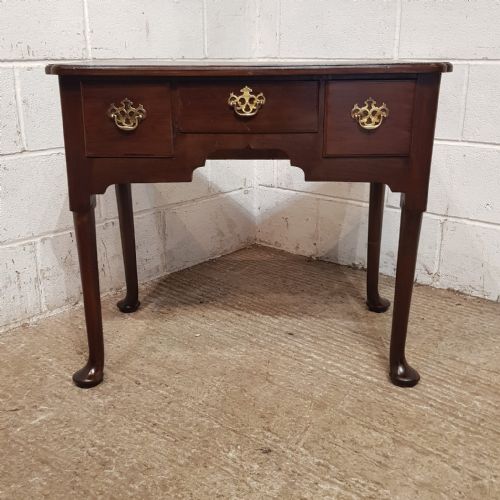
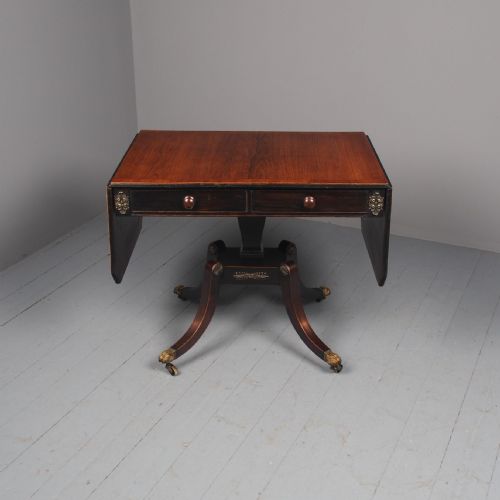
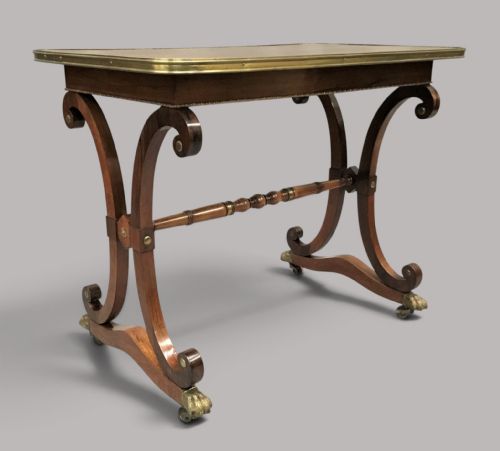
A brass footed hall table encompasses lowboys, sofa tables, console tables, and side tables constructed across multiple historic periods. These pieces serve as practical surfaces in hallways and reception rooms, often featuring drawers or drop leaves for additional utility.
The versions most frequently met on this page date from the Georgian, Regency, and 19th-century eras, executed in timbers such as mahogany, oak, and rosewood. Makers integrated brass castors and mounts to protect floor surfaces and provide a decorative contrast to the dark wood.
Styles range from restrained George II designs to elaborate French Empire and Regency interpretations. Each object demonstrates the domestic requirements of its period, balancing functional surface area with compact proportions suitable for transitional spaces.
Assessing quality and execution
Superior examples distinguish themselves through the choice of timber grain and the precision of inlaid details such as boxwood stringing. The integration of brass mounts and castors reflects the original maker's investment in both utility and ornament.
Proportions and stability dictate the standing of each piece, with well-balanced legs and sound joinery separating finer workshop output from simpler utilitarian furniture. The retention of original brass hardware preserves the integrity of the design.
Brass Footed Hall Table Retail Price Guide 2026
Typical asking prices for brass footed hall table among the pieces listed under this phrase on Sellingantiques today, from the lower quarter to the upper quarter. They describe what is for sale here now, not the wider market.
Object types span lowboys, sofa tables, console tables, and centre tables fitted with brass castors or mounts.
Muirhead Moffat & Co·Gillows
The Brass Footed Hall Table Glossary
- Lowboy
- A small table with drawers, typically raised on four legs, used historically as a dressing or side table.
- Sofa table
- A rectangular occasional table designed to stand in front of a sofa, usually featuring drop leaves at either end.
- Console table
- A table fixed to a wall or freestanding, often placed in a hallway to display decorative objects.
- Castor
- A small wheel mounted on a swivel assembly attached to the foot of a table for ease of movement.
- Ormolu
- Gilt bronze ornamentation applied to furniture mounts, popular in Regency and French Empire pieces.
Brass Footed Hall Table: Frequently Asked Questions
How do I date a mahogany table?
Dating relies on observing the timber grain, construction joints, and secondary woods used in the drawer linings. Stylistic markers such as brass castors and inlay patterns also correspond to specific historical periods.
Earlier pieces from the Georgian era display hand-cut joinery, whereas 19th-century examples incorporate machine-sawn components alongside traditional assembly methods.
Where should I place a sofa table?
A sofa table functions effectively behind a freestanding sofa or against an entryway wall. The drop leaves allow the surface area to adapt depending on the available space.
Their narrow depth makes them suitable for hallways where wide furniture would obstruct movement.
What is the difference between oak and mahogany furniture?
Oak furniture tends to represent earlier periods, displaying a prominent open grain and heavy construction. Mahogany became prevalent in the Georgian and Regency eras, offering a tighter grain and darker reddish-brown tone.
Mahogany tables often incorporate finer inlay work and brass mounts compared to the more utilitarian character of early oak pieces.