
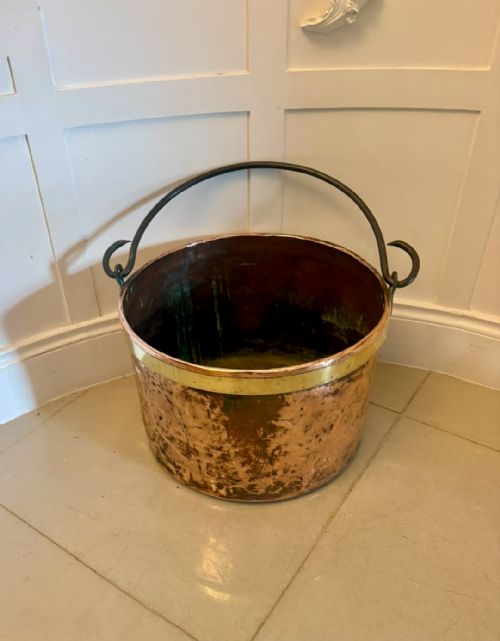

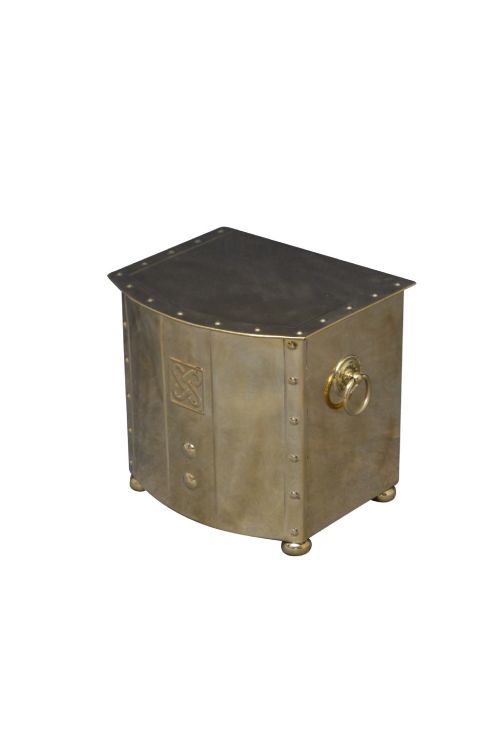


Brass Fireside Planter
These brass fireside planter vessels combine practical hearth storage with decorative metalwork across Victorian, Edwardian, and Regency periods.
Brass Fireside Planter
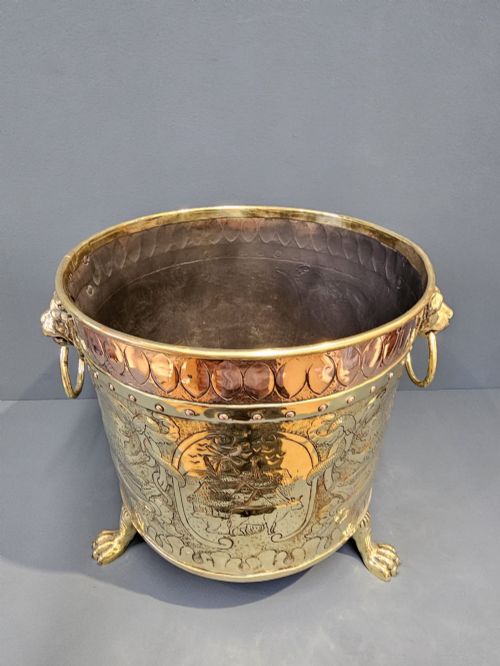
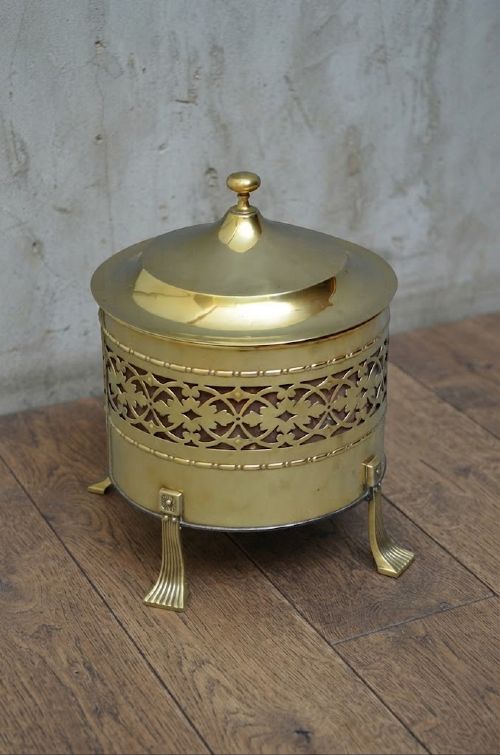
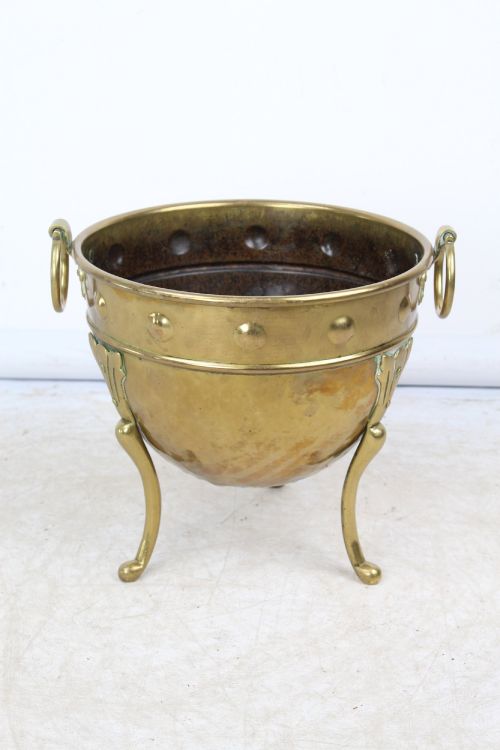
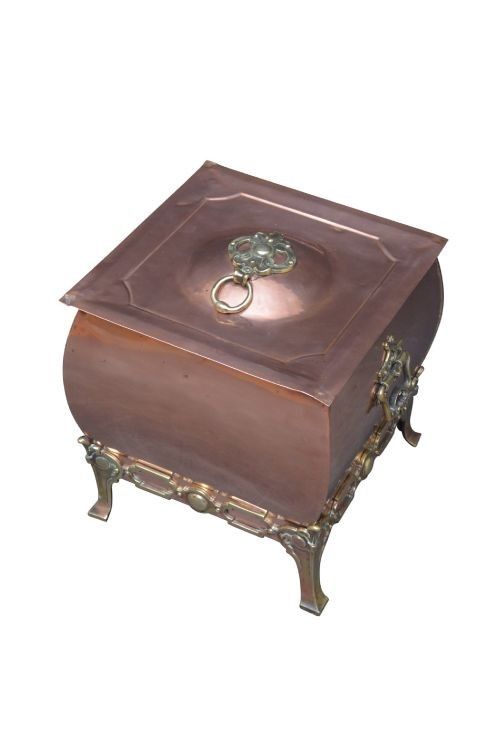
When searching for a brass fireside planter, you are looking at hearth accessories that double as coal buckets, log bins, and fuel baskets. The pieces on this page span Victorian, Edwardian, Regency, and Art Deco periods, bringing metalwork into domestic settings.
You are most likely to meet Victorian and Edwardian examples, often rendered in solid brass or combined with copper bands and iron fittings. Formats range from circular pails and cylindrical bins to fretwork designs and handled baskets.
Many serve a dual purpose as planters alongside their traditional function as fireside coal stores. Their origins encompass English workshops, French examples, and Dutch coopered styles.
Materials and construction methods
Makers utilised sheet brass and copper, hammering, riveting, and embossing the metal to create rigid bodies for holding fuel. Handbeaten finishes and applied copper bands add textural contrast to the smooth brass surfaces.
Internal liners, oak staves, and iron elements provide structural support within coopered and riveted bodies. Fretwork designs and embossed motifs demonstrate the decorative metalworking techniques of the 19th and early 20th centuries.
Listings combine brass, copper, and iron materials across Victorian, Edwardian, and Regency periods in various fireside forms.
Distinctions in construction and design
Quality rests in the weight of the metal, the integrity of the riveted joints, and the crispness of any embossed or handbeaten surface detail. Thicker gauge brass and secure iron handles distinguish sturdier hearth containers from lighter decorative pails.
The presence of original internal liners, tight coopered oak construction, and defined maker attribution elevate individual pieces. Fretwork cutouts and decorative brass bounds require precision to separate utilitarian vessels from finer parlour furnishings.
Henry Loveridge·Petrus Ramus
The Brass Fireside Planter Glossary
- Fretwork
- Metal pierced with decorative patterns using a saw or piercing technique. This technique appears on Edwardian coal buckets to lighten the visual mass.
- Coopered
- Made by a cooper using curved wooden staves bound with metal hoops. This method secures traditional Dutch-style log bins.
- Embossed
- Ornamented with raised patterns pressed or hammered into the metal sheet. Victorian examples frequently utilise this to display floral or geometric motifs.
- Riveted
- Fastened with short metal pins whose ends are beaten flat to join plates together. Riveted copper and brass construction ensures durable seams on heavy fuel buckets.
Brass Fireside Planter: Frequently Asked Questions
Were these originally used for plants?
Most of these vessels served primarily as coal buckets, log bins, or fuel stores beside the hearth to keep solid fuel close to the fire.
Over time, many found a second life as planters because their metal bodies and waterproof liners accommodate potted foliage.
How do I distinguish Victorian from Edwardian pieces?
Victorian examples tend to feature heavier embossed brass, riveted copper bands, and robust proportions associated with coal storage.
Edwardian pieces often introduce lighter fretwork designs, pierced patterns, and refined geometric detailing suited to domestic hearths.
Do they all have internal liners?
Liners appear in specific coal buckets and planters to contain moisture or coal dust, protecting the outer metal and surrounding floor.
Not all vessels retain their liners, as many served simply as dry storage baskets for logs and fuel.
How do I clean brass and copper planters?
Gentle dusting and occasional wiping maintain the aged patina that develops on 19th-century metalwork.
Harsh chemical polishes should be avoided to preserve the authentic surface character and historical depth of the brass and copper.