


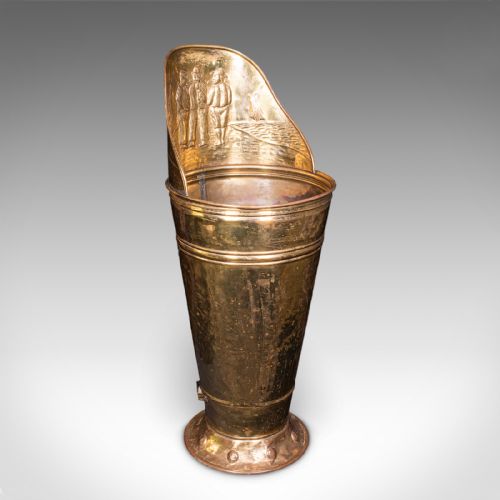



Decorative Brass Fireplace Bucket
These decorative brass fireplace buckets bring warmth and utility to hearths, combining robust metalwork with practical storage for fuel.
Decorative Brass Fireplace Bucket
A decorative brass fireplace bucket serves as a refined vessel for holding coal, logs, or peat beside the hearth, uniting daily utility with polished metal display. The pieces on this page span several eras including the Victorian period, Regency, Edwardian, and the early twentieth century, alongside specific dates such as 1850, 1880, 1900, and 1920.
Forms vary from classic lidded coal scuttles and coopered peat buckets to large planters, jardinieres, and stick stands. Materials extend beyond pure brass to include copper, walnut, mahogany, oak, tin, and marquetry inlay, reflecting diverse styles from Arts and Crafts and Art Nouveau to Dutch Traditional, Neoclassical Revival, and Georgian.
Materials and construction methods
Many of these vessels utilise hammered copper and brass, often combining the two metals to create visual contrast on bodies and rims. Wooden examples frequently employ coopered staves of walnut, mahogany, or oak, secured with metal bands and mounts.
Surface decoration ranges from hand-beaten hammering and dinanderie work to intricate marquetry inlay on wooden coal boxes. Handles and feet are robustly fixed to withstand heavy loads of solid fuel.
Decorative Brass Fireplace Bucket Retail Price Guide 2026
Typical asking prices for decorative brass fireplace bucket among the pieces listed under this phrase on Sellingantiques today, from the lower quarter to the upper quarter. They describe what is for sale here now, not the wider market.
Materials documented across the inventory include brass, copper, walnut, mahogany, oak, tin, and marquetry inlay.
Evaluating craftsmanship and proportion
Quality shows in the weight of the metal and the precision of the construction, such as tightly fitted coopered staves or cleanly executed hand-hammered surface patterns. Superior examples display balanced proportions and robust handles that integrate seamlessly with the body.
The choice of secondary materials, from fine walnut and mahogany to inlaid wood details, elevates certain pieces above standard utility items. The crispness of period styling, whether Art Nouveau curves or Neoclassical Revival symmetry, determines the distinction of each vessel.
The Decorative Brass Fireplace Bucket Glossary
- Dinanderie
- An old term for various items of brass, copper, and bronze, originating from the Belgian town of Dinant. It often describes heavier decorative metal vessels.
- Coopered
- Built like a wooden barrel using tapered staves bound by metal hoops. This technique appears on peat and tea buckets.
- Jardiniere
- An ornamental pot or stand for holding plants or flowers. These vessels were frequently repurposed for holding logs or coal by the fireside.
- Purdonium
- A specialised domestic coal container designed to sit neatly beside a fireplace. They often feature a sloping front and a hinged lid.
Decorative Brass Fireplace Bucket: Frequently Asked Questions
What were these buckets originally used for?
These vessels were primarily made to store coal, logs, or peat close to the fireplace for convenient refuelling.
Many examples also doubled as planters, umbrella stands, or general fireside storage containers.
How do I clean a brass bucket?
Dust the surface regularly with a soft dry cloth to prevent the buildup of dirt and grime.
Avoid harsh commercial metal cleaners that strip away the aged surface character unless a bright polished look is specifically desired.
Can these buckets be used for plants?
Many of these metal and wood vessels make excellent indoor planters or jardinieres.
It is advisable to use a waterproof liner inside wooden or unsealed containers to protect the interior from moisture.
How do I date a brass bucket?
Dating relies on examining the construction methods, handle attachments, and prevailing decorative styles such as Arts and Crafts or Art Nouveau.
Materials like walnut, mahogany, or specific marks also help place a piece within periods like the Victorian era or Regency.