
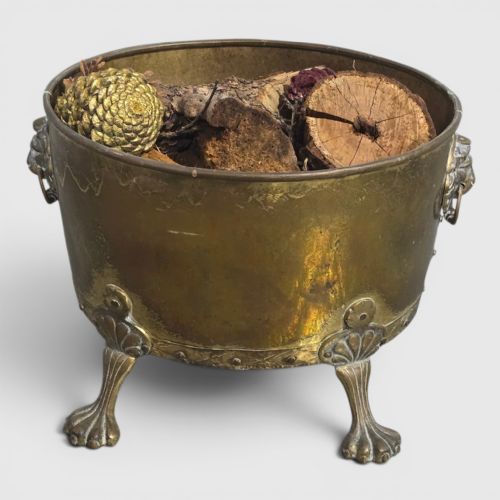


Brass Coal Bucket Feet
Brass coal bucket feet support heavy fireside vessels from Victorian and Regency periods, lifting heavy metal off hearth stones.
Brass Coal Bucket Feet
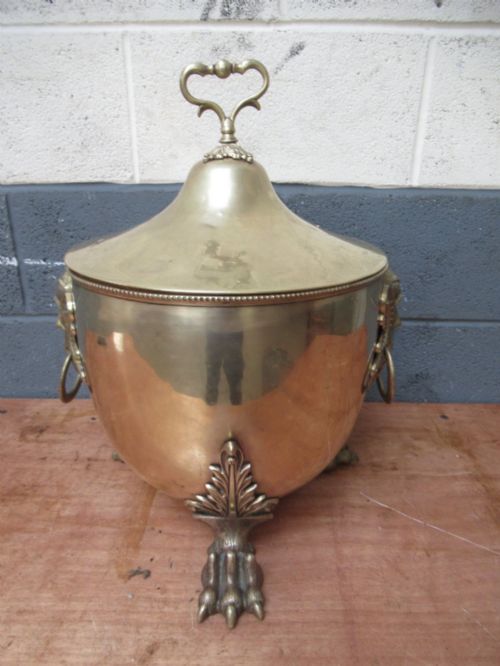
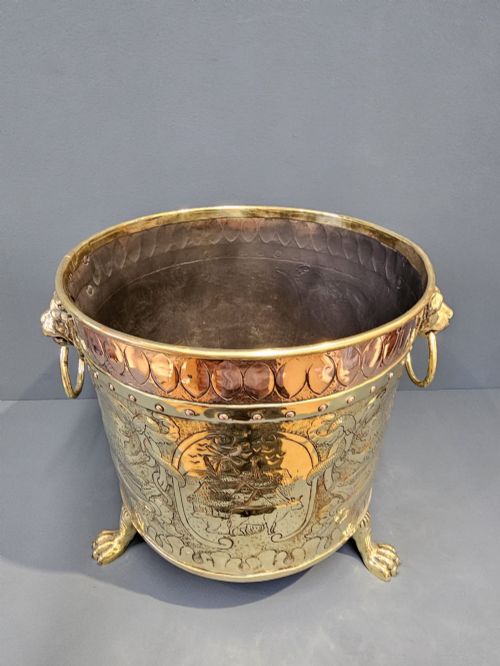
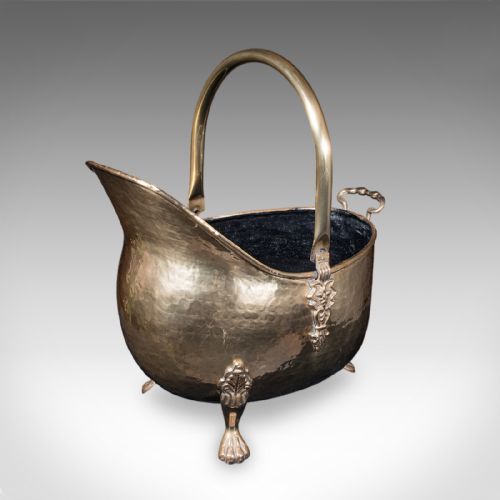
Brass coal bucket feet anchor substantial fireside vessels designed to hold fuel beside the hearth. These pieces appear in forms ranging from traditional log bins to helmet scuttles and planters, spanning the Victorian and Regency eras.
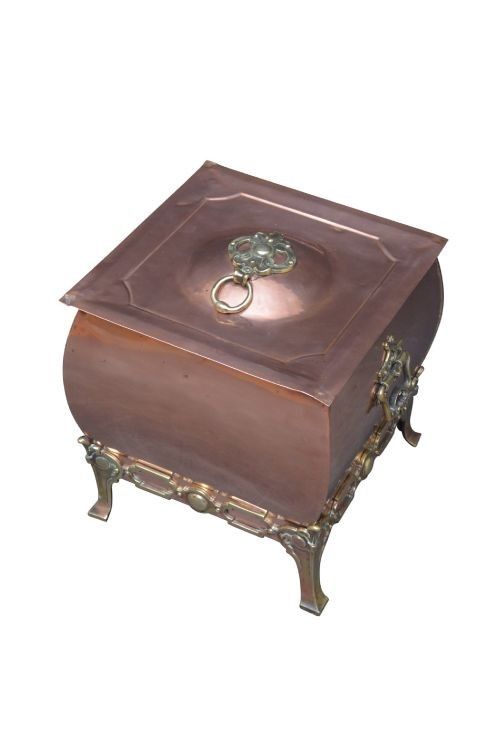
The objects themselves serve both practical and decorative functions in period rooms. Surviving examples combine heavy metal bodies with distinct pedestal bases, paw feet, or cast mounts.
Buyers seeking brass coal bucket feet will encounter sturdy vessels constructed from mixed metals. Copper bodies often feature cast brass feet, handles, and bands, creating a robust fireside accessory.
How they were made
Makers constructed these fireside vessels using heavy sheet brass and copper, joined by visible rivets or smooth seams. Handles and feet were cast separately in brass and attached securely to the main body.
Surface treatment involved hand-beating or embossing the metal sheets to create decorative patterns. Iron components and wooden elements such as ebony occasionally appear in handles and structural reinforcement.
Some coal buckets double as indoor plant pots, letting Victorian ferns sit where the anthracite used to burn.
What varies in quality
The weight of the cast brass feet and the thickness of the metal body determine the structural integrity of each piece. Superior examples display crisp casting detail on the feet and robust joining at the seams.
Proportion and surface finish distinguish standard utilitarian bins from finer country house accessories. Items bearing maker marks or refined hand-beaten work represent the higher tier of production.
William Soutter & Sons
The Brass Coal Bucket Feet Glossary
- Log Bin
- A large floor-standing container designed to hold firewood beside a fireplace. These vessels often feature sturdy metal feet and drop handles.
- Coal Scuttle
- A deep bucket or hod used for carrying coal to the hearth, frequently fitted with a shovel compartment or pivoting handle.
- Jardiniere
- An ornamental pot or receptacle for holding plants or flowers, sharing similar construction methods and metal bodies with coal buckets.
- Claw Feet
- Decorative foot mounts shaped like animal paws, commonly cast in brass to support the weight of heavy coal bins.
- Handbeaten
- A manufacturing technique where metal panels are shaped and textured manually with a hammer, leaving subtle facets on the surface.
Brass Coal Bucket Feet: Frequently Asked Questions
What were brass coal buckets used for?
These vessels held coal or logs near the hearth for easy access during the winter months. Their robust construction handled the heavy weight of solid fuel.
They also functioned as decorative items in Victorian and Regency interiors, often matching other fireside accessories.
How do I clean an antique brass bucket?
Gentle dusting with a soft cloth preserves the historic surface of the metal. Avoid harsh chemical cleaners that strip away the aged patina.
Old copper and brass benefit from occasional mild soap and water if dirt accumulates in the embossed details.
Are these buckets made entirely of brass?
Many examples combine a copper body with cast brass feet, handles, and rims. Iron and wood also appear in internal structures and handles.
Makers utilised mixed metals to balance durability with decorative contrast across the Victorian and Regency periods.
How do I date a brass coal bucket?
Stylistic clues such as embossed Victorian motifs or Regency silhouettes help narrow down the manufacturing era. Hand-beating marks and riveted construction methods point towards nineteenth-century production.
Specific maker stamps on the base or body provide definitive attribution when present.