



Brass Firedogs Andirons
Brass firedogs andirons support heavy logs above the hearth while adding polish and reflection to the fireplace opening.
Brass Firedogs Andirons
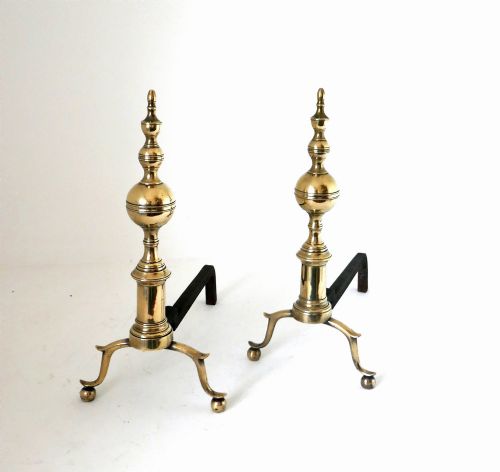
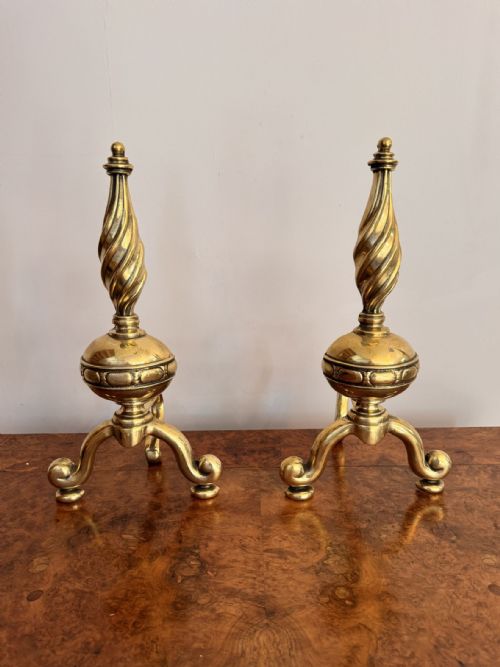
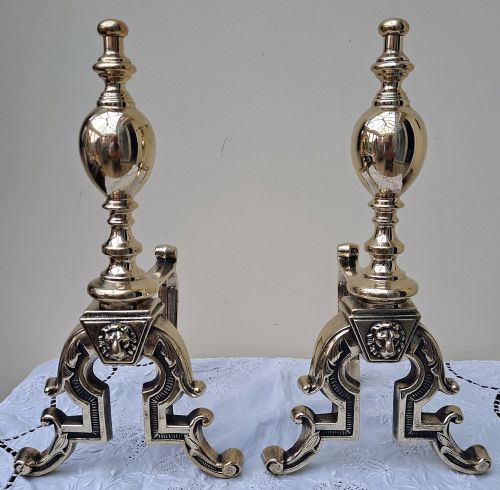
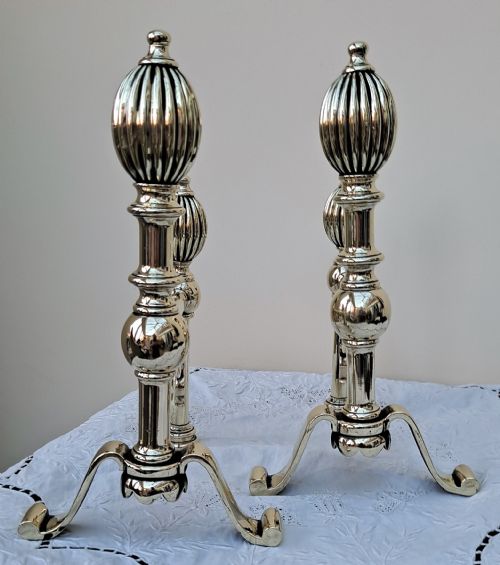
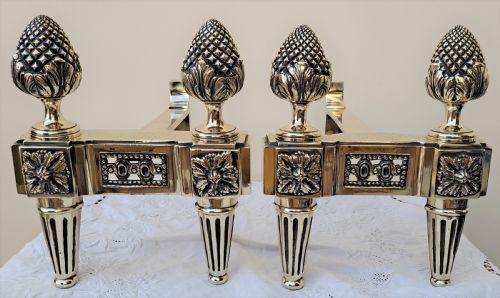
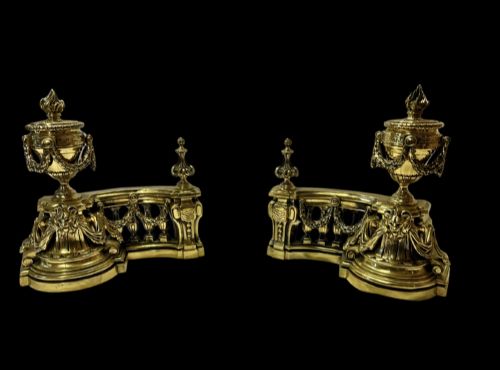
When you search for brass firedogs andirons, you are looking at functional hearth furniture designed to hold wood above the hearth floor for better airflow. The pieces available here span from the Georgian era through the Victorian period, originating from English, French, and American workshops. You will most frequently encounter pairs of Victorian cast and polished brass examples, often accompanied by matching fire tools or companion sets.
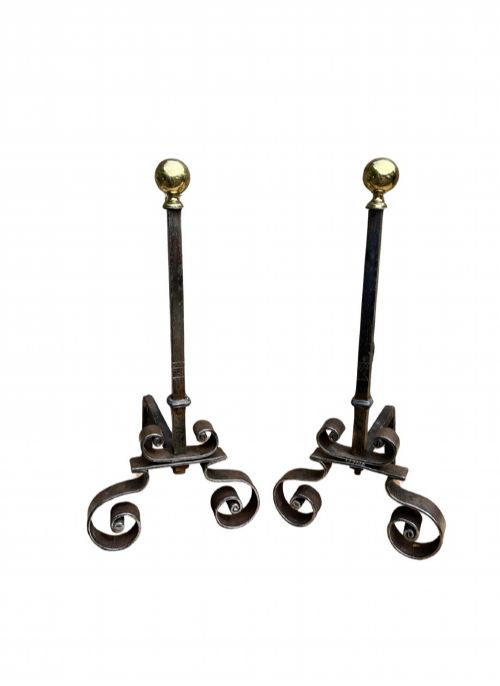
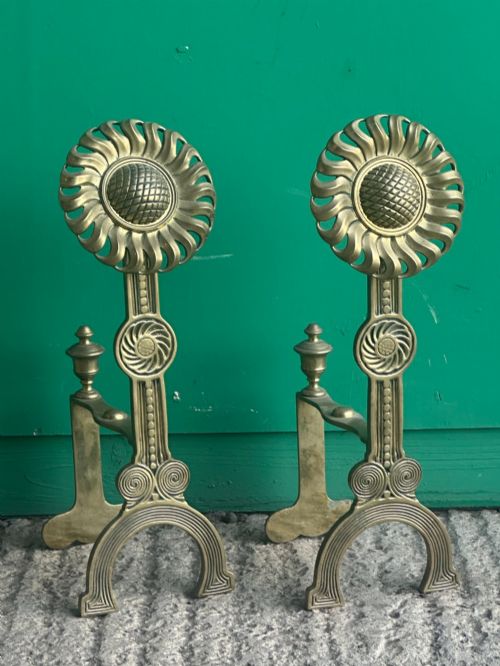
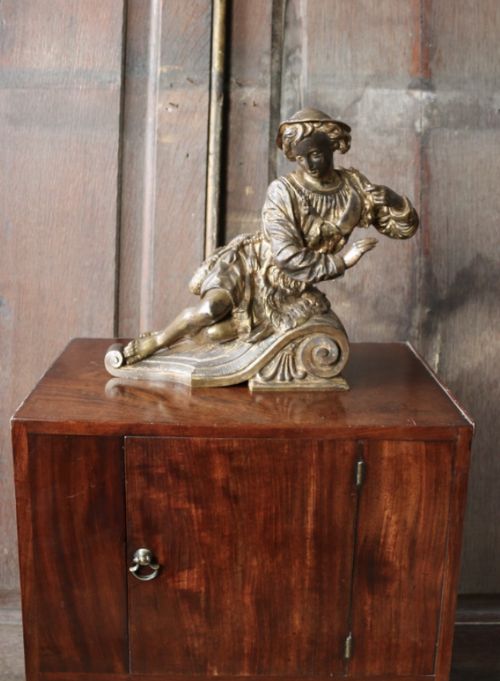
The forms range from simple columnar shafts to ornate French Rococo and aesthetic movement designs featuring sunflowers or stylized figures. Many pairs combine a sturdy iron or wrought iron billet bar with decorative brass fronts, ensuring both structural strength and visual warmth. Whether styled in the manner of Christopher Dresser or Thomas Jeckyll, these functional items serve as focal points for period fireplaces.
Materials and construction
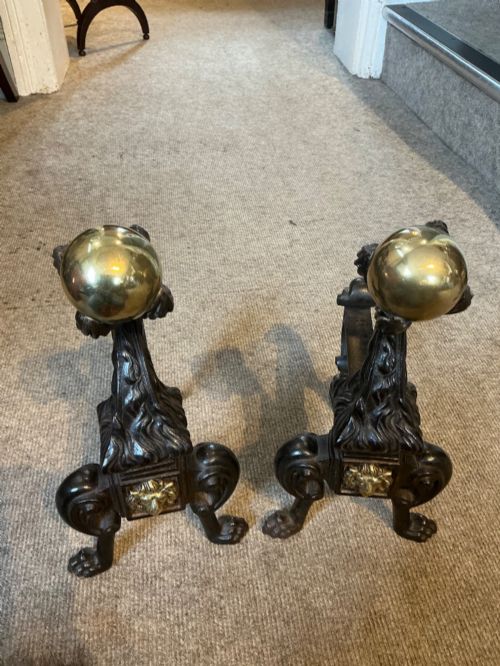
The primary materials recorded in these listings are brass, cast iron, and wrought iron, frequently combined to balance weight and appearance. Brass provides the bright, reflective front facade, while iron forms the robust horizontal bars and legs that endure intense hearth heat. Many finer examples utilise cast brass or ormolu mounts fixed to heavier metal cores.
Foundry techniques involved sand casting for intricate details like floral motifs and figural statuettes, followed by hand chasing and polishing. Ormolu components required mercury gilding over bronze bases, creating a durable golden lustre that survives centuries of use. Wrought iron elements were hand-hammered and forged to shape, ensuring structural integrity at the rear.
Materials documented in the inventory include cast iron, wrought iron, gilt bronze, and ormolu alongside solid brass.
Evaluating craftsmanship and proportion
Quality in brass firedogs andirons rests on the crispness of the casting and the weight of the metal used in construction. Finer pairs exhibit deep, hand-chased detail on floral or figural elements rather than soft, mass-produced surface smoothing. Substantial metal thickness prevents warping under sustained heat and provides a reassuring heft when handled.
Proportion and matching also dictate desirability, as superior pairs maintain absolute symmetry in their decorative fronts and secure joints along the billet bars. The integration of auxiliary components, such as tool rests or integrated fire irons, distinguishes standard utilitarian pairs from bespoke showroom commissions. Original surface patination without excessive modern over-polishing preserves the historical character of the brass.
William Tonks·James Cartland and Sons·Thomas Jeckyll·Christopher Dresser
The Brass Firedogs Andirons Glossary
- Firedog
- An alternative term for an andiron, frequently used interchangeably in British and American inventories. They often incorporate hooks or rests for holding fire irons.
- Chenet
- The French term for an andiron, commonly applied to decorative continental examples featuring bronze, ormolu, or figural mountings. They date predominantly from neoclassical and baroque revival periods.
- Billet bar
- The horizontal iron support extending backward from the front standard to hold the burning logs. It bears the direct weight and thermal shock of the fire.
- Ormolu
- Finely ground high-carat gold applied in a mercury amalgam to a bronze base, producing a rich golden finish. It appears frequently on French and high-status Victorian hearth pieces.
Brass Firedogs Andirons: Frequently Asked Questions
Can I use antique andirons in an active fireplace?
Most iron and brass andirons are structurally robust enough for burning wood if the billet bars are solid and thick. Ensure the hearth has adequate draft and clearance before lighting fires.
Take care not to overheat delicate ormolu or thin decorative castings. Many collectors prefer to use them for decorative display rather than daily burning.
What is the difference between andirons and fire dogs?
There is no functional difference between the two terms, as both describe hearth supports for logs. Regional and historical preferences simply favoured one word over the other.
Inventories often use both terms together to aid search visibility.
How do I match andirons with fire irons?
Look for matching periods, brass casting styles, and handle designs to create a cohesive hearth suite. Many Victorian sets were manufactured together with companion stands and tool rests.
Matching the metal finish, whether bright polished brass or warm aged bronze, ensures visual harmony across the fireplace opening.