

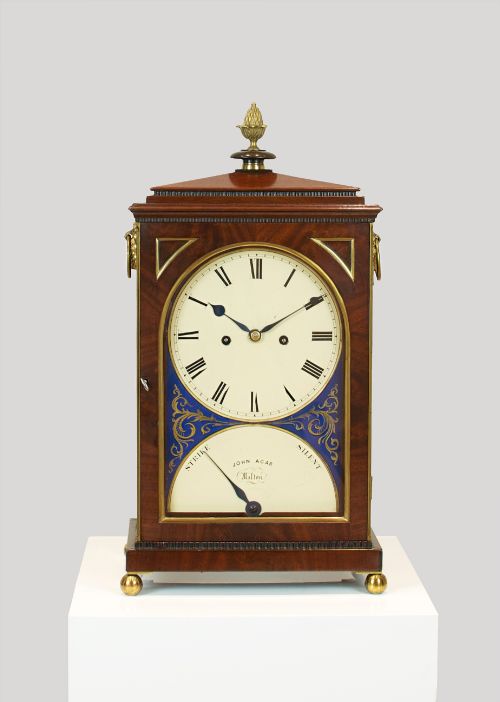
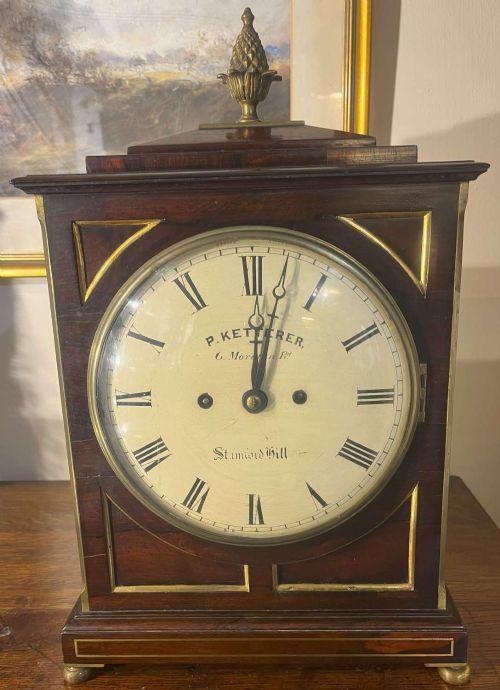
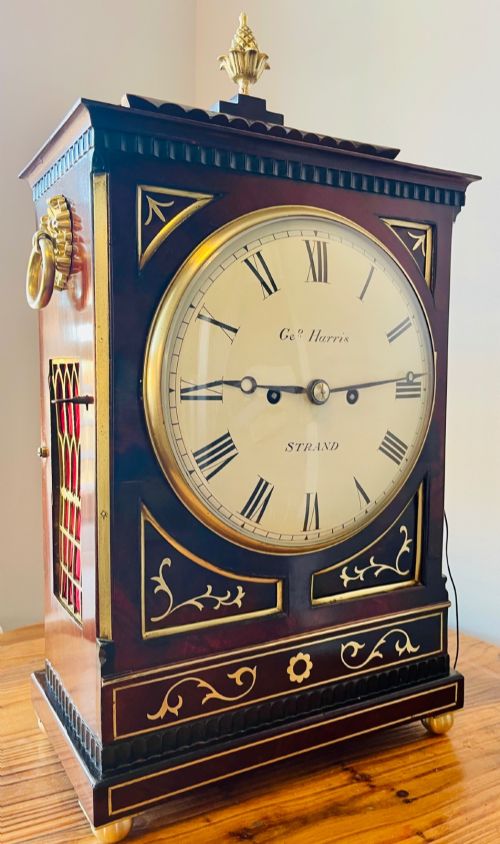
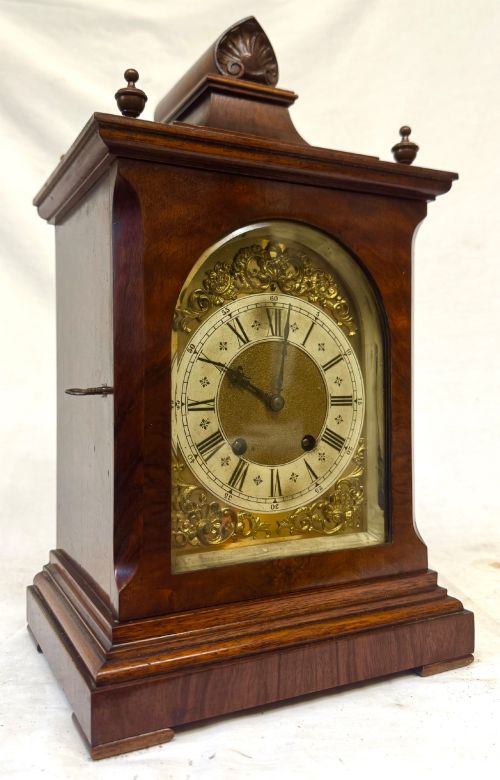
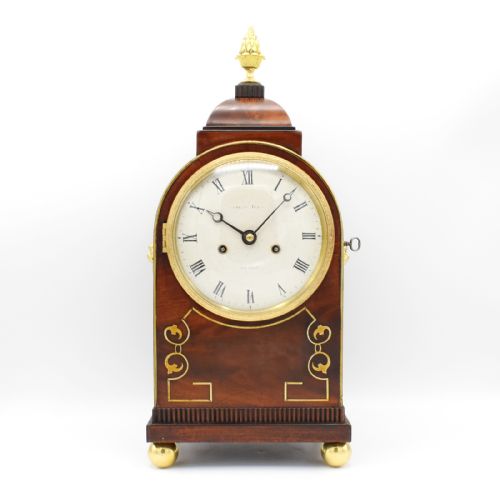
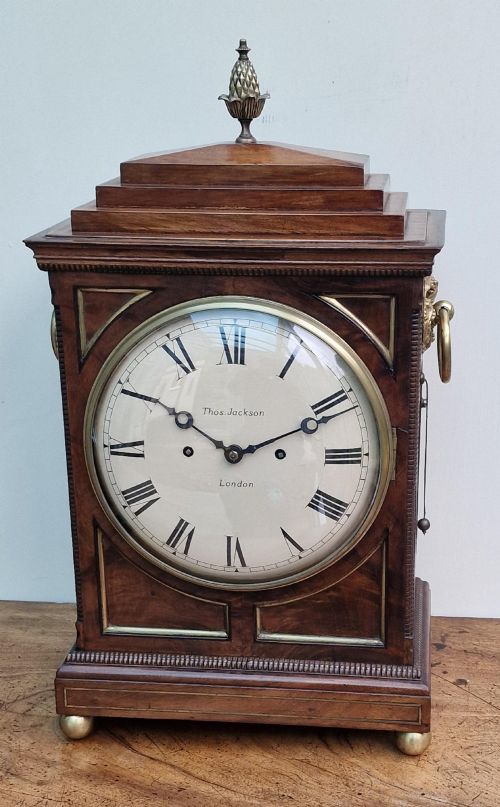


Brass Finial Table Clock
These brass finial table clock examples bring mechanical precision and period warmth to a room, driven by fusee movements and housed in rich timber.
Brass Finial Table Clock
A brass finial table clock sits on a bracket, mantel or surface, uniting timekeeping with decorative woodwork or cast metal. The pieces matching this search phrase encompass mantel clocks, bracket clocks and clock sets from Georgian, Regency, Victorian and Edwardian periods.
Most examples encountered here are robust timber bracket clocks or French mantel clocks featuring brass ornamentation. Makers from London and the continent shaped these domestic timepieces in mahogany, ebonised wood, boulle and ormolu.
Materials and construction
Clockmakers utilised dense hardwoods such as mahogany and ebonised wood for the structural cases, often incorporating brass finials, dials and bezels. Ormolu and gilt bronze frequently decorate French models, whilst glass protects the delicate enamel faces.
Movements rely on fusee mechanisms or spring-driven systems developed by skilled horologists. Brass and steel components work in tandem within the heavy timber or glazed housings to drive the hands and striking trains.
Brass Finial Table Clock Retail Price Guide 2026
Typical asking prices for brass finial table clock among the pieces listed under this phrase on Sellingantiques today, from the lower quarter to the upper quarter. They describe what is for sale here now, not the wider market.
Listings span Georgian, Regency, Victorian, and Edwardian periods, utilising mahogany, ormolu, brass, glass, and tortoiseshell.
Judging quality and execution
Quality rests upon the crispness of the brass casting and the refinement of the cabinetmaker's timber selection. Heavy mahogany cases with well-proportioned brass feet and finials stand apart from simpler iterations.
The reputation of the horologist signing the dial or movement dictates desirability. Signed London and French maker movements demonstrate superior mechanical execution compared to unmarked workshop pieces.
Charles Pratt London·Thomas Jackson·Webster Cornhill London·John Bull of Bedford·Samuel Marti·Leplastrier of London·frodsham baker london·Berguer of the Strand
The Brass Finial Table Clock Glossary
- Fusee
- A conical pulley used in spring-driven clocks to maintain an even pull as the mainspring unwinds. This mechanical device ensures steady timekeeping across the winding cycle.
- Bracket clock
- A portable timekeeper originally designed to sit upon a wall bracket or table. These spring-driven pieces typically feature a brass carrying handle and glazed side panels.
- Ormolu
- Gilt bronze ornamentation applied to clock cases, particularly French nineteenth-century examples. The technique involves applying a mercury and gold amalgam to shaped bronze.
- Boulle
- A marquetry technique using tortoiseshell and brass inlaid in contrasting patterns. This decorative finish appears on elaborate French mantel clock housings.
- Enamel dial
- A metal face covered with fused powdered glass, providing a smooth white surface for painted numerals. These dials require careful firing to prevent cracking around the winding holes.
Brass Finial Table Clock: Frequently Asked Questions
What is a fusee movement?
A fusee movement uses a conical drum to equalise the power delivered by the mainspring as it runs down. This mechanical arrangement helps the clock maintain consistent accuracy.
Most high-grade British bracket clocks from the Georgian and Regency eras rely on this specific system.
Where should I place a bracket clock?
These clocks suit stable surfaces such as sideboards, mantelpieces or dedicated wall brackets where they remain undisturbed. Placing them away from direct sunlight and drafts protects the timber case.
Ensure the surface is level so the pendulum or balance wheel maintains an even beat.
How do I identify a French mantel clock?
French examples often feature ormolu mounts, porcelain panels, boulle marquetry or architectural brass cases rather than plain mahogany. They frequently originate from the nineteenth century and carry maker signatures like Samuel Marti.
Many of these continental designs include matching garniture urns or vases as part of a clock set.
How do I tell Regency clocks apart from Victorian ones?
Regency clocks typically display restrained mahogany cases with clean architectural lines and brass bracket feet. Victorian pieces often introduce bolder ornamentation, ebonised finishes, or French revival styling.
Examining the dial signature and interior movement style provides further confirmation of the manufacturing period.