
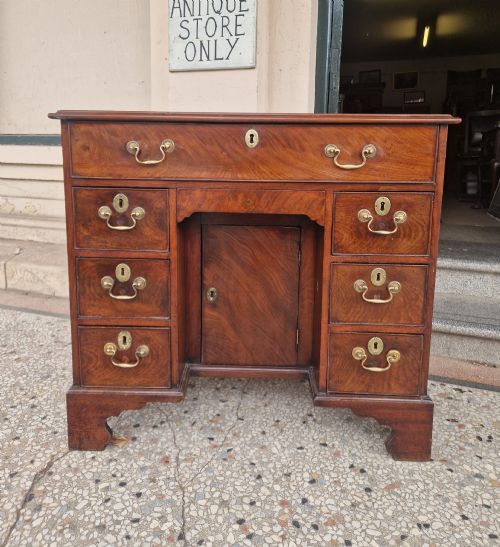
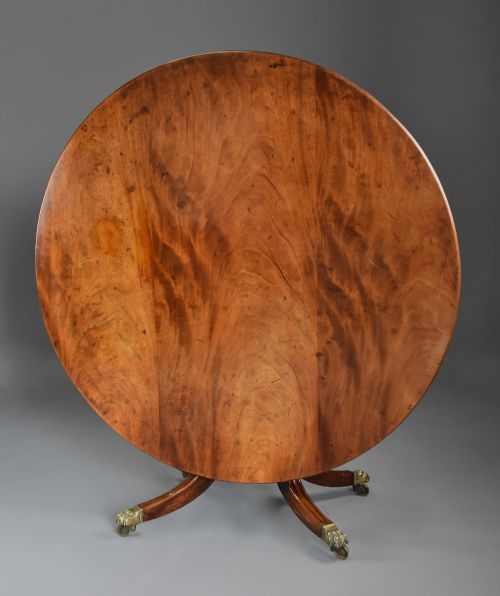
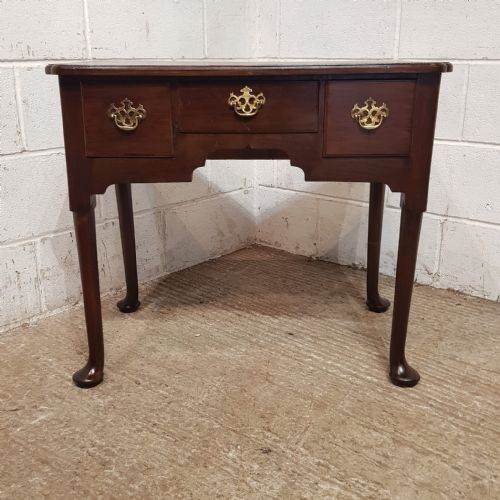
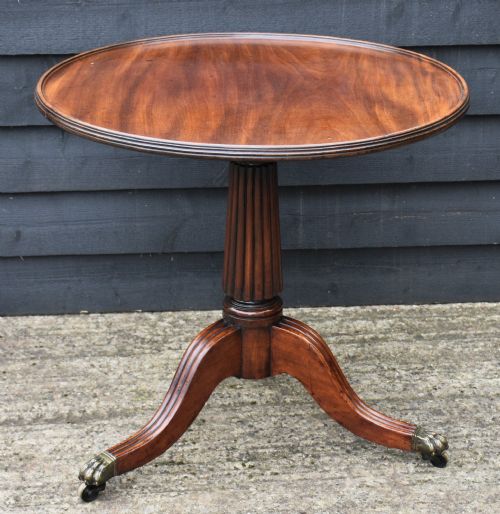
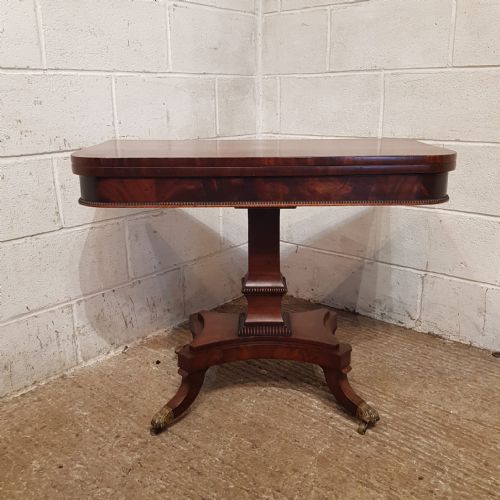
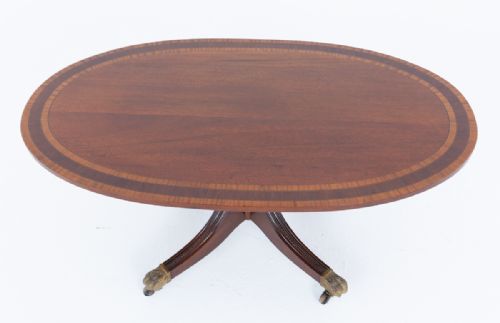
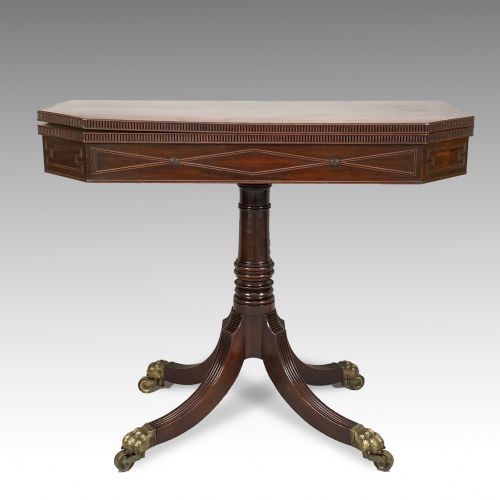

Brass Feet Mahogany Table
A brass feet mahogany table brings warmth and considered proportion to a room, uniting dense timber with bright metal detail.
Brass Feet Mahogany Table
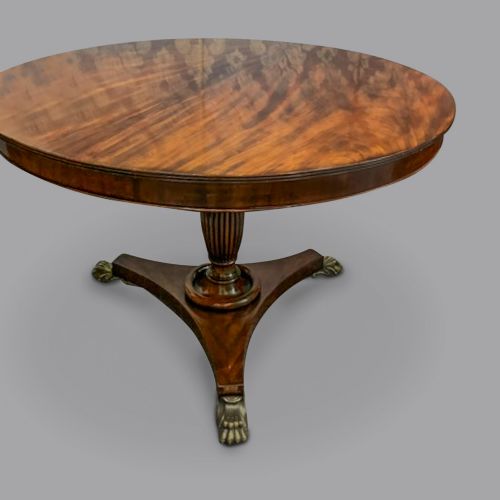
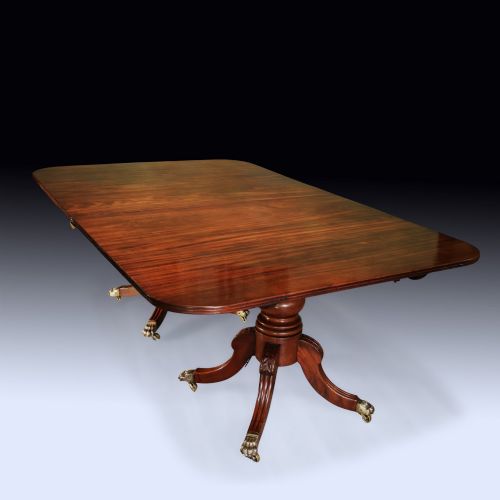
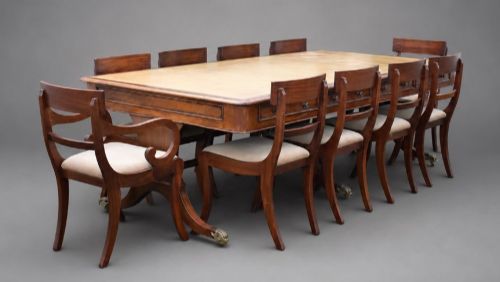
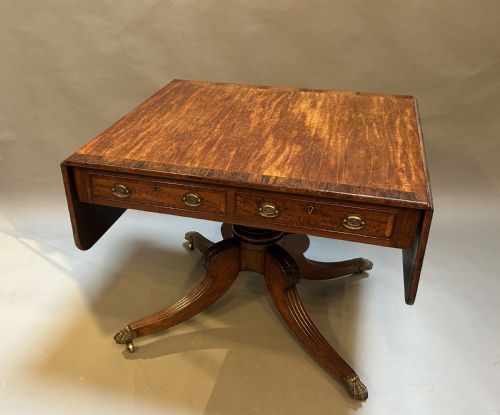
When you search for a brass feet mahogany table, you encounter diverse forms ranging from sofa tables and card tables to dining furniture and centre tables. These pieces span periods from the Georgian and Regency eras through the Victorian period and later revivals, reflecting shifts in domestic design.
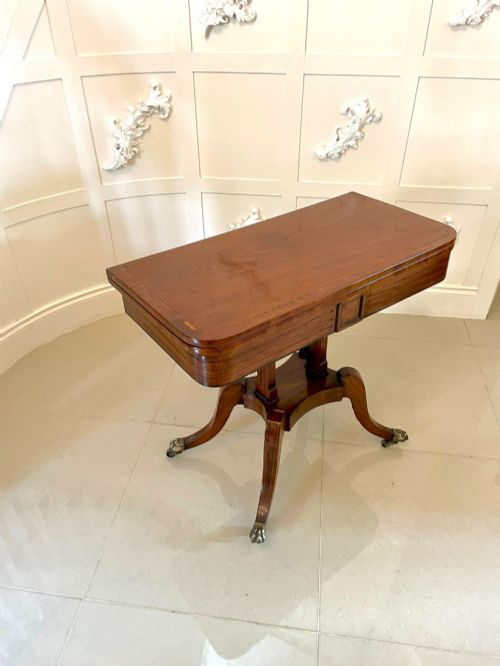
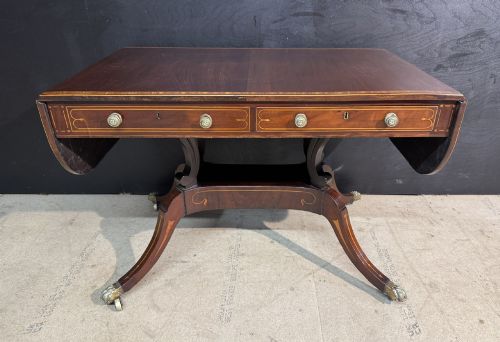
The version you are most likely to meet on this page is a Regency or Georgian card, sofa or dining table where dark mahogany meets cast brass terminals. These tables served practical functions in drawing rooms and dining rooms, often designed to fold, extend or pivot according to their use.
Makers utilised mahogany for its strength and rich grain, mounting the legs on brass castors or paw feet to ease movement across carpets. The survival of these fittings intact indicates how carefully the furniture was handled over centuries.
How they were made
Cabinet makers constructed these tables using solid mahogany and figured veneers applied to secondary timbers, often accentuating the design with wood inlay, ebony or rosewood banding. Timber was selected for grain movement and depth of colour before being polished by hand to a warm finish.
Foundries cast the brass components separately, producing paw feet, castors, mounts and swan neck handles that were polished and fixed directly to the timber legs. These metal elements provided structural protection to the vulnerable lower sections of the table legs while adding decorative contrast.
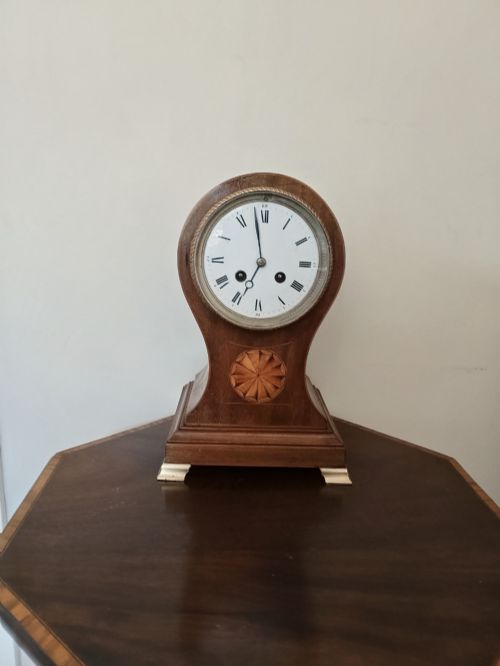
Even clocks on this page share the mahogany and brass vocabulary of the tables, keeping time with quiet domestic dignity.
What varies in quality
The distinction between ordinary and exceptional pieces lies in the choice of timber and the crispness of the brass casting. Figured mahogany with strong natural grain patterns elevates a piece far above plain stock, whilst finely chased brass feet demonstrate superior workshop standards.
Proportion and execution define the upper tier of these tables. Subtle details such as precise wood inlay, smooth pivoting mechanisms on card tables, and well-balanced pedestals separate standard cabinet work from pieces produced by master workshops.
Bush of London·Desbois and Wheeler·L Vick of Stroud·Muirhead Moffat and Co
The Brass Feet Mahogany Table Glossary
- Sofa table
- A rectangular table designed to stand in front of a sofa, typically featuring drop leaves on either side and drawers in the frieze. These pieces emerged strongly during the Regency period.
- Card table
- A folding table with a hinged top that opens to reveal a baize-lined surface for playing games. They often rest on pedestal bases or tapering legs.
- Frieze
- The horizontal band or rail beneath the tabletop, frequently housing drawers or decorative inlay. It provides structural rigidity to the frame.
- Pedestal
- A central vertical column supporting the table top, often rising from a platform base with spreading legs. This form replaced traditional four-leg configurations in many Regency designs.
- Bracket foot
- A simple foot shape formed by two pieces of wood mitred together, appearing on case pieces and lower tables. They lift the main body cleanly off the floor.
Brass Feet Mahogany Table: Frequently Asked Questions
What is a sofa table used for?
A sofa table functioned historically as a movable writing or work table placed behind a sofa in the drawing room. Its drop leaves allowed it to expand when needed and retract to save space.
Today, these versatile pieces serve well behind modern seating arrangements or as narrow console tables in hallways.
How do I identify a Regency table?
Regency tables typically display classical architectural influences, featuring dark mahogany, brass mounts, and pedestal bases with carved or reeded details. The lines are clean and draw inspiration from ancient Roman and Greek forms.
Look for distinctive brass paw feet and well-figured timber veneers that characterise the early nineteenth-century aesthetic.
Are mahogany tables durable for daily use?
Mahogany is a dense, hard timber that resists warping and knocks far better than many softwood alternatives. Tables built from this material have survived centuries of domestic life.
Routine care involving soft cloths and quality wax preserves the finish without harming the historic timber beneath.