




Brass Crystal Table Lamp
These brass crystal table lamp designs combine metalwork and glass to illuminate interiors with period character.
Brass Crystal Table Lamp
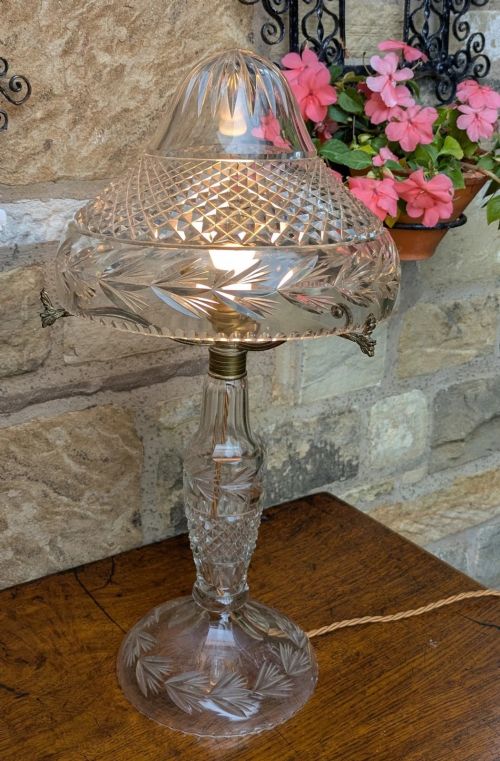
A brass crystal table lamp unites metal framework with glass components to create functional lighting. Buyers searching for a brass crystal table lamp encounter varied forms including converted oil lamps, candelabra, girandoles, and traditional table lamps.
The pieces on this page span Victorian, Edwardian, and early twentieth century periods, with French styles such as Belle Epoque, Louis XV, and Neoclassical appearing alongside traditional English designs. These items originate from domestic and continental workshops, reflecting diverse aesthetic preferences of the nineteenth and early twentieth centuries.
Makers utilised brass, gilt bronze, ormolu, and gilt metal alongside lead crystal, cut glass, and fabric shades. The results range from simple single-bulb table lights to elaborate multi-branch candelabra and table chandeliers equipped with hanging lustres.
Materials and construction
Construction relies upon cast or spun brass, gilt bronze, and ormolu to form the structural body, bases, and candle arms. These metal mounts secure cut glass and lead crystal reservoirs, columns, or bobeches using threaded rods and screws.
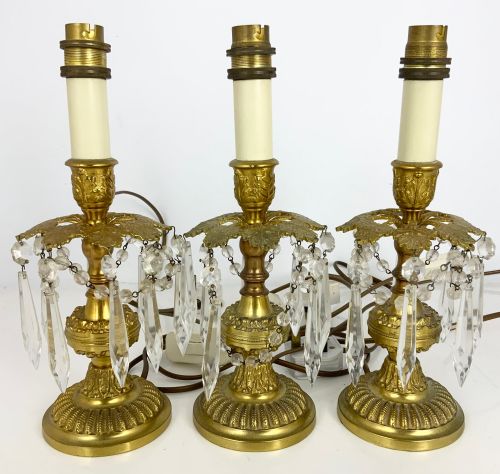
Glass elements undergo cutting, moulding, and polishing to produce facets that refract light, while drops and lustres hang from wire loops attached to the metal frames. Many of these lighting fixtures originated as oil lamps, paraffin burners, or candle-bearing candelabra before undergoing later conversion to electricity.
Brass Crystal Table Lamp Retail Price Guide 2026
Typical asking prices for brass crystal table lamp among the pieces listed under this phrase on Sellingantiques today, from the lower quarter to the upper quarter. They describe what is for sale here now, not the wider market.
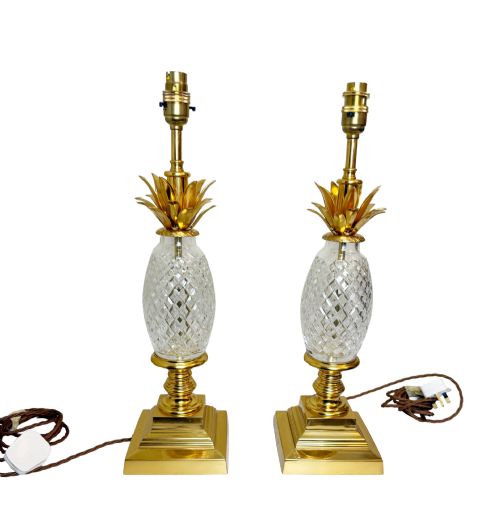
Pineapple-shaped glass reservoirs appear in several pieces, bringing a touch of botanical whimsy to nineteenth-century illumination.
Judging quality and craftsmanship
Quality reveals itself in the weight and crispness of the brass or gilt bronze castings, where finer examples display sharply chased surface details and substantial metal gauges. The glass components further distinguish pieces, with heavy lead crystal and deep hand-cut facets demonstrating superior craftsmanship compared to plain moulded glass.
Proportion and structural integrity separate standard items from exceptional ones, particularly in matched pairs where symmetry and uniformity of crystal drops matter. The integration of the electrical fittings into historical mounts also indicates the level of care taken during period conversions.
Osler
The Brass Crystal Table Lamp Glossary
- Girandole
- A branched candleholder or light fixture featuring mirrors or extensive crystal drops designed to reflect illumination. These decorative pieces often incorporate multiple light arms.
- Ormolu
- Gilt bronze produced by applying a finely ground high-carat gold mercury amalgam to a bronze object, which is then heated to vaporise the mercury. This technique imparts a durable golden finish to period metalwork.
- Lustre
- A cut glass pendant or hanging drop suspended from a lighting fixture to refract light. They catch and scatter illumination from candles or bulbs.
Brass Crystal Table Lamp: Frequently Asked Questions
Are these lamps converted from older items?
Many examples began life as oil lamps, paraffin burners, or candle-bearing candelabra during the Victorian and Edwardian eras. These pieces subsequently underwent conversion to electricity to suit modern homes.
This adaptation preserves the decorative metal and glass bodies while integrating contemporary wiring and lamp holders for safe everyday use.
How do I identify French styles?
French lighting designs often display specific stylistic cues such as gilt bronze mounts, acanthus leaf casting, and ornate crystal drops associated with Louis XV, Neoclassical, or Belle Epoque tastes. Ormolu finishes and multi-branch configurations are common characteristics.
English equivalents tend to feature more restrained brass mounts and traditional columnar forms, reflecting different regional domestic interiors of the nineteenth century.
What is the difference between glass and crystal?
Lead crystal contains metallic oxides that increase its density, clarity, and refractive index compared to standard soda-lime glass. This composition allows for deeper, sharper hand-cutting and produces a more resonant ring when struck.
Items described as cut crystal or lead crystal exhibit heavier weight and brighter light dispersion than plain glass alternatives.
How should I clean crystal lustres?
Maintenance involves removing hanging lustres and glass drops individually for washing in warm, soapy water using a soft cloth. Harsh chemicals can damage vintage gilt metal surfaces and old brass lacquers.
Careful handling ensures that wire connectors and delicate glass edges remain intact during the cleaning process.