

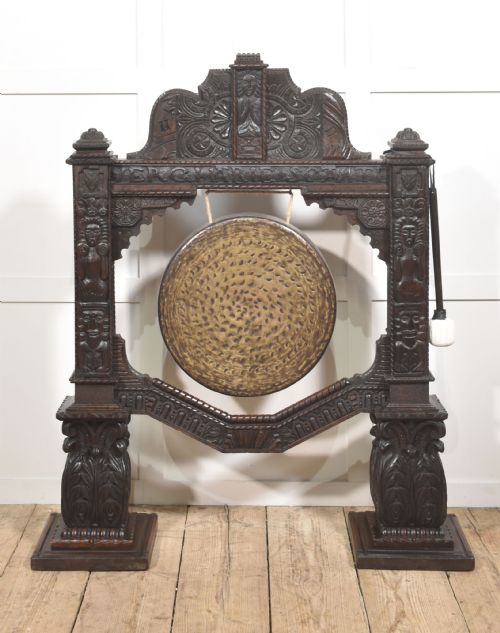


Brass Country House Gong
A brass country house gong summons household and guests alike, bringing resonant presence and tactile heritage into the hallway.
Brass Country House Gong
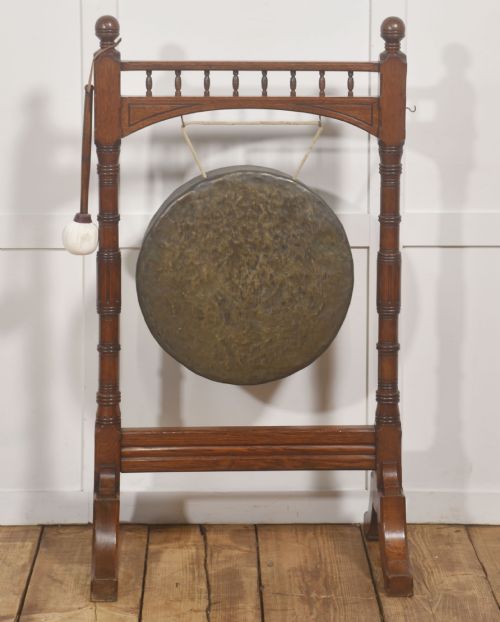
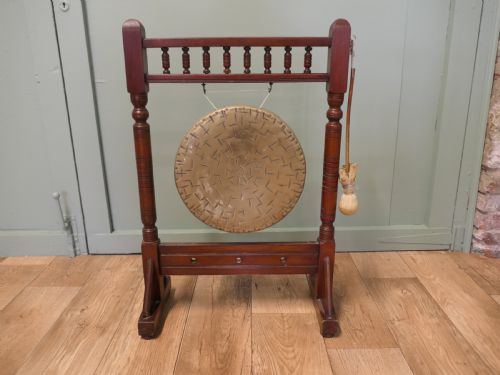
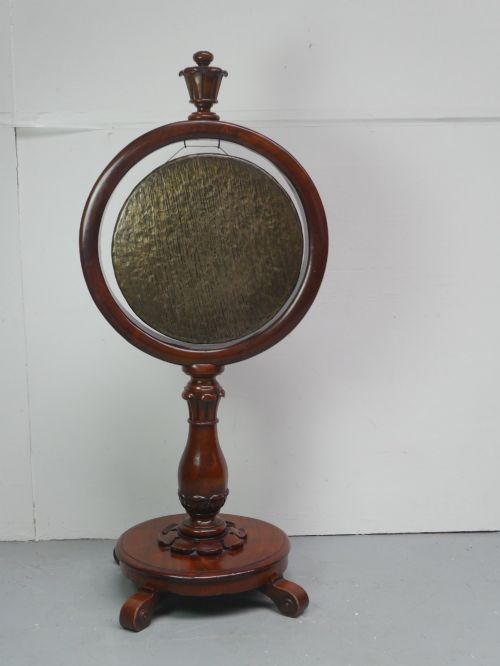
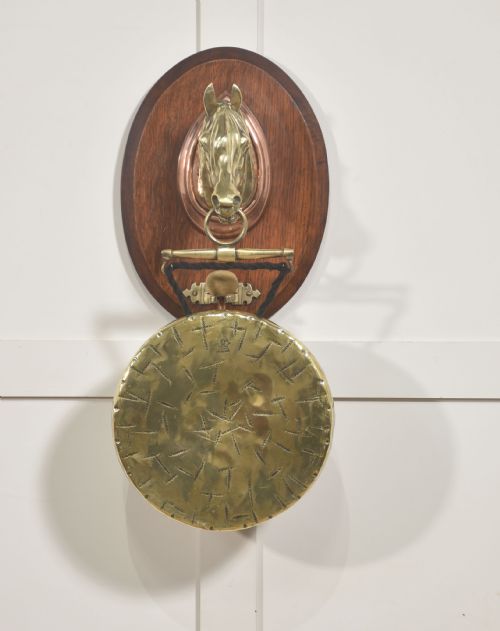
A brass country house gong combines a suspended metal disc with a substantial wooden or iron supporting frame, created to call residents to the table. These resonant items appear in formats ranging from wall-hanging mounts to impressive floor-standing examples.
The pieces on this page emerge primarily from the nineteenth century and around nineteen hundred, reflecting Victorian, Arts and Crafts, and Gothic Revival tastes. They bridge functional household utility with striking decorative presence in domestic interiors.
Oak serves as the predominant framing material, often accompanied by brass, copper, leather, cord, rope, and occasionally cattle horn. Examples span from simple wall-mounted variations to monumental carved designs and equestrian-themed pieces.
How they were made
Makers shaped the sounding discs from brass and copper, hammering and tuning the metal to produce a deep, sustained tone when struck. These resonant plates hang securely from frames using sturdy rope, cord, or leather straps.
Supporting structures utilise solid oak and wrought iron, frequently featuring carved ornamentation and specialised mounts such as horse heads or cattle horns. Cabinetmakers and metalworkers combined these materials to ensure the heavy frames could withstand the vibration of the hanging gong.
Brass Country House Gong Retail Price Guide 2026
Typical asking prices for brass country house gong among the pieces listed under this phrase on Sellingantiques today, from the lower quarter to the upper quarter. They describe what is for sale here now, not the wider market.
The listings here feature oak, brass, copper, leather, and cattle horn across nineteenth-century and Victorian pieces.
What varies in quality
The distinction between standard and exceptional pieces rests upon the ambition of the framing and the resonance of the metal disc itself. Heavier carved oak frames and monumental proportions indicate greater workshop effort than simple, plain supports.
Detailing such as specialised brass mounts, cattle horn integration, or wrought iron work elevates specific examples above standard production. The depth and longevity of the acoustic ring further separate utilitarian items from finer decorative furnishings.
The Brass Country House Gong Glossary
- Dinner Gong
- A suspended metal disc struck with a mallet to announce meals in large residences. These resonant objects form the central focus of the items on this page.
- Gothic Revival
- An architectural and decorative style drawing inspiration from medieval forms. Pieces bearing this aesthetic display pointed arches and heavy, dramatic carving.
- Arts and Crafts
- A design movement valuing traditional craftsmanship and honest materials. Frames from this tradition emphasise visible construction and simple, robust lines.
- Wrought Iron
- Iron beaten and shaped by hand while hot to create structural frames. This material provides sturdy, dark support for hanging metal discs.
Brass Country House Gong: Frequently Asked Questions
How do you sound a dinner gong?
A padded mallet strikes the centre of the hanging brass disc to produce a resonant tone.
Striking with varying force alters the volume, though the natural resonance carries sound across large spaces.
Where were these gongs placed?
These pieces hung in entrance halls, corridors, or main reception areas of large houses.
Their prominent placement ensured the sound reached every corner of the residence when dinner was served.
How do I care for the oak frame?
The wooden structure benefits from occasional application of natural wax to nourish the grain.
Keeping the wood away from direct heat sources prevents the timber from drying out or splitting.
How do I date a Victorian gong?
Dating relies upon stylistic markers such as Gothic Revival motifs or Arts and Crafts simplicity.
Materials like solid oak and hand-wrought iron also point toward nineteenth-century manufacturing techniques.