

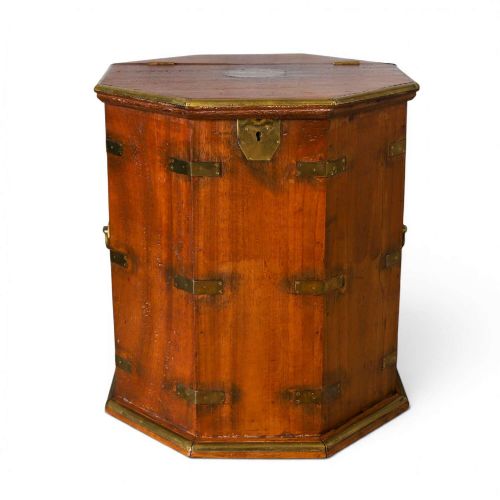

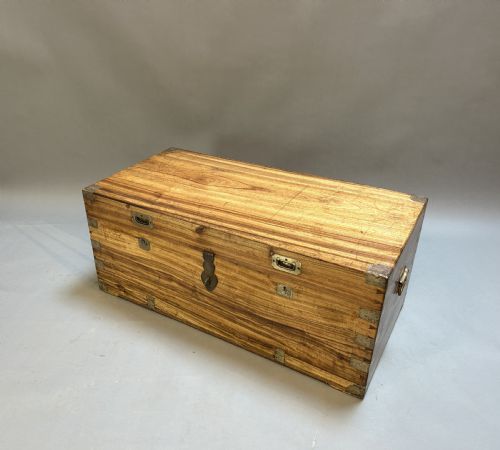
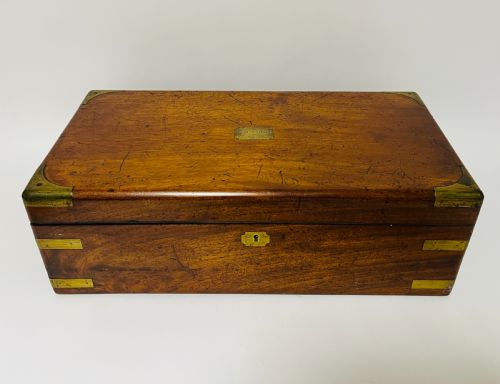


Brass Corner Wooden Box
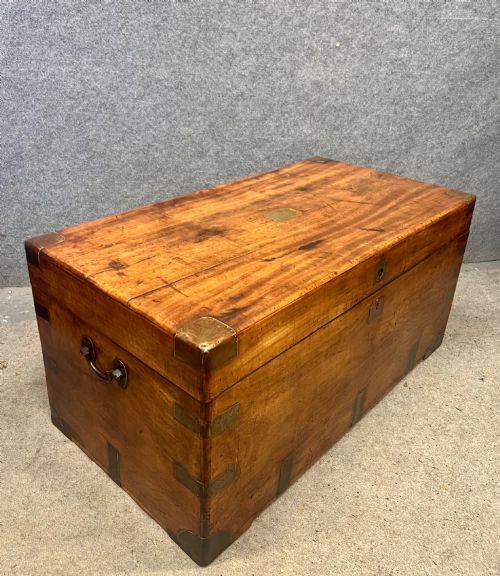
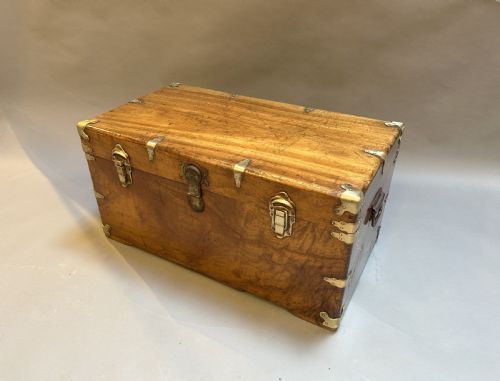
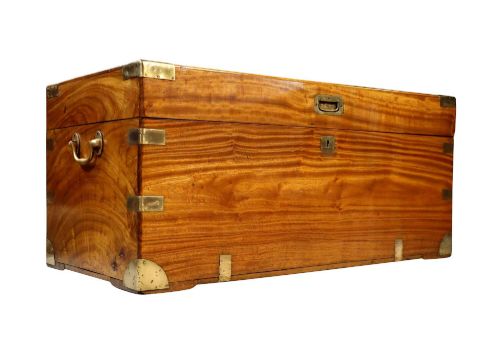
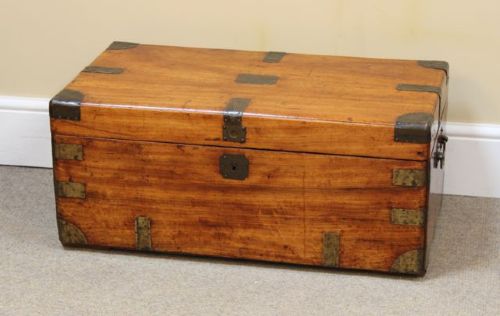
A brass corner wooden box brings travel history into a room, offering sturdy storage built for movement across distant continents.

Brass Corner Wooden Box
A brass corner wooden box primarily spans the nineteenth century, taking the form of campaign chests, writing slopes, and travelling trunks designed for officers and merchants on the move. These items served practical purposes during military campaigns and colonial expansion, requiring robust construction to withstand long journeys.
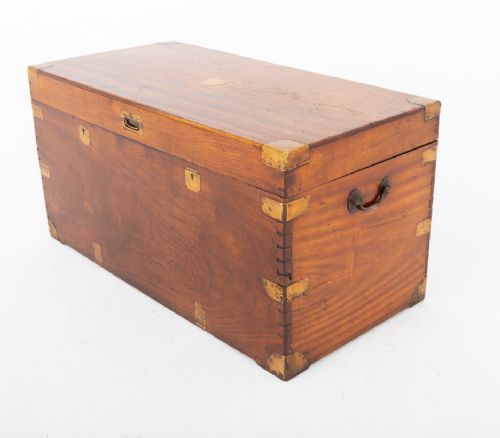
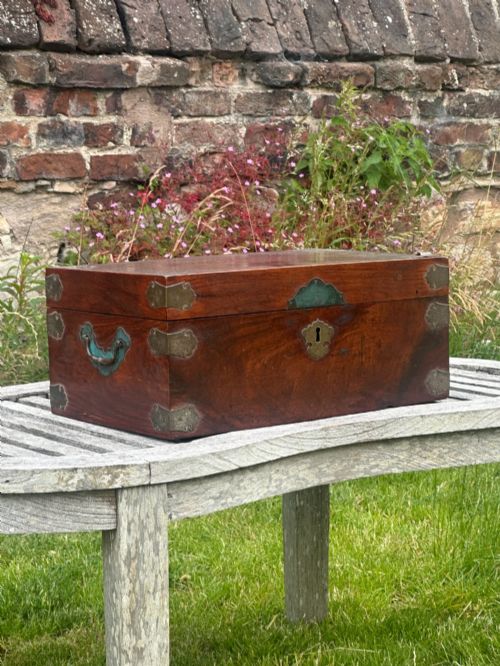
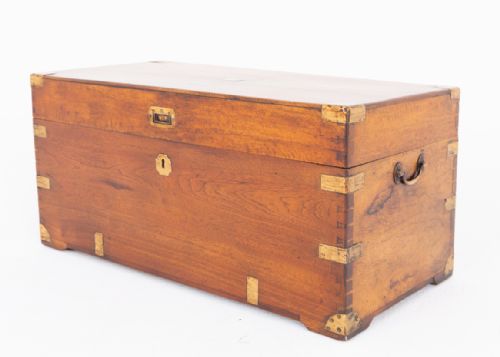
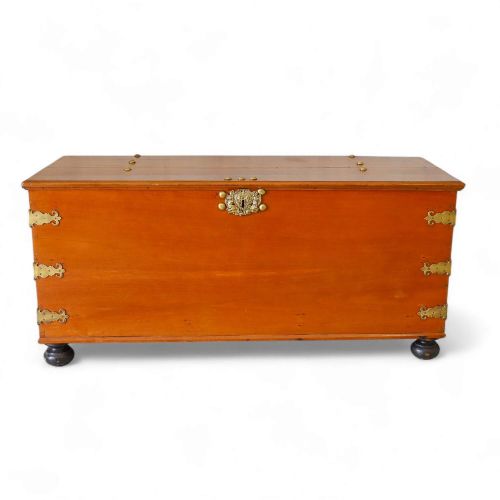
The most common version met on this page is the camphor wood or teak campaign trunk, reinforced with brass corners, straps, and flush-fitting inset handles. Buyers also encounter smaller writing boxes and deed boxes constructed from mahogany, walnut, or rosewood, similarly fitted with protective metalwork.
Originating from British colonial administration and military expeditions, these pieces combine dense hardwoods with protective brass hardware that absorbed the knocks of transport. Their modular design and durable construction meant they could be packed easily onto ships and wagons.
How they were made
Cabinetmakers utilised dense, moisture-resistant timbers such as camphor wood, teak, and mahogany to build these boxes, protecting the contents from humidity and pests during tropical travel. These woods were chosen for stability and grain strength rather than surface display alone.
Brass corners, straps, and brackets were screwed into the wood and often countersunk to present a flush exterior that avoided snagging on ropes or storage holds. Dovetail joints secured the primary carcass, while iron internal fittings and brass locks added security for valuables and documents.
Brass Corner Wooden Box Retail Price Guide 2026
Typical asking prices for brass corner wooden box among the pieces listed under this phrase on Sellingantiques today, from the lower quarter to the upper quarter. They describe what is for sale here now, not the wider market.
Many camphor trunks still retain a faint, unmistakable trace of aromatic wood oil after two centuries at sea.
What varies in quality
The distinction between standard utility pieces and finer examples rests on the weight of the brass, the precision of the mitred joints, and the selection of figured timber. Superior boxes display heavy, cast brass hardware rather than thin sheet metal, with hand-cut dovetails and intact internal fittings.
Originality of the hardware and surface patination dictate the standing of a piece within its type. Examples retaining their original recessed carrying handles, working locks with keys, and unblemished wood surfaces command greater attention from collectors.
The Brass Corner Wooden Box Glossary
- Campaign chest
- A modular chest of drawers or trunk made in sections for ease of transport during military operations. These pieces typically feature recessed brass handles and corner brackets to prevent damage during transit.
- Writing slope
- A portable desk with a hinged, slanted lid that opens to reveal a lined writing surface and internal compartments for ink and paper. Victorian examples often incorporate secret drawers concealed behind false partitions.
- Camphor wood
- An aromatic hardwood native to Asia, prized for insect-repellent properties and distinctive grain patterns. It was heavily utilised for campaign trunks destined for tropical climates.
- Flush handle
- A metal lifting ring or handle inset into the wood so that it sits level with the surface. This design prevents snagging and maximises space efficiency in transit.
- Padouk
- A dense tropical hardwood with a reddish-brown colour used in Anglo-Indian cabinetmaking. It offers exceptional durability and stability.
Brass Corner Wooden Box: Frequently Asked Questions
What were brass corner wooden boxes used for?
These boxes served as portable storage for officers and officials travelling during the eighteenth and nineteenth centuries. They protected clothing, documents, and personal valuables against moisture and rough handling during sea voyages.
Over time, many transitioned from functional campaign equipment to decorative home furnishings. Today, they function as coffee tables, blanket chests, or desktop storage.
How do I care for camphor wood?
Camphor wood benefits from minimal treatment, requiring only a soft cloth to remove dust and occasional application of natural wax to nourish the grain. Direct sunlight should be avoided to prevent the timber from fading.
The natural aromatic oils within the wood remain active for generations, keeping the interior fresh without the need for artificial scent blocks.
How can I tell the age of a campaign chest?
Dating relies on examining construction methods, timber choices, and the style of the brass hardware. Nineteenth-century pieces typically exhibit hand-cut dovetailing and heavy brass corners designed for active military use.
Later Victorian and Edwardian examples often show machine-sawn elements and lighter gauge brass mountings. Maker's stamps or paper labels inside drawers can also help confirm the period.
Are writing slopes difficult to restore?
Restoration depends entirely on the survival of internal components like inkwells, velvet inserts, and secret drawers. Minor cleaning and waxing preserve the surface patination without diminishing historical value.
Replacing missing brass hardware or damaged leather writing surfaces requires specialist skill to match the original nineteenth-century materials.