

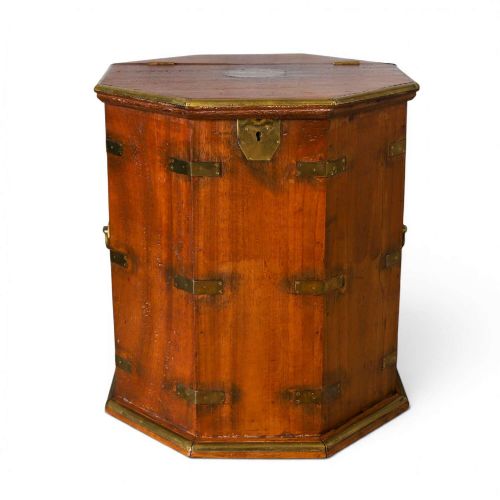

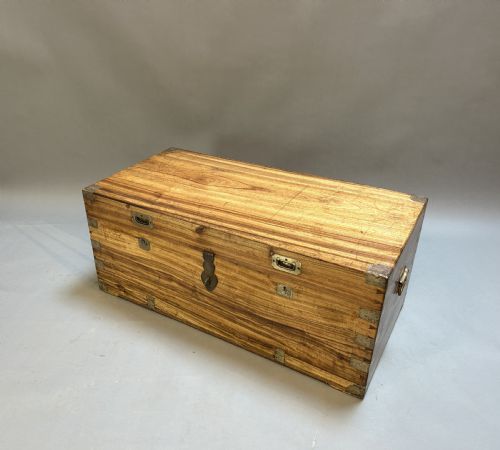
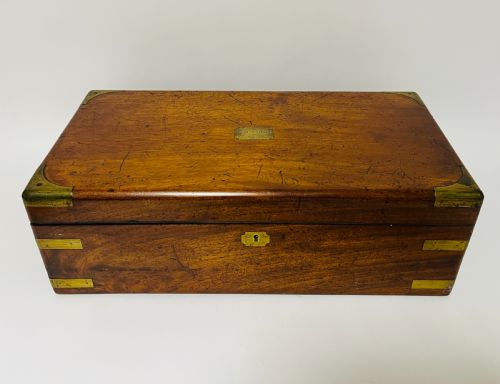


Brass Corner Campaign Box
A brass corner campaign box is a portable piece of travelling furniture designed for officers on active service.
Brass Corner Campaign Box
A brass corner campaign box represents the portable storage built for officers on the move during the Georgian and Victorian periods. When you search for a brass corner campaign box, you encounter chests, trunks, and writing slopes constructed for military life. These items served soldiers and administrators across the British Empire, requiring robust builds to withstand frequent transport.
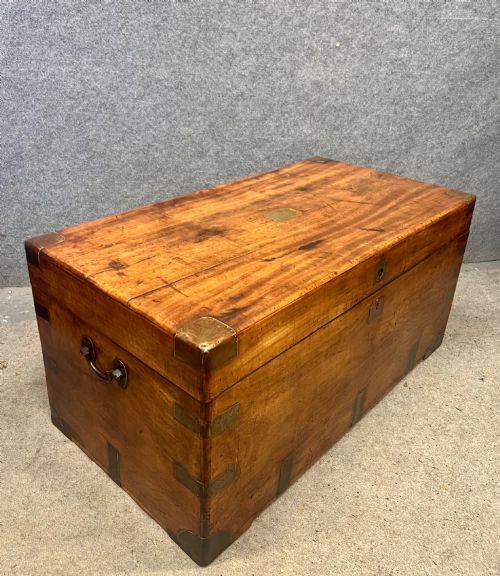
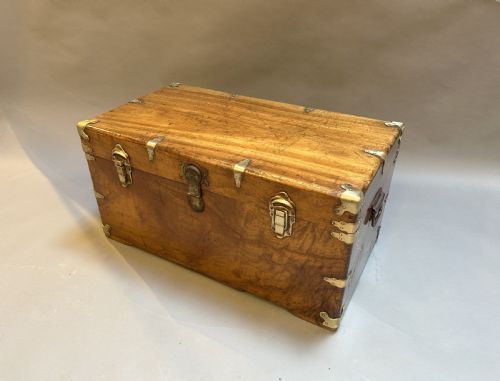
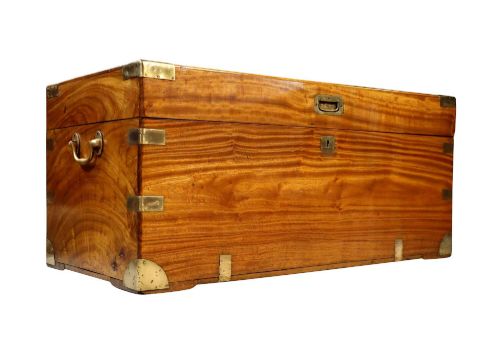
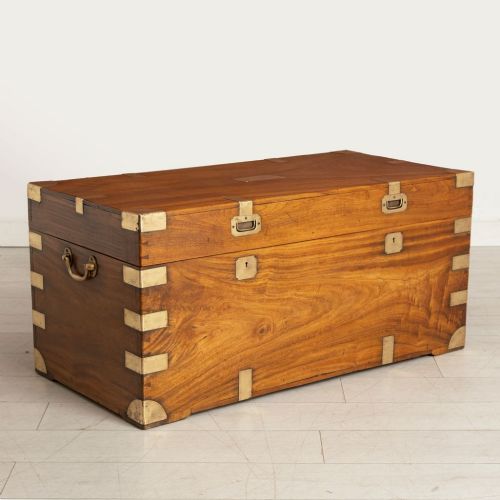
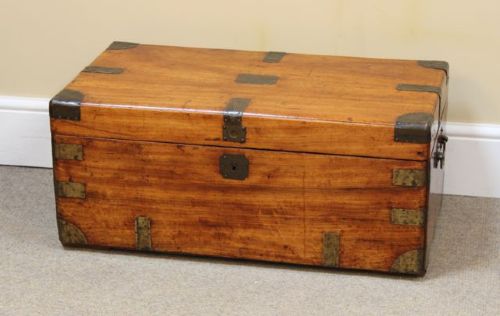
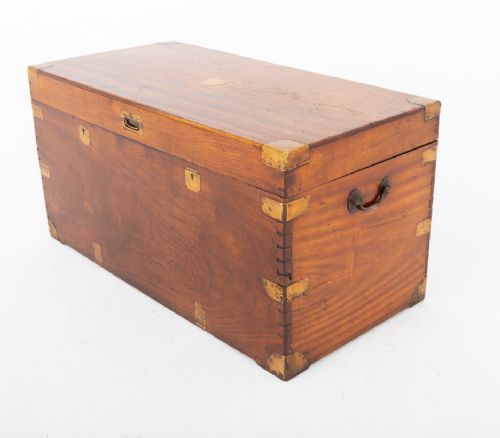
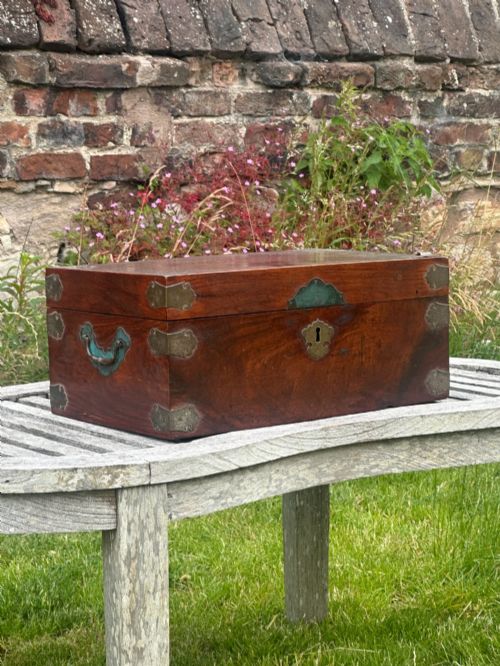
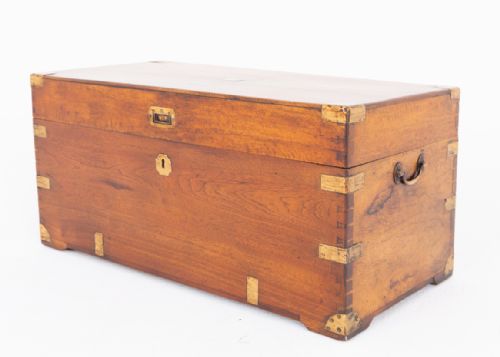
The version you meet most often on this page is the camphor wood trunk bound in brass, dating from the nineteenth century. These chests feature recessed brass corners and strapwork designed to protect the timber edges from knocks during transit. Smaller writing slopes and deed boxes also appear, fitted with internal compartments for correspondence and documents.
Makers utilised resilient tropical timbers such as teak, padouk, and camphor wood to resist humidity and insects in distant postings. Chests often divide into modular sections or include flush-fitting drop handles for efficient packing. The aesthetic combines plain utility with the gleam of heavy brass reinforcement.
Materials and Construction
Carpenters constructed these pieces primarily from solid camphor wood, teak, mahogany, and oak, selecting timbers for durability and resistance to warping. Camphor wood was favoured for its insect-repellent properties, protecting stored uniforms and papers in tropical climates. Secondary woods sometimes appear in internal partitions and secret drawers.
Sheet brass was cut, folded, and screwed to every vulnerable edge, joint, and corner to absorb the impact of rough handling. Flush brass drop handles and sunken escutcheons prevented snags during loading and stacking. Dovetail joints secured the main carcass, ensuring stability under heavy loads.
Opening an untouched nineteenth-century camphor trunk often releases a faint trace of spice after two hundred years.
Distinctions in Quality
Quality rests in the precision of the brasswork and the selection of timber grain. Better examples display thick, hand-beaten or cast brass mounts screwed securely with matching slotted screws, rather than thin stamped metal. The figure and grain of the camphor wood or teak also elevate a piece from basic utility to a finer officer's equipment.
Internal fitted arrangements dictate the tier of craftsmanship in smaller boxes and writing slopes. Superior pieces incorporate secret drawers, pigeonholes with cockbeading, and original leather writing surfaces. The integration of robust locking mechanisms and flush-folding hardware separates standard military issue from bespoke officer commissions.
The Brass Corner Campaign Box Glossary
- Campaign chest
- A modular storage chest built in two or more sections to facilitate transport on military campaigns. These units stack securely and feature removable feet or brackets.
- Camphor wood
- An aromatic hardwood native to Asia, utilised for campaign trunks because its natural scent repels moths and insects. It possesses a distinct warm tone and varied grain.
- Writing slope
- A portable slant-topped box that opens to reveal a writing surface, inkwell compartments, and storage for stationery. Many include hidden compartments for sensitive documents.
- Escutcheon
- A protective brass plate surrounding a keyhole. On campaign pieces, these are typically sunk flush into the wood to avoid catching on canvas straps.
- Strapwork
- Heavy metal bands affixed across the exterior of a trunk to reinforce the structure. Brass strapwork defines the military aesthetic of these transport boxes.
Brass Corner Campaign Box: Frequently Asked Questions
What is a campaign box?
A campaign box is a portable chest or desk made for military officers travelling on duty. They feature reinforced brass corners to survive rough transport.
These boxes served British personnel across the Empire, designed to pack easily into tents or wagons.
Why use camphor wood?
Camphor wood was chosen because its natural aroma protects woollens and papers from insects in humid climates. It is also lightweight yet durable.
Carpenters valued the timber for its stability when subjected to extreme shifts in temperature.
How do I date a box?
Dating relies on timber choices, brass thickness, and construction methods. Nineteenth-century examples often feature heavy brass bound corners and dovetailed joints.
Georgian pieces typically display finer proportions and specific lock designs characteristic of the eighteenth century.
Can I use them as coffee tables?
Many buyers place these sturdy chests in living spaces to serve as low tables with internal storage. Their flat tops and robust construction suit modern domestic use.
Original hardware and historic patina add character to contemporary interiors.