
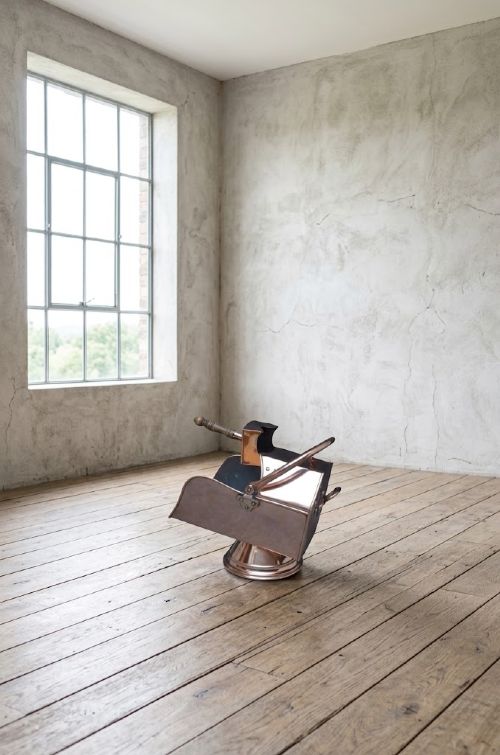
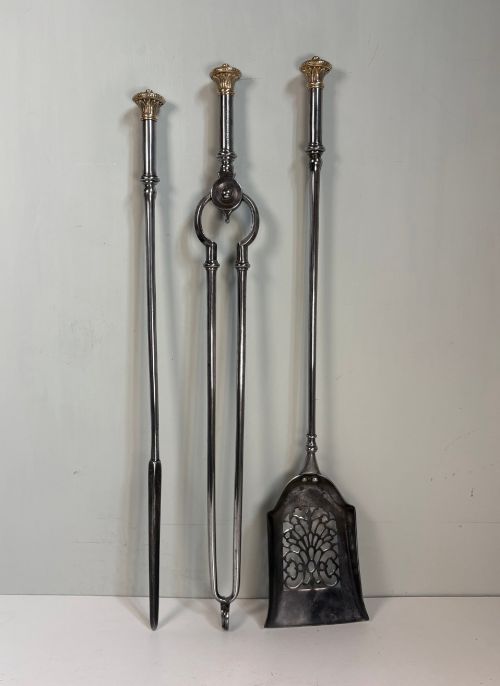
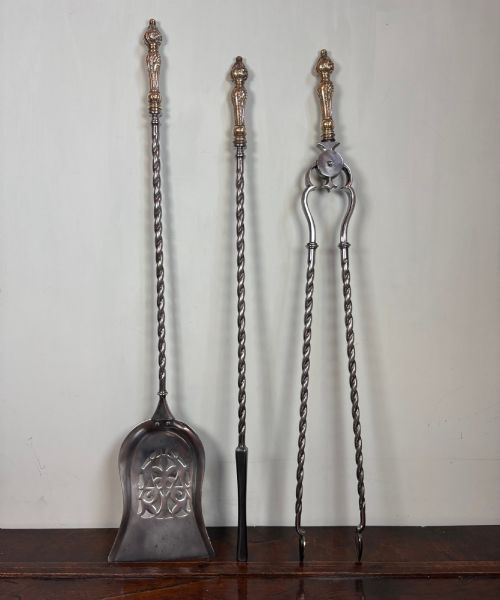
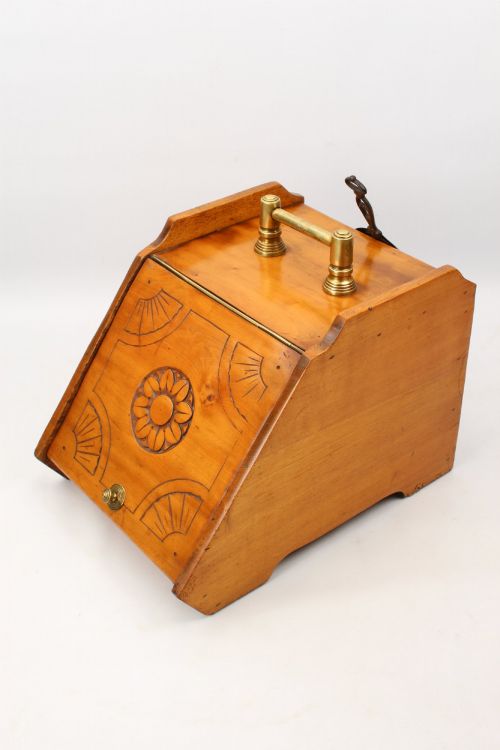
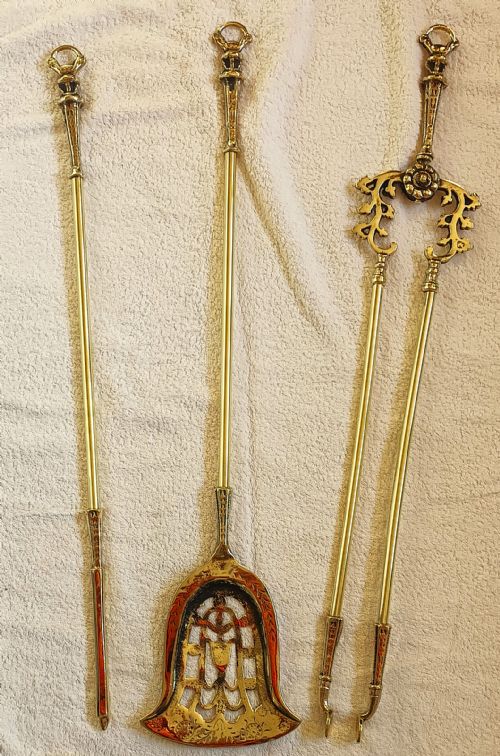


Brass Coal Shovel
A brass coal shovel brings bright metal and steady utility to the hearth, serving as the necessary tool for moving fuel.
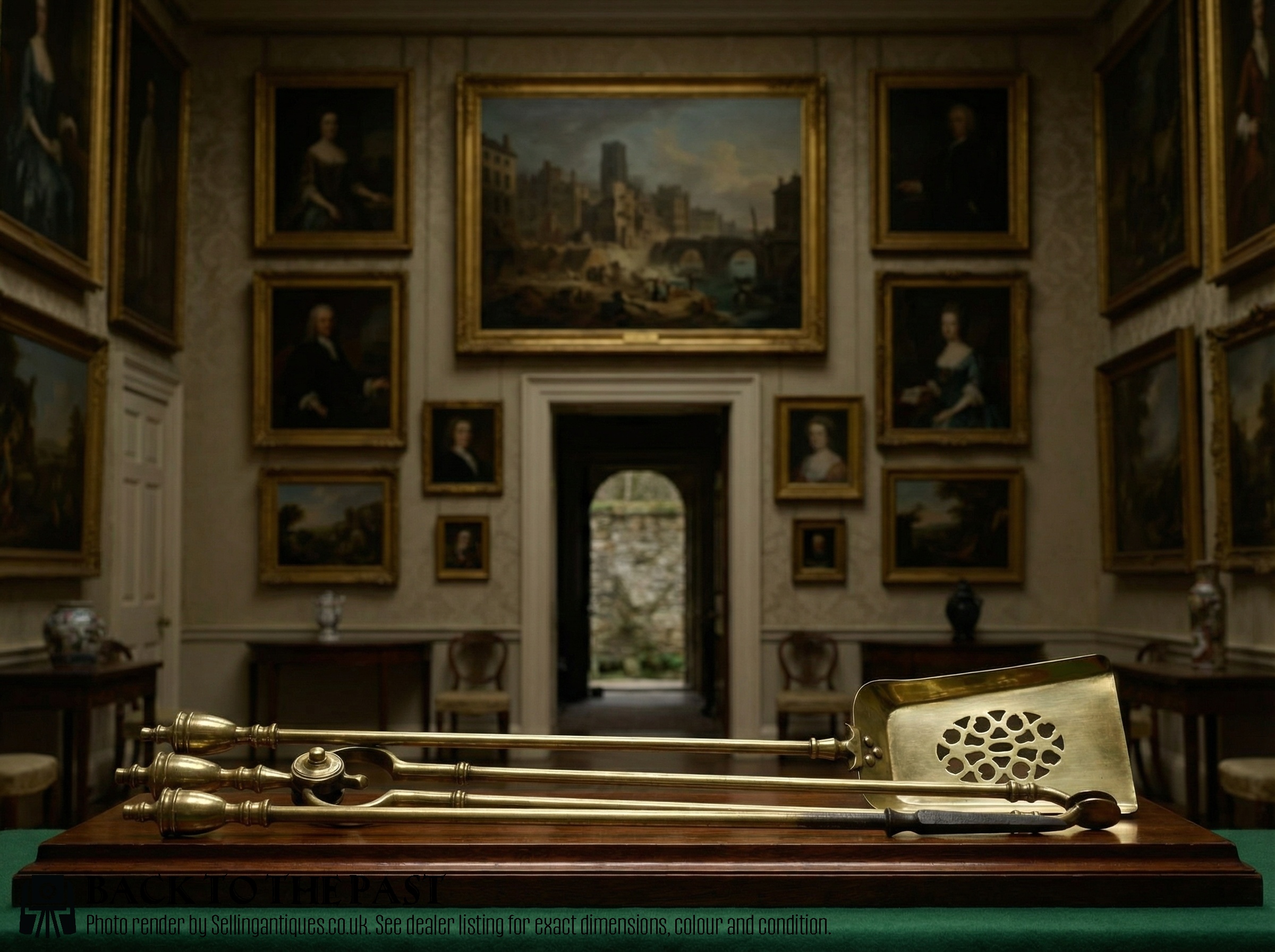
Brass Coal Shovel
When you search for a brass coal shovel, you encounter utilitarian hearth equipment designed to handle solid fuel with durability and style. The items seen on this page span the Georgian, Victorian, and Edwardian periods, stretching from the late eighteenth century into the early twentieth century.
Many examples appear as part of companion fire tool sets alongside pokers and tongs, or accompany coal scuttles, helmets, and purdoniums. The Victorian era supplies a large proportion of these pieces, alongside Arts and Crafts designs and earlier Georgian forms.
These shovels range from simple working implements to heavy, ornate pieces intended for prominent display beside the fireplace. Their forms reflect the changing domestic tastes of British households over two centuries of coal heating.
Materials and Construction
Makers formed these pieces predominantly from solid brass, often pairing the bright metal bowls with iron or steel shafts for added strength during heavy lifting. Some iterations incorporate copper or wood components, particularly in coal scuttles, bins, and boxes fitted with turned wooden handles.
Forging, casting, and riveting dominate the construction methods visible across the listings. Handles often feature cast brass grips or turned wooden inserts, while shovel blades are joined securely to their stems to withstand the weight of coal.
Listings feature brass, copper, iron, steel, oak, and mahogany across Victorian, Georgian, Edwardian, and Arts and Crafts styles.
Judgments of Quality
Quality rests in the gauge of the metal and the integrity of the joins between blade and handle. Heavier brass castings and thick steel rods indicate superior manufacturing that endured decades of daily use at the hearth.
Refinement in the handle casting and the crispness of any decorative chasing or shaping separate standard utilitarian tools from finer companion set components. Original matching shovels retained within coal scuttles or fire tool sets hold greater integrity than assembled groupings.
The Brass Coal Shovel Glossary
- Purdonium
- A decorative coal box or bin, typically featuring a sloping front and a compartment for a shovel. These containers kept solid fuel tidy beside the Victorian hearth.
- Coal Helmet
- A coal scuttle shaped with a flared rim resembling a classical helmet, often paired with a matching brass shovel. The design allowed easy pouring of fuel into the grate.
- Companion Set
- A collection of fireside tools, usually including a shovel, poker, and tongs, housed together on a stand or arranged by the fireplace.
- Coal Hod
- A deep bucket or container designed specifically for carrying and holding coal. They frequently include a swing handle for transportation.
- Adam Style
- A neoclassical design style popularised in the eighteenth century, characterised by symmetrical ornamentation, urn motifs, and refined proportions.
Brass Coal Shovel: Frequently Asked Questions
How were these shovels used?
These shovels scooped coal from scuttles, hods, and purdoniums to replenish domestic fires burning in grates. They functioned as daily working tools rather than purely decorative objects.
Users needed robust metal construction to lift heavy loads of fuel without bending the shaft or detaching the handle.
Are original shovels important?
Original shovels that match the specific scuttle, bin, or companion set complete the historic unit. Finding a set with its original accompanying shovel adds historical completeness.
Many pieces survive separated from their original companion sets or scuttles due to decades of household rearrangement.
How do I date a brass shovel?
Dating relies on stylistic clues, manufacturing techniques, and the accompanying coal containers or fire tool sets. Georgian pieces often display different casting proportions compared to later Victorian or Edwardian examples.
Subtle changes in handle turning, edge profiling, and assembly methods help distinguish nineteenth-century production from later revivals.
How do I live with a brass shovel?
These pieces integrate easily into active or decorative fireplace arrangements alongside other historic metalwork. Regular dusting maintains the metal surface without requiring aggressive polishing.
They serve equally well displayed beside a working period grate or mounted near a decorative fireplace surround.