
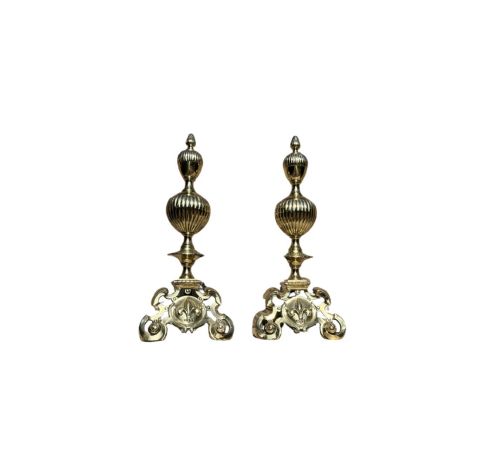
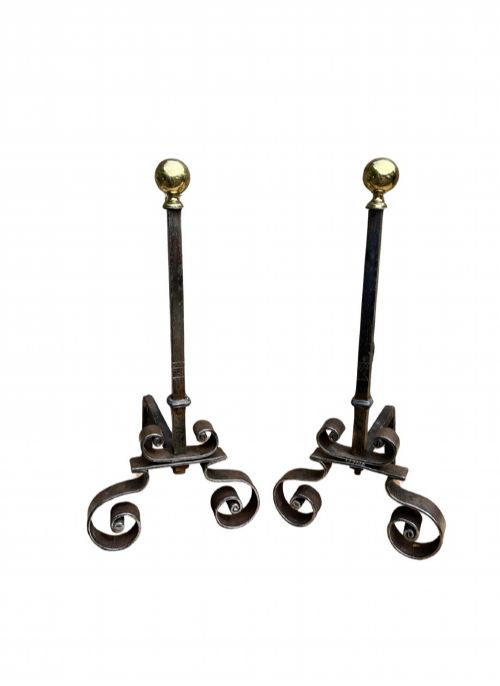
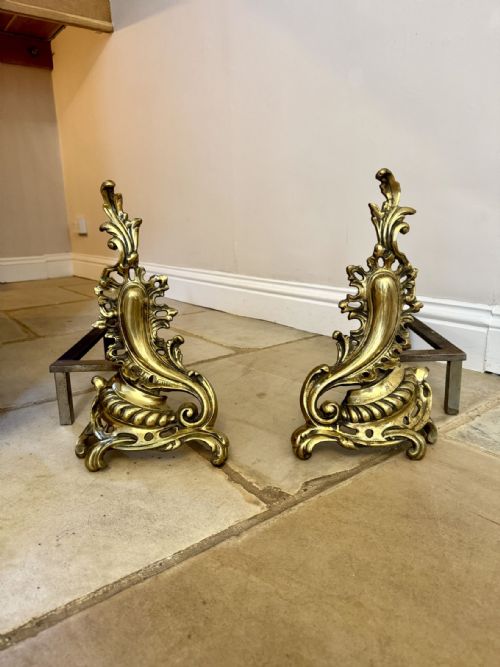
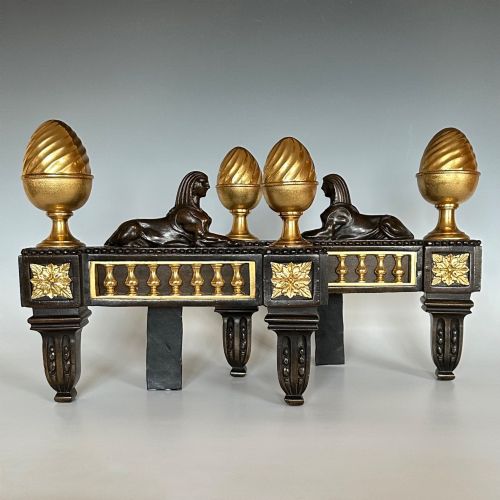
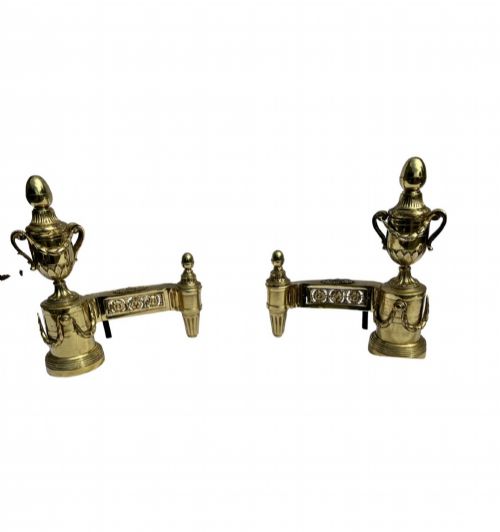
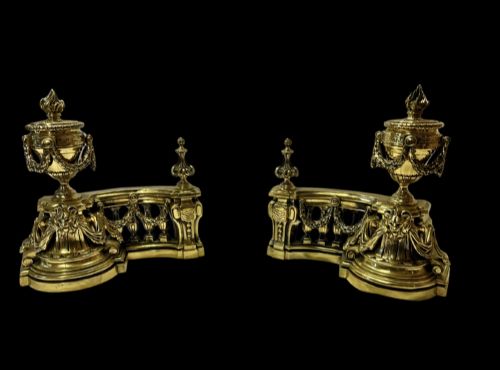
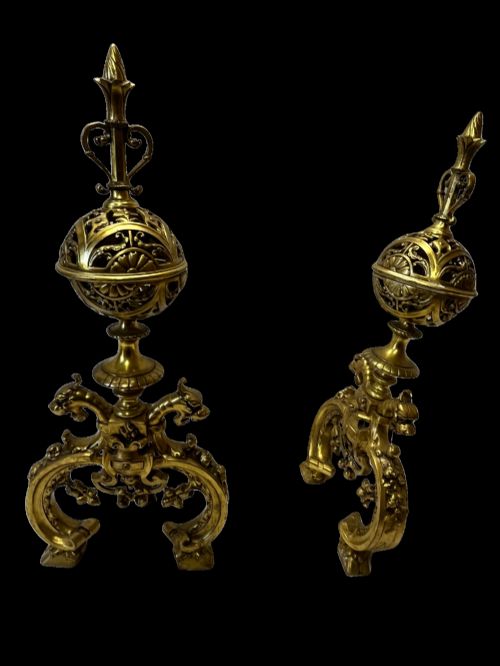


Brass Chenets Pair
These brass chenets pair listings offer heavy hearth supports, bringing sculptural weight and French style to period fireplaces.
Brass Chenets Pair
A brass chenets pair consists of matched hearth supports designed to hold logs above the hearth floor for better airflow. When you search for a brass chenets pair on this page, you meet heavy decorative fire dogs spanning the Georgian, Regency, and Victorian eras.
Most examples originate from French workshops or follow English Georgian and Victorian designs. They frequently appear alongside terms like andirons or fire dogs, serving both practical hearth duties and ornate decorative roles.
Materials and construction
Foundries cast these pieces primarily in brass, iron, or bronze, frequently applying gilt, ormolu, or fire gilding to create rich surface highlights. Wrought and cast iron often form the internal bars or structural backs that withstand direct hearth heat.
Makers utilised detailed moulding techniques to achieve complex scrollwork, animal motifs, and asymmetric rococo forms. The marriage of solid cast brass bodies with iron support billets ensures both decorative presence and durability under heavy fuel loads.
Listings feature brass, bronze, and iron materials across nineteenth-century Victorian and French Rococo Revival styles.
Judging quality and execution
Quality rests heavily on the crispness of the casting and the depth of the subsequent chasing work by hand. Superior pairs show sharp relief in acanthus leaves, scroll feet, and figural details without the softening typical of secondary mould copies.
Weight and material density distinguish the better examples from standard production pieces. Solid bronze and heavy cast brass with genuine ormolu mounts command greater attention than lighter brass-plated iron alternatives.
James Cartland & Son
The Brass Chenets Pair Glossary
- Chenet
- A French term for an andiron or fire dog placed at the front of a hearth. These decorative metal supports often feature matching tool rests or fender attachments.
- Ormolu
- Finely ground high-carat gold applied to a bronze or brass base using a mercury amalgamation technique. This historic process yields a warm, durable metallic lustre.
- Andiron
- A horizontal iron bar supported by vertical legs, designed to raise logs in an open fireplace. Pairs of these metal supports are fundamental to traditional hearth burning.
- Baroque
- An elaborate design style characterised by grand curves, rich ornamentation, and theatrical asymmetry. Pieces from this tradition emphasise dramatic visual movement.
- Rococo
- A decorative style featuring delicate shell motifs, C-scrolls, and plant-like asymmetry. This aesthetic dominates nineteenth-century French revival hearth accessories.
Brass Chenets Pair: Frequently Asked Questions
What is a brass chenets pair?
A brass chenets pair is a matched set of decorative fire dogs placed at the front of an open hearth. They support burning logs and prevent fuel from rolling onto the floor.
Historically, they also served as rests for fire irons or connected to matching fenders to frame the fireplace opening.
How do I clean antique chenets?
Dust them gently with a soft brush to protect vulnerable ormolu or gilt surfaces. Avoid aggressive metal polishes that strip historic patination and fine surface detail.
Consult a specialist conservator if the gilding shows active flaking or if structural iron components require rust stabilization.
Can I use them in a working fireplace?
Many solid brass and iron pairs remain structurally sound for burning logs in an active hearth. Ensure the iron billets at the rear can handle intense heat without warping.
Delicate ormolu surfaces and fire-gilt finishes face potential heat damage, so many owners prefer them for decorative hearth displays.
How do I date an older pair?
Examine the casting method, fastener types, and stylistic motifs such as rococo scrolls or neoclassical urns. Heavier cast components and hand-finished chasing often point to earlier nineteenth-century production.
Compare the design vocabulary against known Georgian, Regency, and Victorian manufacture patterns recorded in archive examples.