





Brass Ceiling Rose
A brass ceiling rose finishes a room with period weight, securing wiring while anchoring a light fitting to plaster.
Brass Ceiling Rose
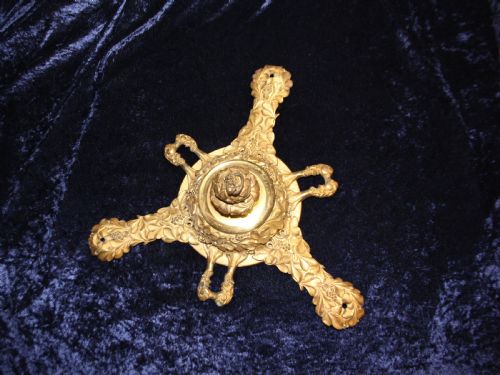
A brass ceiling rose is a decorative mounting plate that sits flush against the ceiling to conceal electrical connections while supporting pendant lights and chandeliers. When you search for a brass ceiling rose, you encounter sturdy hardware designed to anchor historical lighting securely above a room.
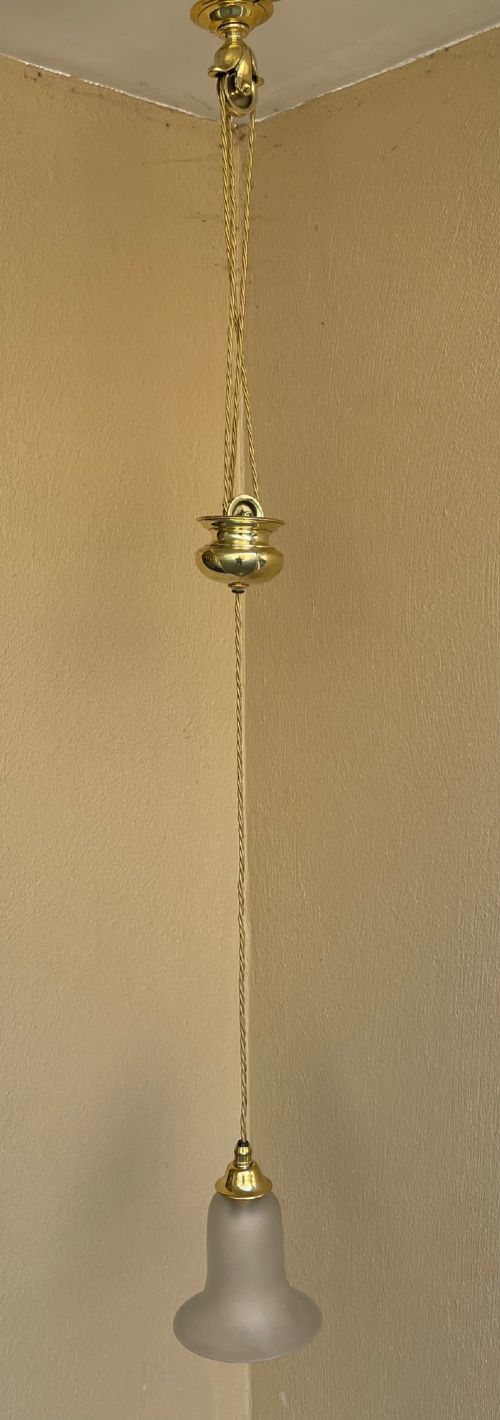
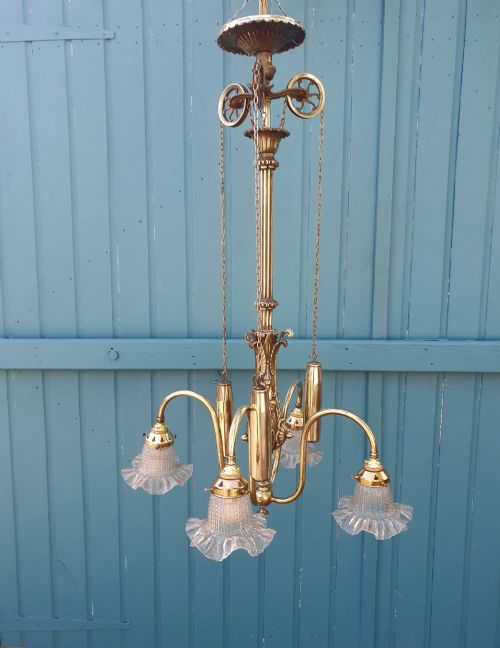
The pieces appearing on this page span the nineteenth century, the Edwardian era, and the year nineteen hundred, taking the form of standalone mounting plates as well as complete pendant lights, rise and fall fittings, and multi-armed chandeliers. Most examples show the heavy influence of Victorian, Art Nouveau, Art Deco, and French Rococo Revival design.
Plain cast plates appear alongside elaborate assemblies featuring cut glass shades, fabric cords, and polished bronze frames. Buyers find both individual roses intended for existing wiring and complete antique fixtures where the brass rose forms an integral part of the pendant mechanism.
Materials and construction
Manufacturers made these fixtures primarily using cast brass, polished bronze, and gilt brass, often pairing the metalwork with clear or opaque cut glass. The foundational plates were cast in moulds to achieve crisp botanical or scroll details before undergoing hand-polishing or gilding.
Complete lighting assemblies incorporate braided fabric cable or fabric cord to suspend the heavy metal lanterns and glass shades. Rise and fall mechanisms utilise internal weights and pulleys housed within the brass framework to allow adjustable hanging heights.
Brass Ceiling Rose Retail Price Guide 2026
Typical asking prices for brass ceiling rose among the pieces listed under this phrase on Sellingantiques today, from the lower quarter to the upper quarter. They describe what is for sale here now, not the wider market.
Listings feature brass, glass, and polished bronze materials spanning Victorian, Edwardian, and Art Deco styles.
Distinctions in quality
Quality in these pieces rests on the crispness of the casting and the weight of the metal utilised in the rose and its accompanying arms. Finer examples display sharply rendered surface ornament without the softness or pitting seen in inferior secondary castings.
The sophistication of the mechanics sets the higher tier apart, particularly in complex rise and fall counterweight systems and substantial cut glass components. Superior items maintain original gilding or deep bronze patination that has matured evenly across the entire brass surface.
Osler
The Brass Ceiling Rose Glossary
- Ceiling rose
- A decorative plate fixed to the ceiling to cover the hole where electrical wiring emerges. It also serves as a structural anchor for heavy pendant lights.
- Rise and fall
- A mechanical lighting system utilising internal pulleys and counterweights. This allows the user to adjust the height of the pendant lamp smoothly.
- Gilt brass
- Brass that has been treated with a thin layer of gold leaf or gilt paint. This technique gives the metal a rich, enduring golden lustre.
- Cut glass
- Glass decorated by cutting facets or patterns into the surface using a rotating wheel. It scatters light brilliantly when incorporated into antique pendants.
- Cast brass
- Metal poured into a mould while molten to create detailed three-dimensional decorative forms. It provides the heavy structure needed for antique ceiling hardware.
Brass Ceiling Rose: Frequently Asked Questions
What is a brass ceiling rose used for?
A brass ceiling rose serves to hide the electrical junction box and wiring where a light fixture meets the plaster. It provides a solid decorative anchor for hanging pendants and chandeliers.
Historically, these plates managed the transition between structural ceiling timbers and the gas pipes or electrical cables supplying the room. Today, they remain essential for maintaining period character during interior restorations.
How do I date a brass ceiling rose?
Dating relies on stylistic clues and manufacturing techniques visible in the metalwork and associated wiring components. Victorian examples often display heavy cast brass with Gothic or Rococo Revival motifs.
Edwardian pieces frequently incorporate rise and fall mechanisms or flowing Art Nouveau lines, while later nineteen-hundreds pieces show brighter gilt finishes. The presence of original fabric cords and cut glass shades also helps narrow down the period.
Can I install an antique brass ceiling rose today?
Many antique roses can be adapted for modern electrical wiring by a qualified electrician. The central hole often accommodates contemporary flex and standard fixing brackets.
Care must be taken to ensure the old brass plate can support the weight of modern fittings, particularly when mounting heavy glass shades or multi-armed chandeliers.