
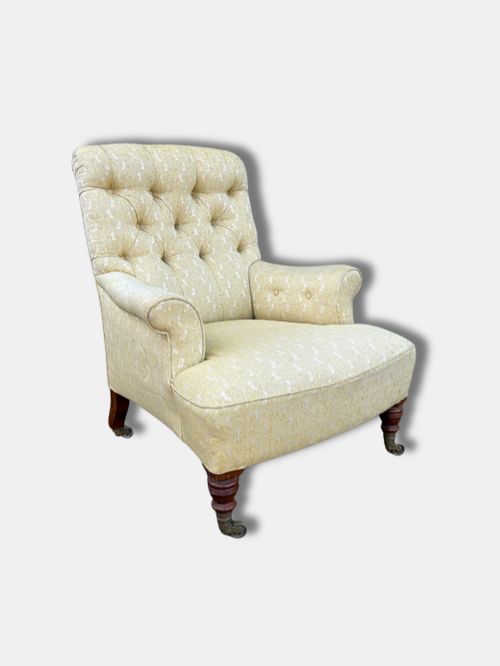
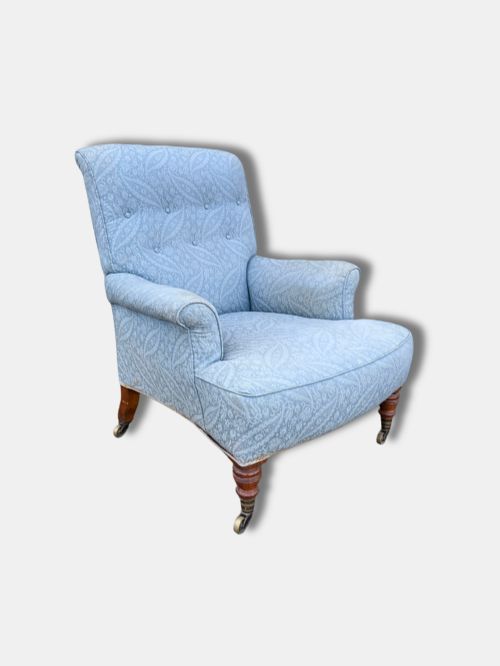
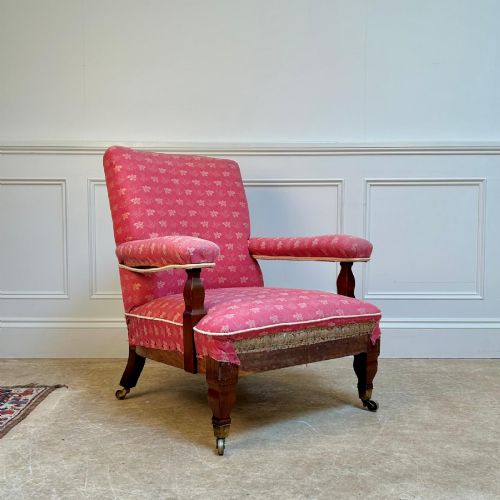
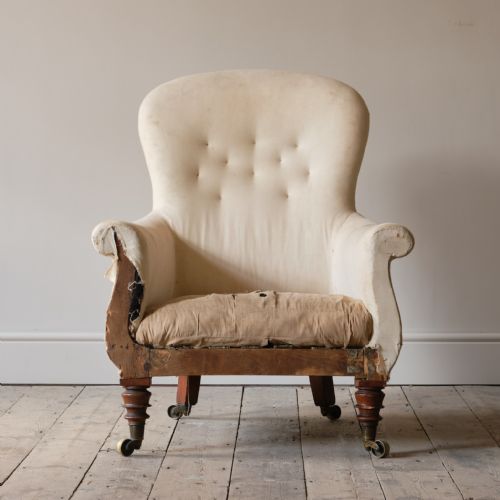
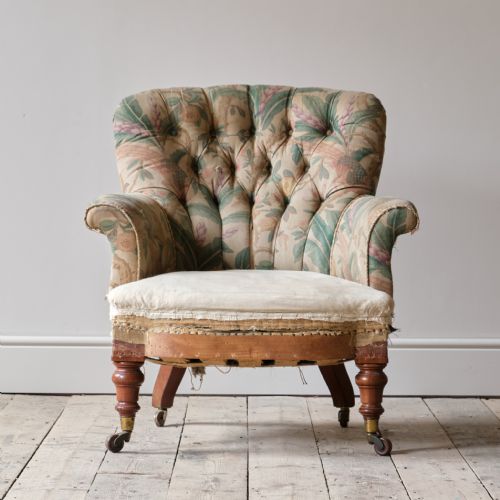
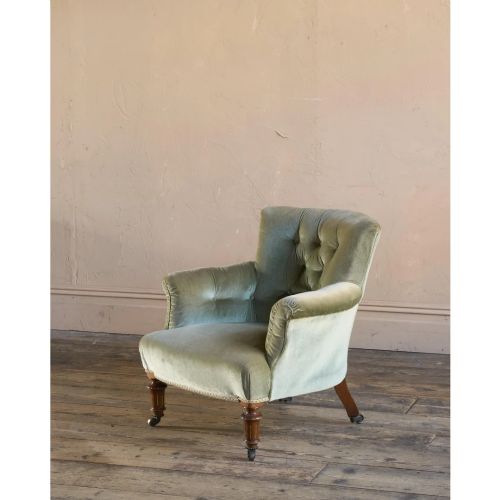
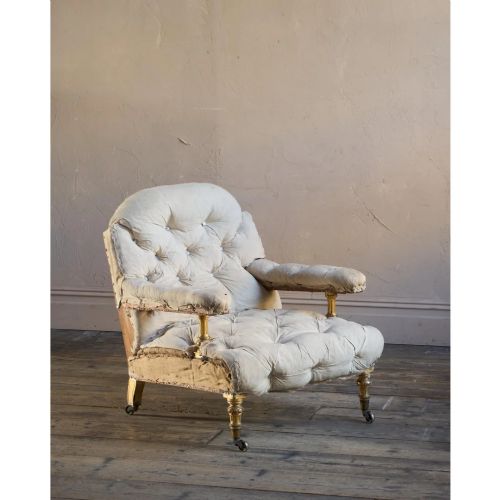
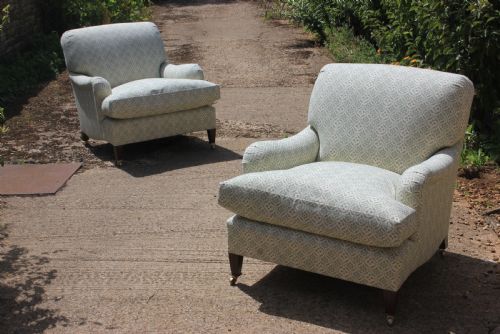
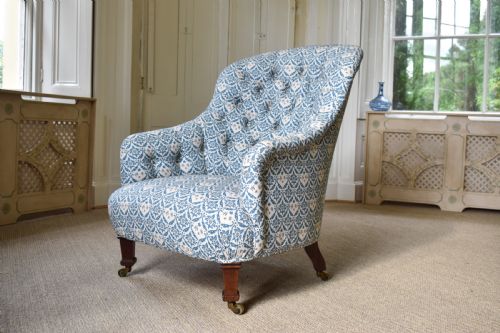

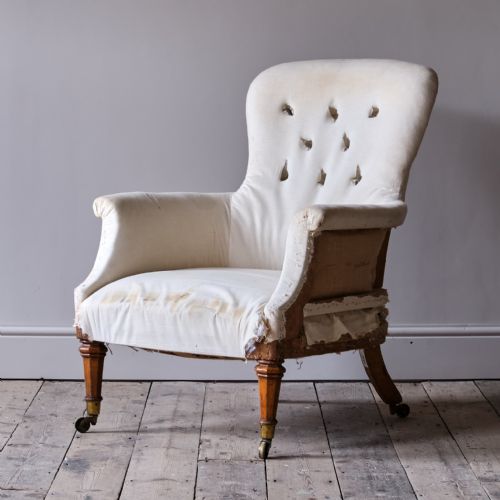

Brass Castor Reading Chair
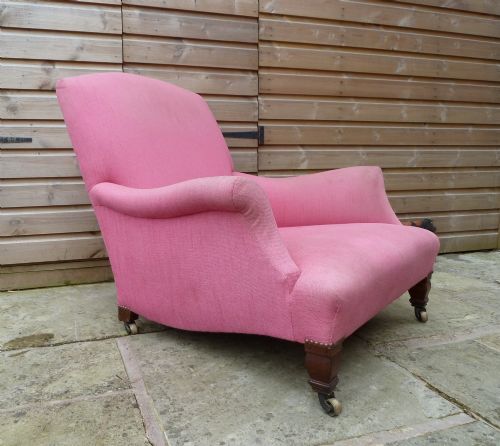
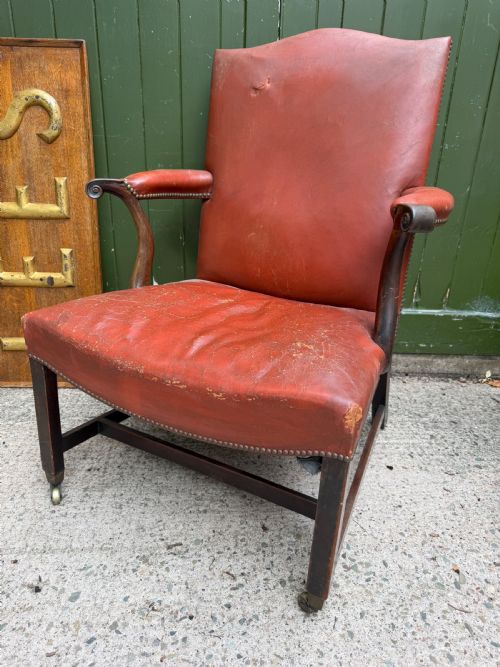
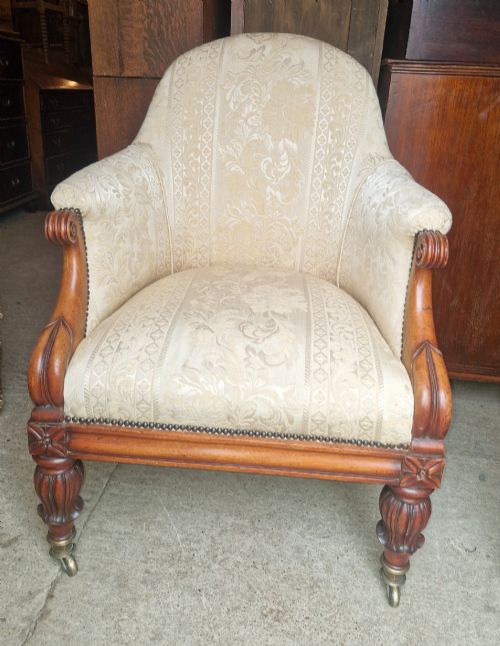
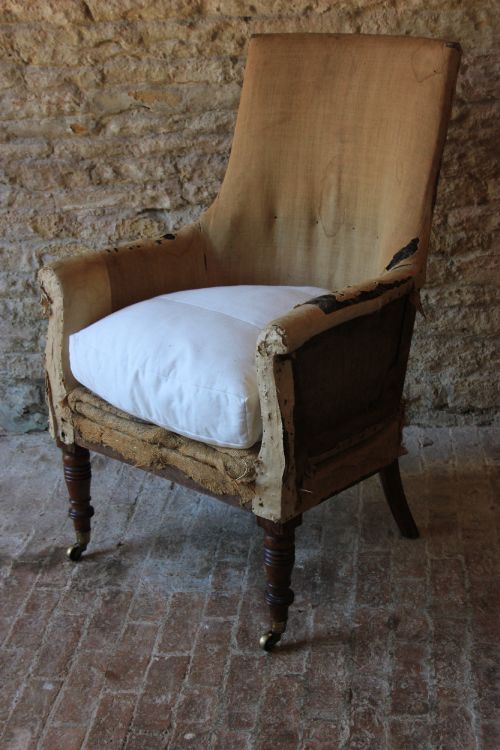
A brass castor reading chair is a substantial library or country house armchair designed for comfort, frequently appearing here in mahogany, rosewood, and hardwood framed in Regency, Victorian, and Edwardian styles.
Brass Castor Reading Chair
A brass castor reading chair represents the heavier end of nineteenth-century seating, built for libraries, studies, and drawing rooms where reading or resting for hours required serious structural support. These pieces take the form of library armchairs, bergères, and club chairs designed with generous proportions and enclosed arms.
The version most frequently met on this page is the nineteenth-century mahogany or hardwood armchair featuring upholstered seats and backrests, often attributed to major London makers or country house workshops. They appear across Georgian, Regency, William IV, Victorian, and Edwardian periods.
Makers utilised sturdy hardwoods like mahogany, rosewood, and general hardwood to construct frames capable of bearing substantial upholstery, finished with brass castors to allow smooth movement across heavy carpets.
Distinctions in quality and finish
Quality rests in the architectural integrity of the wooden frame and the crispness of details such as reeded legs, carved arm supports, and original brass castors. Pieces produced by documented workshops demonstrate superior joinery and balanced proportions compared to simpler provincial examples.
The choice and execution of upholstery also separate tiers of quality, from plain calico foundations to fine red leather, stamped hide, or plush velvet. Surviving maker stamps on legs or brass castors elevate the historical standing of a piece.
Listings span multiple periods including Georgian, Regency, Victorian, and Edwardian eras, utilising mahogany, rosewood, leather, and velvet.
Howard and Sons·Morris and Co·Gillows·Hindley and Sons·Hampton and Sons
The Brass Castor Reading Chair Glossary
- Bergère
- An enclosed upholstered armchair with wooden framing, often featuring cane work to the sides and back. This French-inspired form became popular in English libraries during the Regency and Victorian periods.
- Castor
- A small wheel fitted to the base of a furniture leg to ease movement. Brass examples are standard on nineteenth-century library armchairs.
- Reeded
- A decorative moulding consisting of parallel convex strips resembling parallel reeds. This technique frequently appears on the wooden legs of library chairs.
- Button back
- An upholstery method where depressions are created by pulling twine tightly through the padding and securing it with buttons. It provides structural tension and a distinct tufted appearance.
- Library chair
- A heavy, comfortable armchair designed for reading rooms, often upholstered in leather or fabric. They prioritise deep seats and supportive armrests.
Brass Castor Reading Chair: Frequently Asked Questions
What defines a reading chair?
A reading chair is a robust, padded armchair designed for long periods of sitting in libraries or studies. They typically feature solid timber frames, enclosed arms, and upholstered backs.
Examples often include brass castors to move the heavy piece across floors, and many incorporate leather or heavy fabric coverings.
How do I identify a Regency library chair?
Regency library chairs usually feature dark mahogany frames, classical proportions, and clean lines derived from Greek and Roman design. Look for reeded woodwork and sturdy brass castors.
They date from the early nineteenth century and tend to be heavier and more formal than later Edwardian counterparts.
Are these chairs comfortable for daily use?
These chairs were built for sustained reading and relaxation in country houses, meaning comfort was a primary design consideration. Deep seats and supportive upholstered backs make them practical for modern living.
Many retain their original sprung or padded upholstery foundations, though the condition of coverings varies.
What is a bergere armchair?
A bergère is an armchair featuring solid wooden sides and back panels filled with cane work or tight upholstery. They offer a lighter visual profile whilst maintaining structural strength.
Victorian and Edwardian makers frequently combined this style with mahogany frames and brass castors.
How do I care for antique leather upholstery?
Antique leather requires gentle cleaning and regular conditioning to prevent drying and cracking. Avoid harsh chemical cleaners and direct sunlight.
Feeding the leather with appropriate conservation balms helps preserve its natural texture and rich colour over time.