
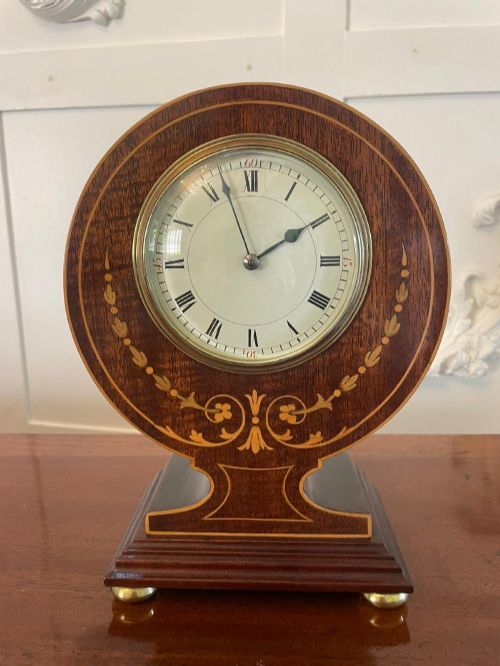
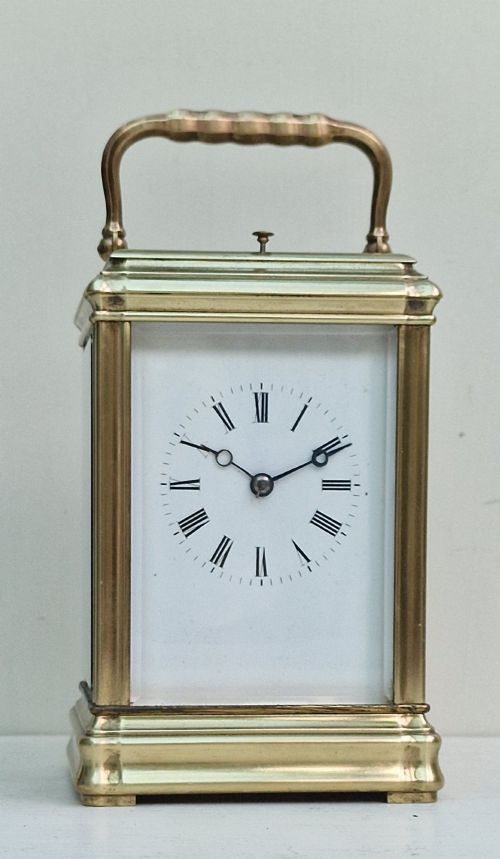


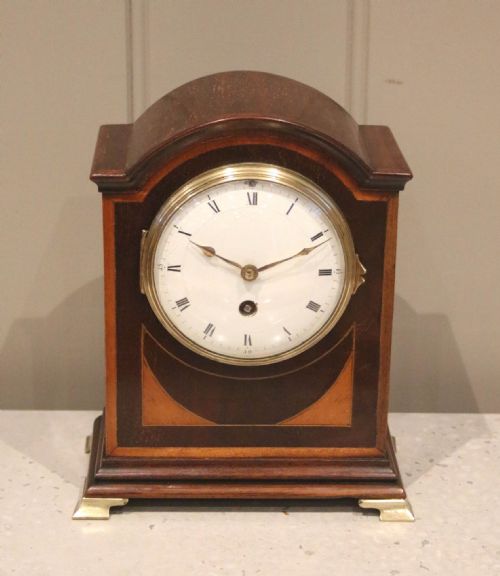


Brass Cased Shelf Clock
These brass cased shelf clock examples bring mechanical precision and polished metals together on a mantelpiece.
Brass Cased Shelf Clock
A brass cased shelf clock sits upon a mantel, shelf or desk, measuring time through intricate internal movements housed in protective metal. When you search for a brass cased shelf clock, you encounter carriage clocks, library clocks and mantel clocks dating from the Victorian and Edwardian eras.
The versions you meet most frequently on this page combine brass housing with glass panels, timber cases in mahogany, walnut and rosewood, or decorative stone such as sienna marble. They range from French gorge case designs and bell striking models to compact timepieces created by English, French and German makers.
Many incorporate enamel dials and subtle wood inlay, reflecting the neoclassical, Regency and Art Deco styles of their respective periods. These clocks serve both a practical function and a decorative purpose within a room.
Materials and construction
These clocks rely on solid brass for their structural cases and bezels, often polished to a bright finish or combined with bevelled glass panels to reveal the internal movement. Timber cases utilise mahogany, walnut and rosewood, frequently enhanced with contrasting satinwood inlay.
Clock faces are commonly formed from white enamel with painted numerals, while heavier decorative models employ natural materials like sienna marble and malachite for their primary bodies.
Materials represented include brass, glass, enamel, mahogany, walnut, rosewood, sienna marble and malachite.
Distinguishing quality
The standard of a clock is evident in the weight and crispness of its brass casting, the clarity of its bevelled glass, and the precision of its dial markings. Finely figured timbers and meticulous marquetry separate standard production pieces from finer examples.
Internal complexity also marks the upper range, where striking and repeating mechanisms, signed movements by notable makers, and original travelling cases indicate a higher grade of craftsmanship.
Paul Garnier·Walker and Hall·Junghans·McCabe
The Brass Cased Shelf Clock Glossary
- Carriage clock
- A portable spring-driven timepiece with a carrying handle, originally designed for travel.
- Gorge case
- A stepped brass housing style with distinctive rounded top mouldings, typical of nineteenth-century French carriage clocks.
- Enamel dial
- A metal clock face covered with fused powdered glass, providing a smooth white surface for painted numerals.
- Mantel clock
- A domestic clock designed to stand on the shelf or mantelpiece above a fireplace.
- Timepiece
- A clock that measures and indicates time without incorporating a striking mechanism to sound the hours.
Brass Cased Shelf Clock: Frequently Asked Questions
What is a carriage clock?
A carriage clock is a portable timepiece housed in a brass frame with glass panels, designed originally for officers on the move.
They feature a folding handle on top and a spring-driven movement that does not require a pendulum.
How do I wind my clock?
Most spring-driven clocks require a specific winding key inserted into the dial holes to tension the mainspring.
Care must be taken not to overwind the mechanism, stopping as soon as resistance is felt.
Where should I place a shelf clock?
These clocks belong on stable, level surfaces such as mantelpieces, desks or bookshelves away from direct sunlight and drafts.
A level foundation ensures the pendulum or escapement beats evenly.
How do I date these clocks?
Dating relies on stylistic clues, case materials, dial design and any engraved signatures or maker marks on the movement.
Victorian and Edwardian pieces often display distinct design traits tied to their specific decade of manufacture.