
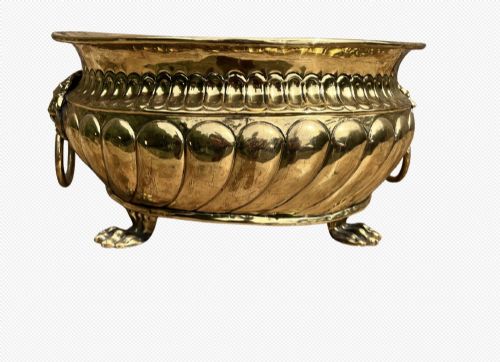
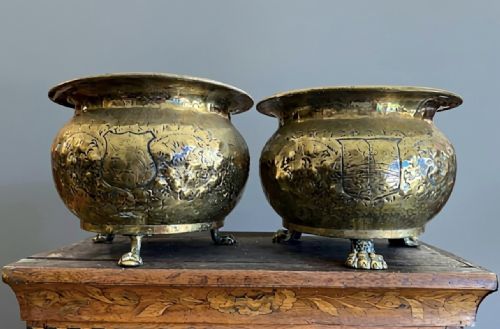


Brass Cachepot Container
These brass cachepot container pieces bring plant holders into the room with weight and shine.
Brass Cachepot Container
A brass cachepot container serves to hold potted plants while keeping watering surfaces dry, typically taking the form of a jardiniere or planter. When searching for a brass cachepot container, buyers encounter items ranging from simple Victorian cylinders to ornate Edwardian vessels and heavier Arts and Crafts designs.
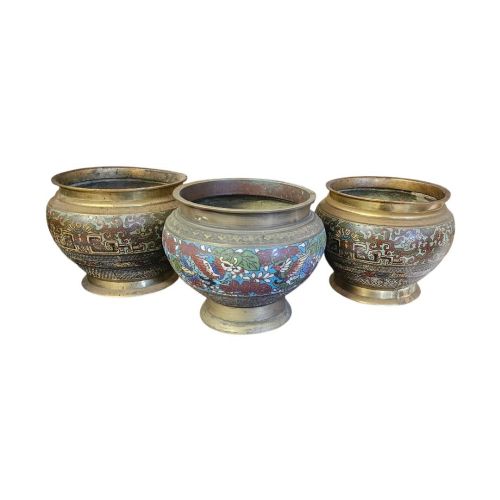
The selection on this page draws on nineteenth century and early twentieth century work, including Victorian, Edwardian, and Art Nouveau periods. Styles stretch from Dutch repoussé and Gothic Revival to Aesthetic movement pieces and Chinese bronze champlevé enamel.
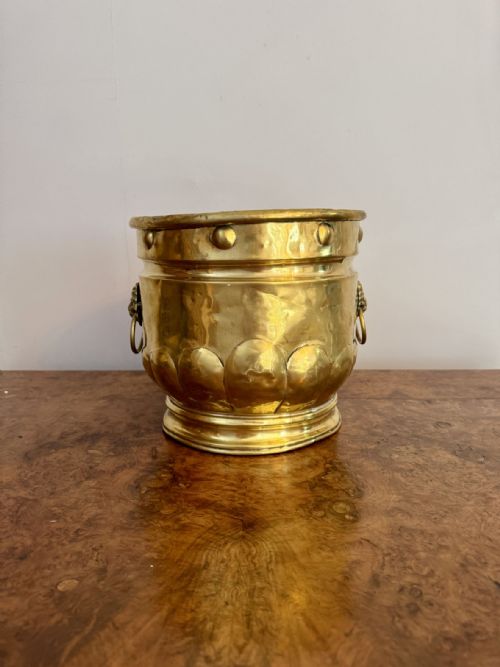
Forms vary from circular planters and square plant stands to coal buckets functioning as decorative vessels. These pieces bring metallic texture and historical presence to interior spaces, whether rendered in plain polished brass or combined with copper, iron, and enamel.
How they were made
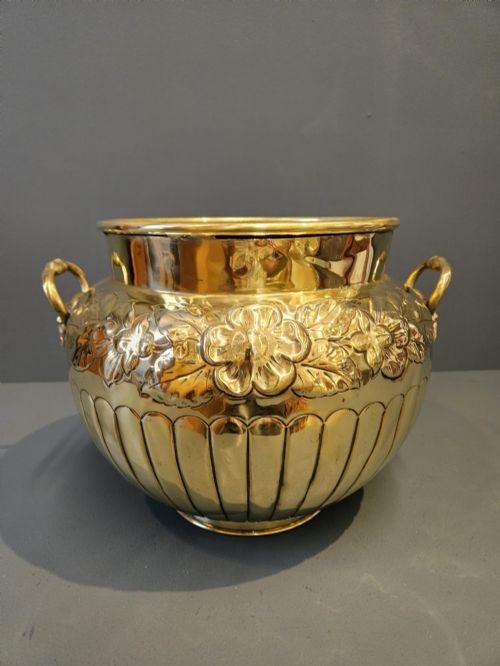
Makers shaped these containers primarily from sheet brass and copper, hammering and pressing the metal into deep vessels. Artisans utilised repoussé techniques to beat intricate floral and animal motifs out from the reverse side of the metal.
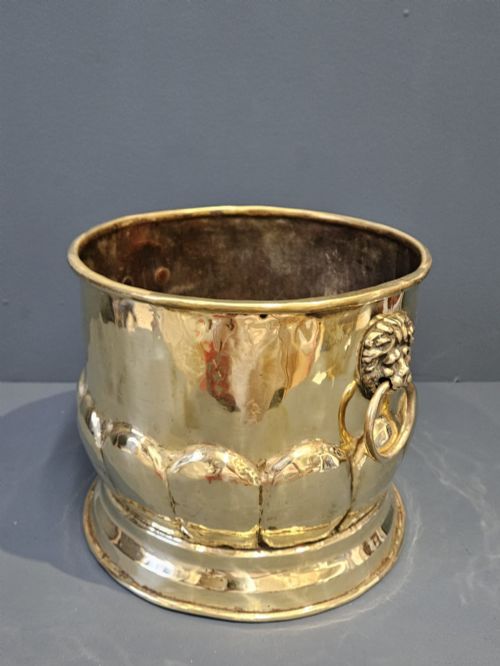
Cast elements such as lion mask handles and sturdy feet provide structural contrast to the thin beaten body of the planter. Some examples incorporate champlevé enamel work or combine iron and tin construction to achieve specific decorative and functional qualities.
The inventory includes Dutch seventeenth-century style planters alongside Chinese champlevé enamel vessels.
What varies in quality
The standard of a brass cachepot container depends on the crispness of the repoussé work and the weight of the metal used in its construction. Finer examples display deeply chased surface detail and securely joined seams rather than superficial surface stamping.
J Sankey and Sons
The Brass Cachepot Container Glossary
- Cachepot
- An ornamental container used to hold a flowerpot and catch drainage water. The word translates from French as hiding pot.
- Jardiniere
- A large ornamental pot or stand for plants and flowers. These vessels often feature decorative handles or embossed metalwork.
- Repoussé
- A metalworking technique where the artisan hammers the metal from the reverse side to form raised designs. This method creates tactile surface relief on planters and buckets.
- Champlevé
- An enamelwork technique where troughs are carved into the metal surface and filled with vitreous enamel before firing. This process produces colourful patterns set within metallic borders.
- Aesthetic Movement
- A late nineteenth century design current emphasising visual beauty over narrative subject matter. Pieces from this movement display refined ornamentation and artistic focus.
Brass Cachepot Container: Frequently Asked Questions
How do I clean an antique brass planter?
Maintenance requires gentle dusting and occasional cleaning with a mild, non-abrasive metal polish to remove heavy oxidation. Overzealous cleaning removes the historic patina that collectors value on older metalwork.
Harsh chemical agents and steel wool should be avoided entirely to protect the surface finish and any repoussé details.
Can these containers hold plants directly?
Many vintage cachepots lack drainage holes because they were originally designed to catch water from inner pots. Placing a potted plant inside a plastic liner protects the interior metal from moisture damage and soil corrosion.
Checking the interior for leaks before planting ensures that furniture surfaces remain safe from water marks.
How do I date a brass jardiniere?
Dating relies on stylistic clues such as the flowing organic lines of Art Nouveau or the heavy cast mounts of the Victorian era. Manufacturing marks, screw types, and construction methods also help establish the period of origin.
Comparing the weight and chasing style to documented examples provides further clarity on the age of the piece.
Where should I place a cachepot?
These vessels work well on tabletops, mantelpieces, or directly on the floor depending on their scale. Their metallic surfaces reflect light and add warmth to both traditional and modern interiors.
Pairing larger planters with tall foliage creates a strong focal point in a room.