
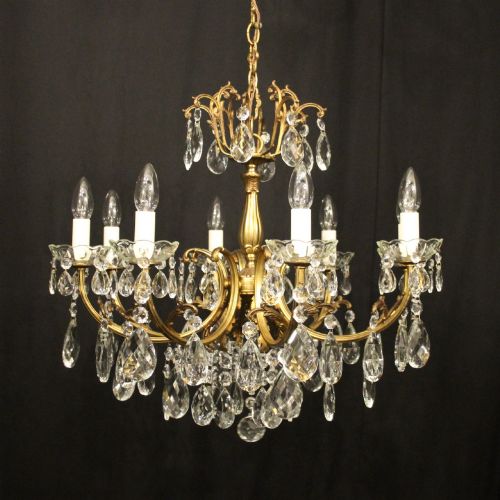
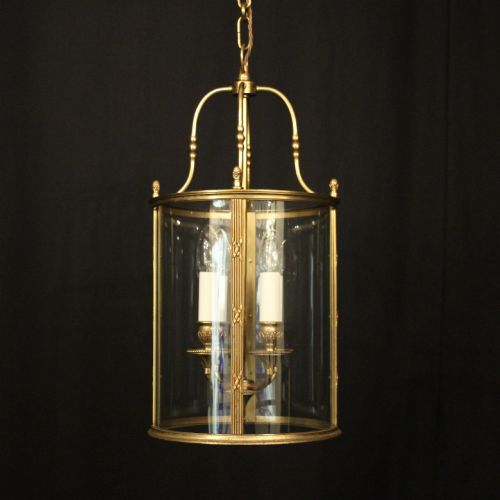
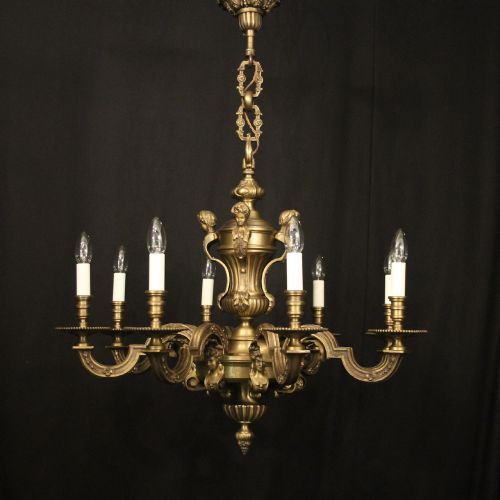
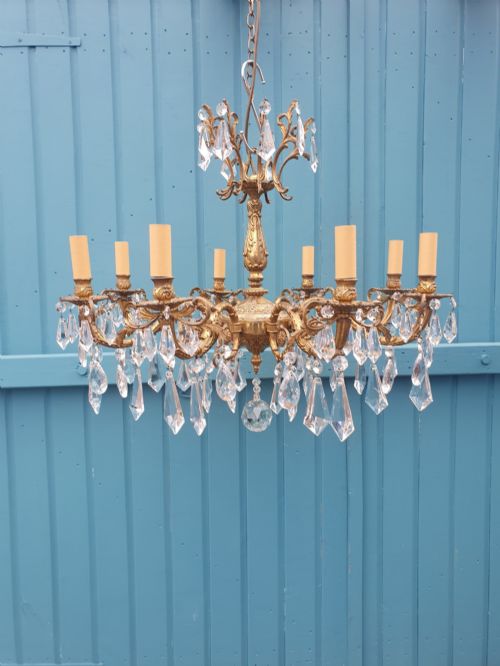


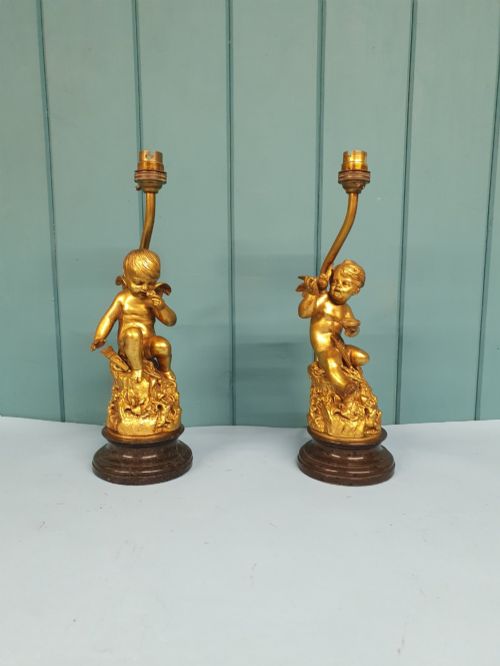
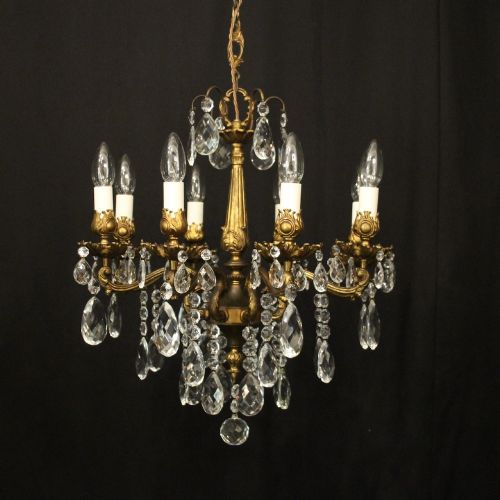
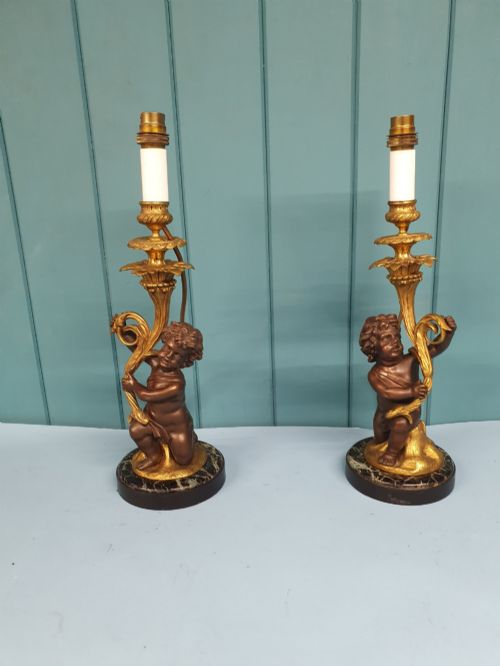
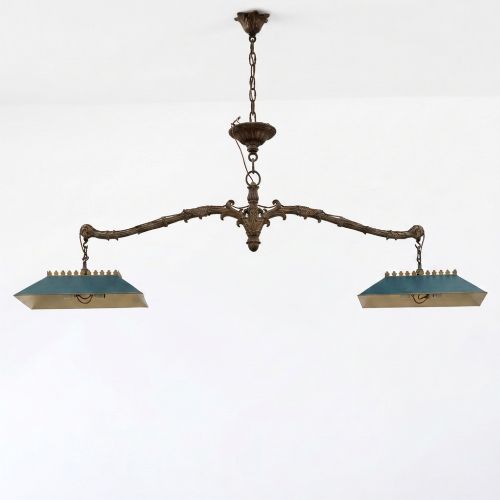
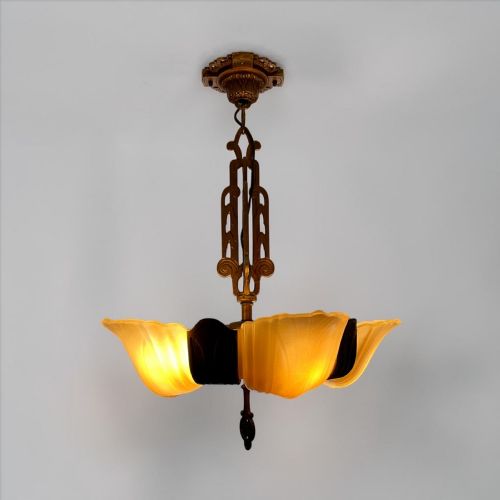
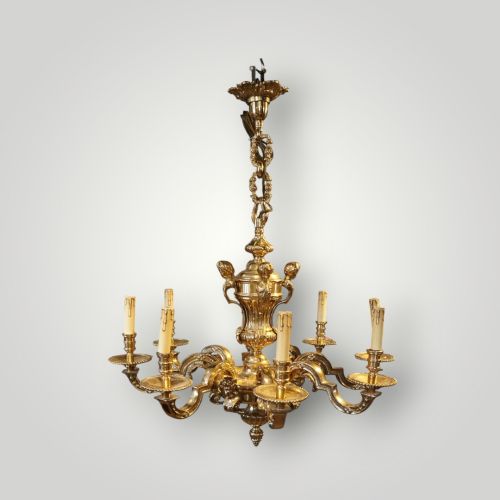
Brass Bronze Lamps
Brass bronze lamps combine substantial metal castings with period illumination, offering interior decorators heavy decorative weight and rich patination.
Brass Bronze Lamps
Brass bronze lamps encompass a range of lighting forms spanning the nineteenth century through the art deco period, bringing formal illumination to domestic spaces. Buyers seeking brass bronze lamps encounter table lamps, chandeliers, and wall sconces rooted primarily in French neoclassical, empire, and rococo revival styles.
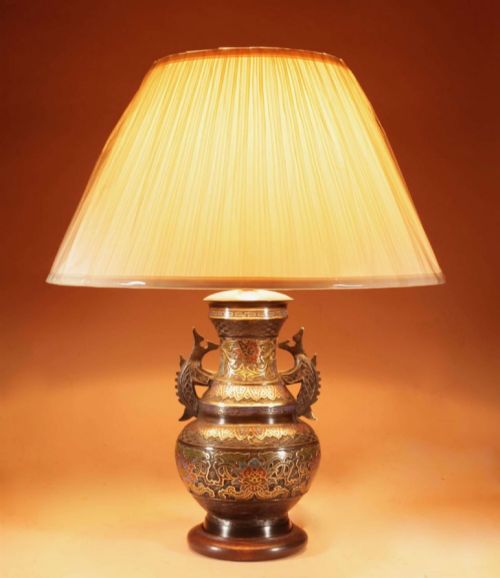
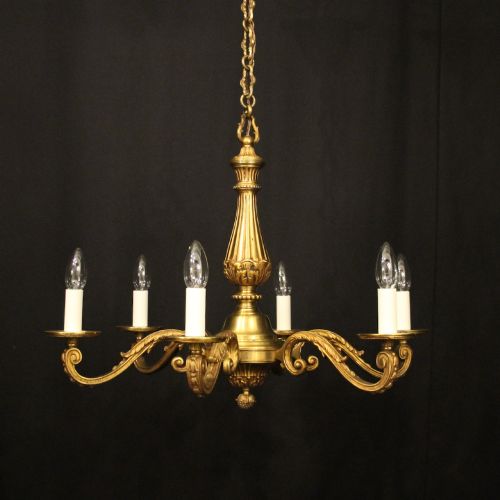
The selection ranges from petite floral design table lamps and cherub figural pairs to multi-light chandeliers and converted oil lamps. Pieces draw on diverse cultural aesthetics, incorporating Japanese bronze work alongside European metal foundry traditions.
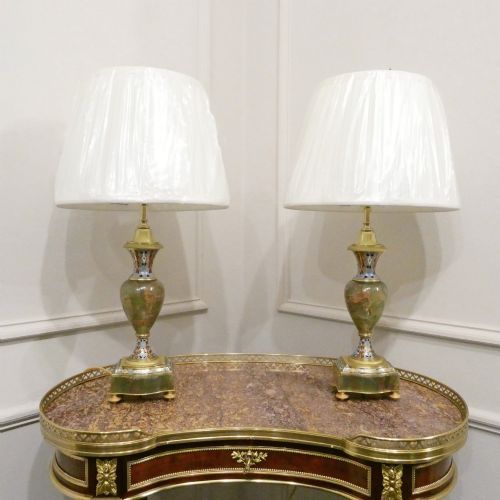
Many examples integrate mixed media, pairing metal mounts with marble bases, porcelain bodies, crystal drops, or onyx columns. This variety allows collectors to select lighting that suits both restrained classical interiors and ornate historic schemes.
Evaluating craftsmanship and design
Quality reveals itself in the crispness of the metal chasing and the depth of the gilding on bronze and ormolu surfaces. Superior examples display sharply defined figural elements, such as cherubs, rams heads, or acanthus scrolls, rather than softened cast details.
The choice of secondary materials distinguishes standard production from high-end pieces, with substantial marble columns, heavy crystal drops, and hand-painted porcelain bodies elevating the overall object. Cohesion between the metal mountings and the primary body indicates thoughtful workshop assembly.
Listings feature nineteenth-century pieces alongside 1920s and 1930s examples, utilising brass, bronze, crystal, and marble.
L & F Moreau·François Linke
The Brass Bronze Lamps Glossary
- Ormolu
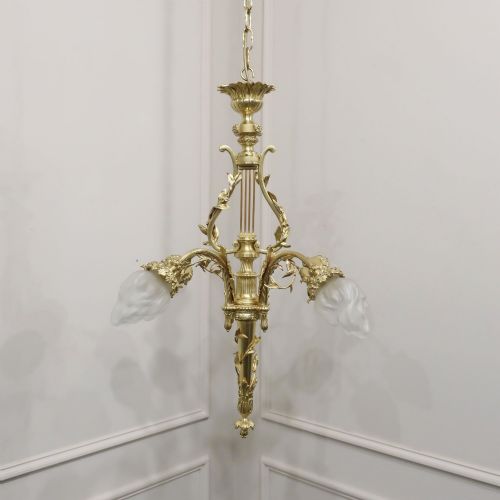
- Gilded bronze produced by applying a mercury and gold amalgam to a bronze base and heating it. This technique creates a durable golden finish seen on French decorative objects.
- Champlevé
- An enamelling technique where troughs are dug into a metal surface and filled with vitreous enamel before firing. It appears on Japanese and French decorative metalwork.
- Rococo Revival
- A nineteenth-century design style emulating the asymmetrical curves and natural motifs of the French eighteenth century. It manifests in scrolling arms and organic leaf patterns.
- French Empire
- A neoclassical design style defined by martial motifs, classical antiquity, and symmetrical dignity. Lamps in this manner frequently utilise columns, paw feet, and gilded mounts.
Brass Bronze Lamps: Frequently Asked Questions
How do I distinguish ormolu from standard brass?
Ormolu consists of a mercury gilding process applied specifically to a bronze substrate, resulting in a deep, warm golden lustre that differs from standard yellow brass.
Closer inspection under magnification reveals the hand-chased details characteristic of high-grade french metalwork from the eighteenth and nineteenth centuries.
Were these lamps converted from oil?
Many period lighting fixtures began as oil or paraffin lamps before being adapted for electricity during twentieth-century modernisations.
Conversions often retain their original weighted bases, font structures, and burner assemblies while receiving internal rewiring for contemporary domestic use.
What styles are common in these fixtures?
French rococo, empire, and neoclassical designs dominate the material, reflecting historic revival movements across the nineteenth century.
Items also incorporate japanese art forms, such as meiji period bronzes, alongside later art nouveau and art deco interpretations.
How should I clean gilded metal surfaces?
Dusting gently with a soft dry brush prevents particulate accumulation without disturbing delicate historical patination or historic gilding layers.
Harsh chemical polishes must be avoided entirely, as they strip away the surface gold and permanently damage the underlying bronze or brass.